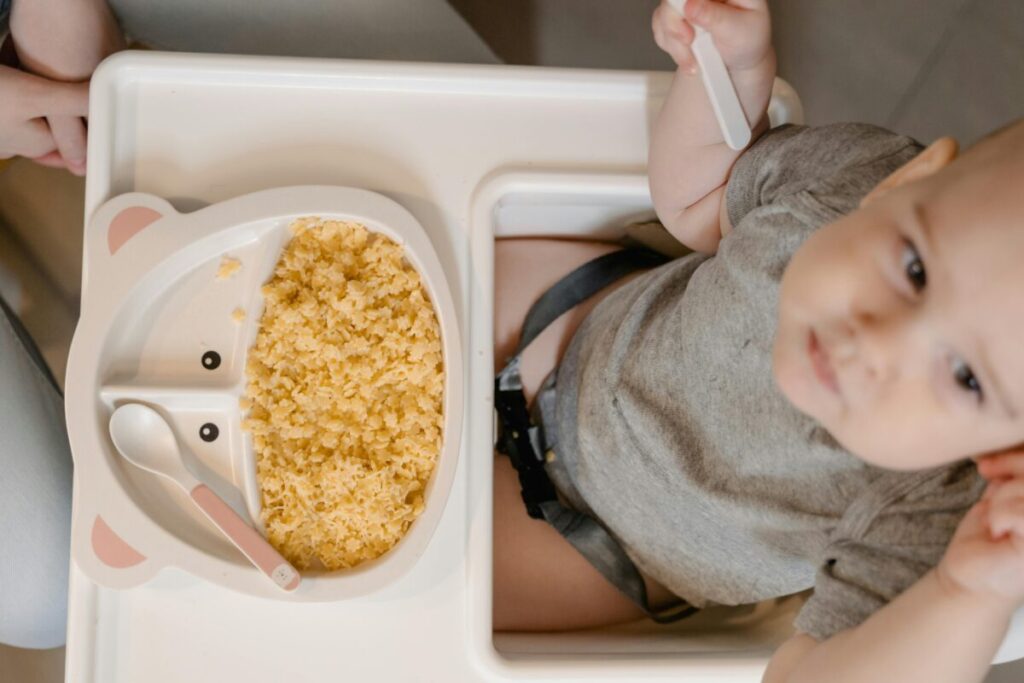
Okay, real talk for a second. Honestly, nothing really prepares you for it… that first spoon of peanut butter is just—terrifying. You’ve spent months protecting this tiny human from everything—sharp corners, loud noises, unwashed hands—and now, the ‘experts’ are telling you that introducing allergens to baby is actually the safest move? It feels so wrong to hand over the one thing that literally comes with allergy warnings everywhere, but here we are
It just feels… wrong. Scary. Like you’re inviting a problem on purpose.
I was sitting in my kitchen at like 3:00 AM, half-asleep, scrolling through forums I probably shouldn’t have opened, while my toddler (then a tiny 6-month-old) slept peacefully. I was staring at a jar of peanut butter like it was an unexploded bomb. I kept checking my phone battery—just in case I needed to call the doctor or rush to the ER—and running through the fastest route to the hospital in my head. Looking back… yeah, it sounds dramatic. But in that moment? It didn’t feel dramatic at all.
Now I’m sitting here… much later at night, typing this with reheated coffee that I’ve already microwaved, I don’t know, three times. The house is finally quiet.
And honestly, I’m writing this because I remember that feeling way too well… like going from completely terrified to just trying to be a little more prepared when it comes to introducing allergens to baby.
The Science vs. The Fear: Why Introducing Allergens to Baby is the New Gold Standard

If you’ve ever mentioned this to your mom—or like, an aunt, or honestly anyone from that generation—you’ve probably gotten that look. Like… “you’re doing what?” “Wait until they’re three!” they’ll say, immediately. And not in a mean way—it’s just… that’s what they were told back then.
At some point, I remember thinking, okay wait—so for years everyone believed a baby’s immune system was too fragile, and the safest thing was just to avoid all the “scary” foods completely. But here’s the thing… and I didn’t even realize this at first… the science kind of did a total 180.
Apparently, there was this big study—doctors call it the LEAP study (I had to Google it like five times)—and it basically showed we had it backwards. Like… avoiding these foods might’ve actually made things worse. So now these early allergen introduction guidelines basically say you’re supposed to introduce these foods around the time your baby starts solids (around 6 months). It turns out that introducing allergens to baby early is the key—which, honestly, sounds terrifying at first.
In mom terms? It’s kind of like… controlled exposure, I guess. Like you’re giving their little body a heads-up so it doesn’t completely freak out later. It’s a massive shift and honestly… yeah, it messed with my head for a bit. If you’re confused, same.
The “Big 8” Breakdown: What Are We Actually Dealing With?
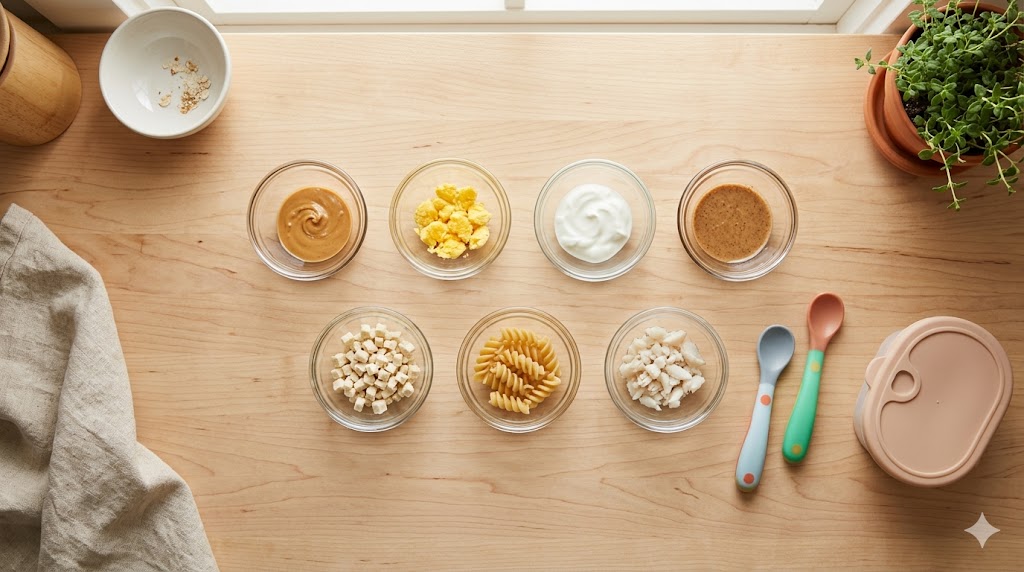
When people say the ‘Top 8,’ they basically mean the usual suspects—the foods that cause most allergies. Honestly, at some point I just sat there like… okay, wait, how am I supposed to handle introducing allergens to baby without completely losing my mind? Some are easier than others, sure, but still, the mental load is real.
1. Peanuts
This is the one that keeps us up at night. The most important thing to remember about how to introduce peanut butter to baby is that you never give them a whole peanut or a big glob of thick peanut butter. That is a massive choking hazard.
Instead, take a tiny teaspoon of smooth peanut butter and thin it out with warm water, breast milk, or formula until it’s a runny liquid. Or, mix a little bit into their usual oat cereal.
2. Eggs
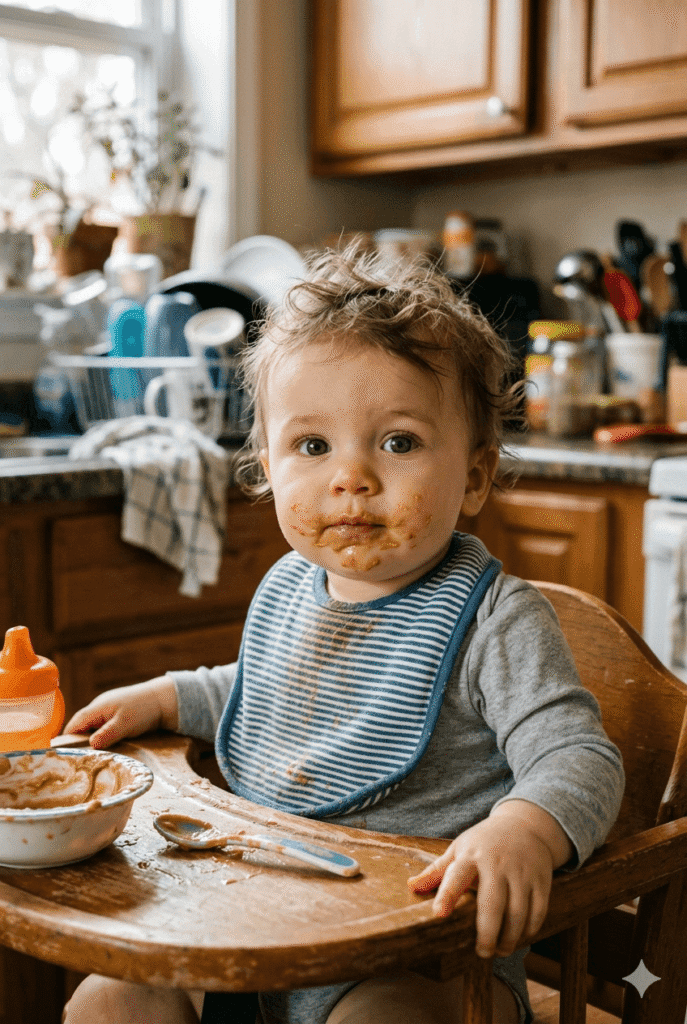
Oh, the ‘egg-y’ mess. I remember my first attempt at making ‘safe’ egg strips for my little one—I thought I had a handle on this whole introducing allergens to baby thing. I followed a recipe for a plain omelet, cut it into perfect little fingers, and felt so proud. Fast forward five minutes: the baby was covered in yellow mush, it was in his hair, under his fingernails, and smeared across the tray. I’m pretty sure he wore 90% of that egg and swallowed about 10%.
But that’s okay! Exposure counts, even if it’s messy. Start with well-cooked eggs (scrambled or hard-boiled mash). Avoid runny yolks or raw dough for now.
3. Dairy
Most babies have already had a run-in with cow’s milk protein if they use formula, but for breastfed babies, this is a new one. We aren’t talking about giving them a glass of milk (save that for after age one), but rather full-fat plain Greek yogurt or a little bit of melted cheese.
4. Tree Nuts
This includes almonds, walnuts, cashews, and pistachios. Since you can’t give a baby a whole almond, look for nut flours or smooth nut butters. Like the peanut butter, thin them out significantly.
5. Soy
Soy is in everything these days, but a good way to introduce it specifically is through mashed tofu or a little bit of soy yogurt.
6. Wheat
If your baby has had baby cereal, they might have already checked this off. If not, a little bit of toast crust (once they are ready for finger foods) or wheat-based pasta is a perfect way to start introducing allergens to baby like wheat without making it a whole separate production.
7. Fish
Think mild white fish like cod or flounder. Make sure it is absolutely, 100% bone-free and flaked very finely.
8. Shellfish
This one feels fancy for a baby, right? Shrimp or crab, finely minced and mixed into a puree, is the way to go here.
The “Safety First” Protocol: How to Sleep (Slightly) Better
You don’t just dump all eight allergens into a blender and hope for the best. We need a system. This system is what gave me enough peace of mind to actually follow through with introducing allergens to baby without feeling like a total nervous wreck.
The 3-Day Rule
Don’t rush the process. When you introduce a new allergen, wait about three days before introducing another one. This way, if your baby has a reaction, you know exactly what caused it. If you give them eggs, wheat, and soy all on Tuesday and they wake up with a rash on Wednesday, you’re back to square one playing detective.
The “Golden Hour” (10:00 AM)
I call 10:00 AM the Golden Hour. Why? Because you want to introduce a new food in the morning or early afternoon when your baby is wide awake and you have the whole day ahead of you to observe them.
Pro-tip: Never introduce an allergen right before a nap or bedtime. If they have a slow-building reaction, you want to be able to see it, not have them tucked away in a dark nursery while you’re downstairs watching Netflix.
Start Tiny
I’m talking the tip of a spoon. You don’t need a full meal. A tiny taste is enough to trigger the immune system response we’re looking for. If that goes well, you can gradually increase the amount the next time.
Recognizing the Signs: What a Reaction Actually Looks Like
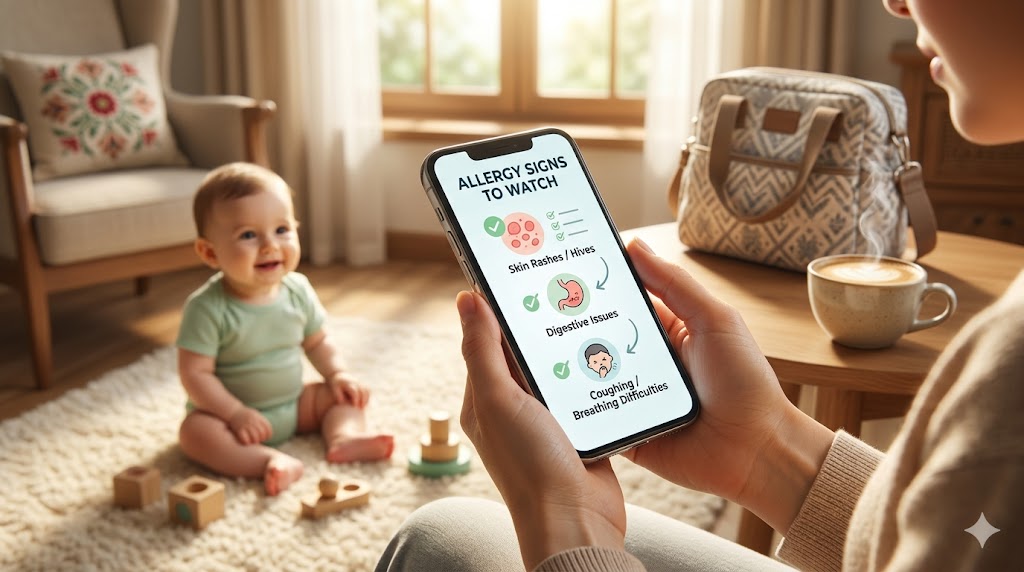
One of the biggest hurdles is actually knowing the signs of food allergy in infants versus just… baby skin being weird. I used to stare at my baby’s face so hard after a new food that I’d swear his cheeks were getting redder, only to realize he was just warm from the sun coming through the window.
It helps to know the difference between a “nothing burger” and a real concern. For example, if your baby gets a little red around their mouth after eating acidic foods like tomato sauce or strawberries, that’s usually just skin irritation—not a food allergy.
Actual signs of food allergy in infants usually include:
- Hives: Raised, red, itchy welts that look like mosquito bites. These can pop up anywhere on the body.
- Vomiting: Not just a little “spit up,” but forceful vomiting shortly after eating.
- Swelling: Especially of the lips, tongue, or face.
- Difficulty Breathing: This is the big one. If they are wheezing, coughing, or seem to be struggling for air, that’s an immediate emergency call.
Wait, I forgot to mention: sometimes a reaction isn’t immediate. It can happen within minutes, but sometimes it takes a couple of hours. This is why that “Golden Hour” we talked about is so important.
Keeping it in the Rotation
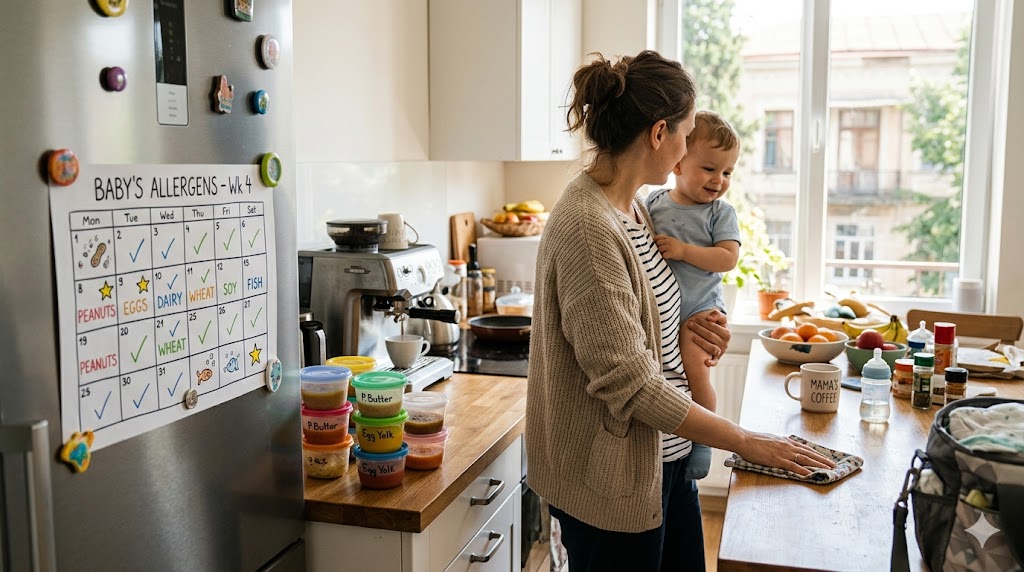
Now, here is the part no one tells you: you can’t just do it once and check it off the list. To keep that “protection” active, you have to keep the food in their diet regularly—ideally a couple of times a week.
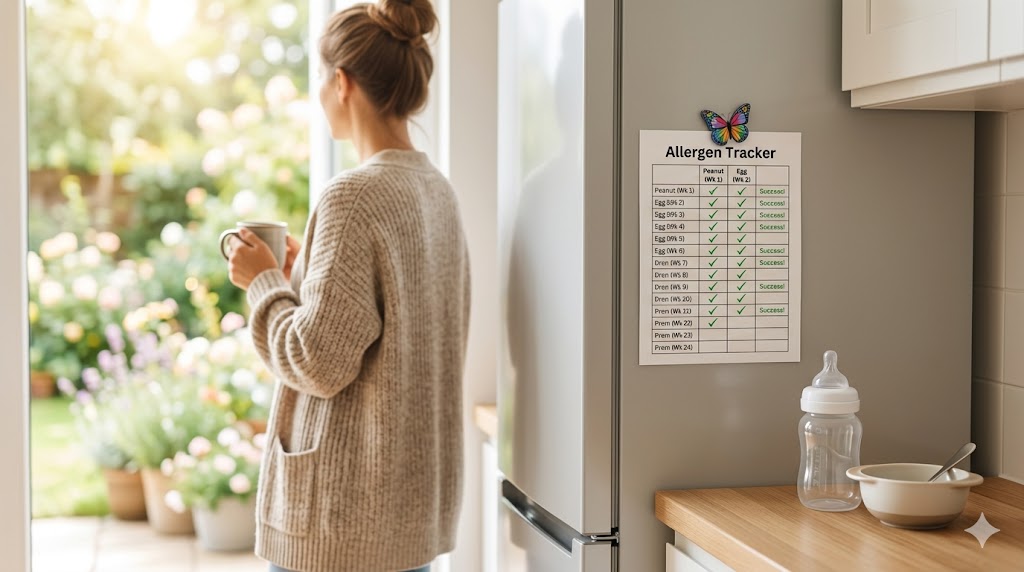
This is where the real “mom juggle” starts. Trying to remember if they’ve had their weekly dose of almond butter while you’re also trying to remember if it’s library day or if you actually put the laundry in the dryer is… a lot. I started keeping a little note on my fridge just to track which allergens we’d hit each week. It’s not about being a “perfect Pinterest mom”; it’s just about survival and not having to redo the 3:00 AM Google spiral.
More From The Chaos (Read These Next):
- Introducing Allergens: A Nervous Mom’s Guide to First Tastes – If you’re still feeling those jitters, here’s my step-by-step emotional survival guide for the very first bite.
- Can Babies Eat Hummus? The Sticky, Messy, and Slightly Chaotic Truth – Since we’re talking about soy and sesame, let’s talk about everyone’s favorite dip (and why it might end up in your baby’s eyebrows).
- Is Beech-Nut Baby Food Safe? What I Learned When I Panicked – For those days when you just can’t deal with the kitchen mess and need a pre-made option without the guilt.
A Dose of Reality: You’ve Got This
I know it’s overwhelming. I know the first time they cough while eating that thinned-out peanut butter, your heart is going to skip a beat. But remember: you are doing this for them. By braving these early allergen introduction guidelines, you are giving them the best possible chance at a life free of food allergies.
Knowledge really is power here. When you know what to look for and you have a plan in place, the fear starts to shrink. It doesn’t disappear entirely (does it ever, as a parent?), but it becomes manageable.
So, microwave that coffee one more time, take a deep breath, and charge your phone. You’re doing an amazing job, Mama. Whether you’re dealing with an “egg-y” mess or the 3:00 AM jitters, just know you aren’t alone in this.
We’re all just doing our best, one tiny, thinned-out spoonful at a time.
Disclaimer: I’m a mom, not a doctor! While I’ve done my homework and followed these guidelines with my own family, always chat with your pediatrician before starting solids or introducing allergens, especially if your baby has severe eczema or a known food allergy.