
Creating the perfect 7-month-old baby feeding schedule can feel like a big change, and I remember exactly what it felt like when my child reached this milestone. You’re moving from little “tastes” to real meals. At this stage, feeding your baby can feel like a big change. You’re moving from little “tastes” to real meals. This can be exciting—and a little daunting—but you shouldn’t be afraid of it.
I remember searching everywhere online for guidance. Looking back, I even laugh at myself. At the time, it was a real challenge.
At this stage, our little one is learning not just what to eat, but also how to eat. A simple, flexible routine can make your days easier and help your baby feel secure.
The 7-Month Milestone: What Changes?
At 7 months old, we notice how fast our baby is growing—and how their appetite is changing. Here’s what’s new:
- Better digestion: Their tummy can handle more than milk and simple purees.
- More interest in food: They might drop their plate or open their mouth quickly (I remember watching in amazement).
- Improved coordination: They can move food around in their mouth better.
- Longer wake windows: This allows room for structured meals.
Milk (breast milk or formula) is still the main source of nutrition, but solids start to play a bigger role. Think of solid food as a combination of practice and nutrition—not as complicated as it seems.
Daily Sample Schedule (7:00 AM – 8:00 PM)
Every baby is different, but this 7-month-old baby feeding schedule is a great starting point for most families.
Every baby is different, but this schedule is a great starting point. Adjust the times according to your baby’s sleep and mood—it’s perfectly fine.
🕖 7:00 AM – Wake Up + Milk Feed
- Breast milk or formula (6–8 oz / 180–240 ml)
- This is still the most important feed of the day.
🕘 9:00 AM – Breakfast
- Milk (small feed if needed)
- Solids:
- Oatmeal or baby cereal
- Mashed fruit (banana, pear, apple)
My Tip: Keep breakfast simple and soft so the little one can eat comfortably.
🕙 10:00 AM – Morning Nap
🕛 12:00 PM – Lunch
- Milk (4–6 oz / 120–180 ml)
- Solids:
- Vegetable puree
- Optional: small protein (lentils or chicken puree)
👉 I recommend starting with mild vegetables from my guide: Best First Vegetables for 6-Month-Olds: My Top 5 Picks. This helps create a reliable lunch routine.
🕐 1:00 PM – Nap
🕒 3:00 PM – Afternoon Milk Feed
- Breast milk or formula (6–8 oz / 180–240 ml)
🕕 5:30 PM – Dinner
- Solids:
- Vegetables + protein
- Fruit on the side (optional)
Examples:
- Sweet potato + chicken
- Carrot + lentils
- Avocado + banana
🕖 7:00 PM – Bedtime Milk Feed
- Breast milk or formula (6–8 oz)
🕗 8:00 PM – Sleep
Portion Sizes: How Much Should a 7-Month-Old Eat?
When you are following a 7-month-old baby feeding schedule, understanding portion sizes is just as important as the timing of the meals.
A common question for parents—and here’s a simple guide:
🍼 Milk
- 24–32 oz per day (breast milk or formula)
- Split across 4–5 feeds
🥄 Solids (2–3 meals per day)
- Start small, increase slowly:
- 1–2 tablespoons per food at first
- Work up to:
- 2–4 tablespoons per food
- 2–3 foods per meal
Example of a full meal:
- 2 tbsp veggies
- 2 tbsp protein
- 2 tbsp fruit
That’s perfectly enough!
Common Mistakes to Avoid
I remember thinking every feeding had to be perfect. I hovered with a spoon, waiting for every bite. This causes stress for both parent and child.
Biggest mistakes:
- Forcing your baby to eat
- Introducing too many new foods at once
Tip: Follow the “3-day rule” to make sure your baby can handle each new ingredient.
The Importance of Texture

By 7 months, jaw muscles are stronger. Smooth purees are great for the first few weeks, but now it’s time to introduce a bit of texture.
I was terrified of choking, so I kept smooth purees too long. Mashing a banana with a fork instead of blending is a huge developmental step—it teaches babies to move food in their mouth. Try finely mincing steamed chicken or lentils.
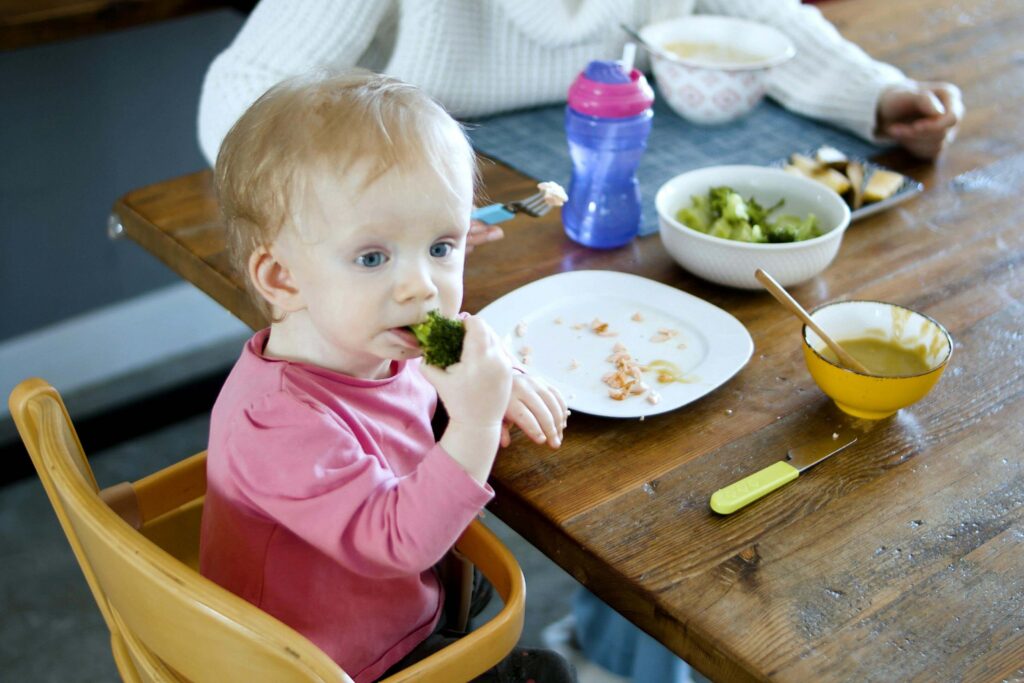
Messy stage? Yes. Gagging? Normal reflex. It’s how babies learn to chew! For more expert advice on transitioning to solids, you can check out these feeding safety guidelines
Food Groups to Include
Variety is key to prevent problems later. Include these daily:
🥕 Vegetables
- Sweet potato
- Carrots
- Zucchini
- Peas
🍎 Fruits
- Banana
- Apple (cooked)
- Pear
- Avocado
🍗 Proteins
- Chicken
- Turkey
- Lentils
- Beans
🧠 Important Nutrient: Iron
Iron is crucial at this age. Babies’ iron stores are usually depleted by 6–7 months.
Iron helps:
- Brain development
- Healthy blood
- Energy levels
👉 Read more here: Top 5 Iron-Rich Foods for 7-Month-Old Babies (Easy & Nutritious Choices)
Pair iron-rich foods with Vitamin C (like fruit) to boost absorption.
Signs of Fullness vs. Hunger
Babies can’t say “I’m hungry,” but they show it:
✅ Signs of Hunger
- Opens mouth when spoon comes
- Leans forward
- Gets excited at the sight of food
- Puts hands in mouth
❌ Signs of Fullness
- Turns head away
- Closes mouth tightly
- Pushes spoon away
- Gets fussy or distracted
Tip: Never force a child to eat. They know when they’re full.
FAQ: 7-Month Feeding Questions
Here are some of the most common questions parents ask when trying to implement a 7-month-old baby feeding schedule for the first time.
💧 How much water?
- 2–4 oz (60–120 ml) per day
- Offer in a cup, not a bottle
- Water doesn’t replace milk—this is practice
🥄 What if my baby refuses the spoon?
- Wait a few minutes and try again
- Let them touch the food
- Offer safe finger foods
- Stay calm
😴 Can I skip a meal if they’re tired?
- Yes, offer milk instead.
- Tired babies won’t eat well, and crying may follow.
🤔 What if my baby eats very little?
- Normal. Milk is main nutrition; solids are for learning.
- Some days they eat more, some less—don’t worry.
🍽️ Should I feed before or after milk?
- Milk first (especially in the morning)
- Solids 30–60 minutes later for balanced nutrition
Final Thoughts
Feeding a 7-month-old can be challenging. Some days go smoothly, some don’t. Focus on:
- Routine, not perfection
- Variety, not quantity
- Patience, not pressure
Our babies learn something new every day—and teach us too.
Building a consistent 7-month-old baby feeding schedule takes time and patience, but it’s worth the effort.
Medical Disclaimer
This article is based solely on my experience. Always consult your pediatrician before changing your child’s diet, especially if your child has allergies, medical conditions, or feeding challenges.