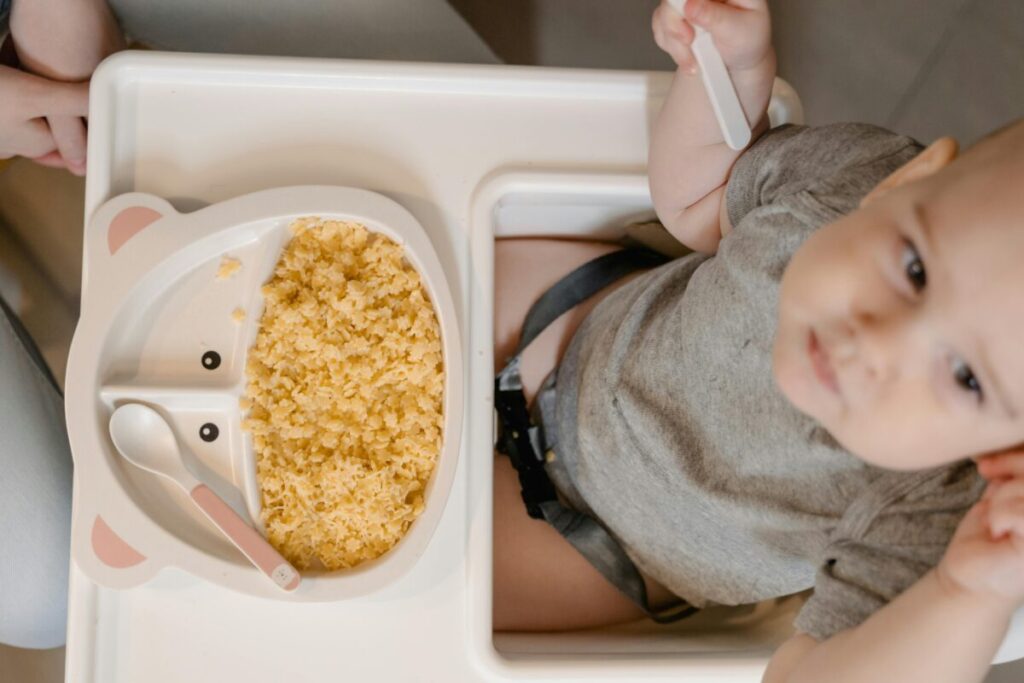
II know how you feel if you’re reading this at 2 a.m. with a baby in your arms. Understanding the connection between baby sleep and nutrition was the biggest breakthrough for me when I was struggling with those middle-of-the-night wake-ups.
I have been there as well. One of the hardest things about being a parent is getting up in the middle of the night. I remember those nights when I would spend hours trying to get my baby to sleep. As soon as I put them in bed, they would wake up. I miss that time now, even though it made me nervous. The biggest breakthrough for me was when I realized that sleep and feeding are not two separate problems, but two processes that are closely related.
I’m not a scientist, but I’ve lived through the 3 a.m. fog. I put together this guide based on what actually worked in my living room, not just what I read in books. It’s about finding that balance between a full tummy and a peaceful night—without the mom-guilt. In this guide, I’ll cover the science behind a baby’s sleep, how nutrition affects night wakings, and useful tips that will help both you and your baby sleep longer without feeling guilty or stressed. Before I found this guide, I had a lot of sleepless nights. I hope it makes your nights easier.
I remember looking at the clock one night and seeing that it was 3:12 a.m. I felt like I hadn’t slept at all. That’s when I knew I had to make a change.
The Science of Baby Sleep: Why Babies Wake Up
The first step to helping your child sleep better is to figure out why they wake up. I didn’t know why my daughter woke up a lot at first.
Adults sleep for much longer periods of time than babies. Adults cycle every 90 to 120 minutes, while babies cycle every 40 to 60 minutes. That means your baby wakes up (or partially wakes) several times a night.
At home, I realized that my daughter wasn’t waking up because she was ‘sleeping poorly,’ but because she was waiting to be back in my arms (I smile when I remember this). From the moment I started putting her down as soon as she was still a little awake, the crying fits at 1 a.m. significantly decreased, helping us finally overcome those exhausting night wakings.
🧠 What Happens During Sleep Cycles?
Each cycle includes:
- Light sleep
- Deep sleep
- REM (active sleep)
At the end of each cycle, your baby briefly wakes to check their environment. If something feels different (like falling asleep in your arms but waking in the crib), they may fully wake and cry.
💤 Why This Matters
If your baby:
- Falls asleep feeding
- Falls asleep being rocked
They may need that same help again every 1–2 hours overnight.
I slowly realized, once I helped my baby learn to fall asleep independently, night wakings didn’t disappear—but they became much shorter and easier. once I helped my baby learn to fall asleep independently, night wakings didn’t disappear—but they became much shorter. This is a core part of mastering baby sleep and nutrition together.
The Role of Full Tummies: Baby Sleep and Nutrition Explained

When we talk about baby sleep and nutrition, we have to address the ’empty tank’ problem.
Let’s talk about the ‘Empty Tank’ problem. I realized that if my girl didn’t get enough ‘fuel’ during the sunlit hours, she’d 100% come looking for it at 2 a.m. It’s called reverse cycling, and it’s a nightmare. I started focusing on calorie-dense solids like avocado and full-fat yogurt during dinner. It wasn’t about stuffing her; it was about making sure her tummy felt satisfied enough to let her brain rest and finally stop those constant night wakings.
At younger ages especially, babies need a certain number of daily calories The Centers for Disease Control and Prevention also emphasizes the importance of adequate daily nutrition for healthy growth and development in infants.
to support:
- Growth
- Brain development
- Energy needs
If they don’t get enough during the day, they’ll often “reverse cycle” and take those calories at night. This is why having a consistent 7-Month-Old Feeding Schedule is crucial to ensure they get enough milk and solids before bedtime.
🍼 Daily Intake Matters
For many babies:
- Total intake: 24–32 oz (720–950 ml) of milk per day
- Plus solids depending on age
If your baby is only taking 20–22 oz (600–650 ml) during the day, they may wake at night to make up the difference.
🥑 High-Calorie Foods = Longer Sleep
Adding calorie-dense foods during the day can help your baby stay fuller longer.
Examples:
- Avocado (1–2 oz (30–60 g) servings)
- Full-fat yogurt (2–3 oz (60–90 g))
- Nut butters (1–2 tsp (5–10 g) mixed with liquid)
These foods provide fats and proteins that digest more slowly.
What worked for us, when I added a solid dinner with about 3–4 oz (90–120 g) of high-calorie foods, I noticed that on the days we skipped our afternoon snack, waking up at 3 a.m. was almost guaranteed. So, my sleepless nights were guaranteed. As soon as we balanced our daily calorie intake, the difference was like night and day.
If your baby still wakes up hungry, adding more calorie-dense foods during the day can make a big difference. In this guide on high-calorie foods for better sleep, I break down exactly what helped us most.
Creating a Fail-Proof Bedtime Routine
A consistent bedtime routine signals to your baby’s brain: sleep is coming. According to the American Academy of Pediatrics, consistent bedtime routines and safe sleep practices are key to helping babies sleep more soundly.
Our bedtime routine became my anchor. It doesn’t have to be a spa day—just a bath, a quick book, and a final feed. Keeping it ‘boring’ and predictable tells their little brains: ‘Hey, the world is safe, it’s time to turn off.’ Even on the days when the house was a mess, we stuck to those 20 minutes. It was our nightly reset button that helped us significantly reduce night wakings.
🌙 Step-by-Step Routine
1. Bath (Optional)
- Warm bath at 98–100°F (37–38°C)
- Helps relax muscles and calm the nervous system
2. Book or Quiet Time
- 5–10 minutes of reading or cuddling
- Low lights, calm voice
3. Feed
- Final feed: 6–8 oz (180–240 ml)
- Keep baby slightly awake if possible
4. Bed
- Place baby down drowsy but awake
- Room should be dark and quiet
💡 Why This Works
Repetition builds sleep associations. Over time, your baby connects these steps with sleep and settles more easily.
In my experience, even when everything else felt chaotic, sticking to the same 20–30 minute routine made a huge difference.
Common Sleep Disruptors
Even with the best routine, sleep can suddenly fall apart. That’s normal.
Here are the most common causes:
🦷 Teething
- Causes discomfort and frequent waking
- Babies may want more comfort or feeding
During my little one’s 8-month growth spurt, I almost gave up on the routine. But sticking to the plan, even when it didn’t seem to be working, eventually got us back on track. It really takes willpower, but I get it, parents, it’s hard.
📈 Growth Spurts
- Increased hunger
- Temporary increase in night feeds
🧠 Separation Anxiety (Around 6–9 Months)
- Baby realizes you’re gone
- May cry more at bedtime
🔄 What to Do
- Stay consistent with routines
- Offer comfort without creating new long-term habits
- Expect temporary regressions
In my experience, these phases usually pass within 3–7 days.
Feeding vs. Comfort: Is Your Baby Actually Hungry?
This is one of the hardest questions at 2:00 AM.
🍼 Signs Your Baby Is Truly Hungry
- Drinks a full feed (4–6 oz (120–180 ml) or more)
- Actively sucking and swallowing
- Wakes at consistent times
🤱 Signs It’s Comfort
- Falls asleep after 1–2 minutes
- Barely drinks (1–2 oz (30–60 ml))
- Wants to be held, not fed
In my experience, I realized my baby wasn’t always hungry—sometimes they just needed reassurance. you might find my tips on How to Introduce Allergens Safely helpful to distinguish between feeding needs and comfort.
💡 What Helps
- Pause before feeding (wait 1–2 minutes)
- Try soothing first (patting, shushing)
- Gradually reduce night feeds if appropriate
👉 [Link to: 7-Month-Old Feeding Schedule]
Top 7 Sleep Tips from Real Parents
This is practical, real-life advice from me. Everything I write here is based solely on my own experience, and these are things that have really worked:
1. Don’t Rush In Immediately
Give your baby a minute—they may resettle on their own.
2. Focus on Daytime Calories
Aim for full feeds: 6–8 oz (180–240 ml) per feeding.
3. Keep Nights Boring
Low light, no talking, no stimulation.
4. Watch Wake Windows
Overtired babies wake more often.
5. Use White Noise
Creates a consistent sleep environment.
6. Dress for Comfort
Room temp: 68–72°F (20–22°C) with appropriate sleepwear.
7. Be Consistent
Even on days when everything went wrong, sticking to the same routine helped use very time.
Frequently Asked Questions (FAQ)
1. Is the “Cry It Out” (CIO) method safe? “Cry It Out” is a sleep training method where a baby is allowed to fuss or cry for set periods to learn self-soothing. While studies show it’s safe when done correctly, it’s not for every family.
In my experience, the best method is the one you can stay consistent with emotionally. If CIO feels too heart-wrenching, start with a gentler approach like “check-and-console.”
2. What is the ideal room temperature for baby sleep? The recommended range is 68–72°F (20–22°C).
A slightly cooler room with a safe sleep sack is usually better than a room that’s too warm. I always checked my daughter’s chest or the back of her neck—if it felt sweaty, I knew the room was too hot, even if the thermometer said otherwise.
3. What is a dream feed, and does it work? A dream feed is when you feed your baby while they’re still asleep, usually around 10:00–11:00 PM.
Typical amount: 4–6 oz (120–180 ml).
It can help extend that first long stretch of sleep. My child had a hard time adjusting at first, but once we found the right rhythm, it stabilized our entire night.
4. When should my baby sleep through the night? Most babies start sleeping for longer stretches around 4–6 months, but “sleeping through the night” looks different for everyone. Some babies still need 1–2 night feeds well into their first year. Don’t compare your journey to anyone else’s Instagram post!
5. I get so many questions about how baby sleep and nutrition overlap, so here are a few more tips. How do I know if my baby is waking from hunger or habit? If your baby:
- Drinks a full feed → It’s likely hunger.
- Snacks briefly and falls back asleep → It’s likely a comfort habit.
Tracking their daily intake (aiming for 24–32 oz / 720–950 ml) helped me realize when my daughter was genuinely hungry and when she just needed a quick cuddle.
6. Can solids help my baby sleep longer? Yes—especially high-calorie solids like avocado (1–2 oz / 30–60 g) or full-fat yogurt (2–3 oz / 60–90 g). However, remember that food is only one piece of the puzzle; routine and consistency are just as vital.
7. What if nothing seems to work? First, take a deep breath. Baby sleep is not linear. If your baby is growing well and is healthy, frequent waking can still be normal. In my own experience, progress often happens slowly—and then all of a sudden, you realize you’ve slept 6 hours straight for the first time in months.
Final Thoughts
Parents, you should remember that sleep teaching and feeding are connected; they work together.
When our babies:
- Eats well during the day
- Has a predictable routine
- Feels safe and supported
This is my experience, which makes better sleep much more likely.
Now that he’s grown up, when I look back on those two-hour nighttime sessions, I realize that this plan gave me the confidence I was missing. It wasn’t just about his sleep; the main thing was that I finally felt like I understood what he needed. And when you learn what your little one needs, it brings you great happiness.