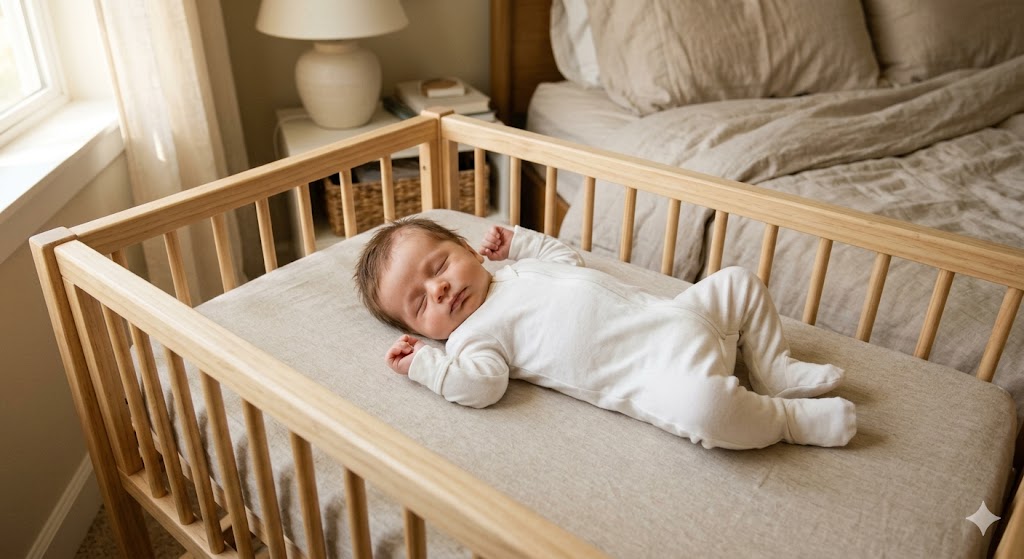
Let’s be real for a second—I’m typing this with one hand while my third cup of coffee goes stone-cold on the counter (again), and I just noticed a suspicious smear of mashed sweet potato on my forehead. Or maybe it’s carrot? Honestly, who knows. If you’ve landed here, you’re probably right in the ‘thick of it,’ frantically trying to set up a safe sleep environment for newborns at home while running on zero fuel. You’re beyond exhausted, your Google search history is a frantic, 3 AM mess of ‘is this weird baby breathing normal?’, and you’d honestly trade your left arm for just four consecutive hours of shut-eye. Just four. Is that too much to ask?
Welcome to the club. It’s a wonderful, messy, slightly terrifying club we never quite feel prepared for, no matter how many books we read.
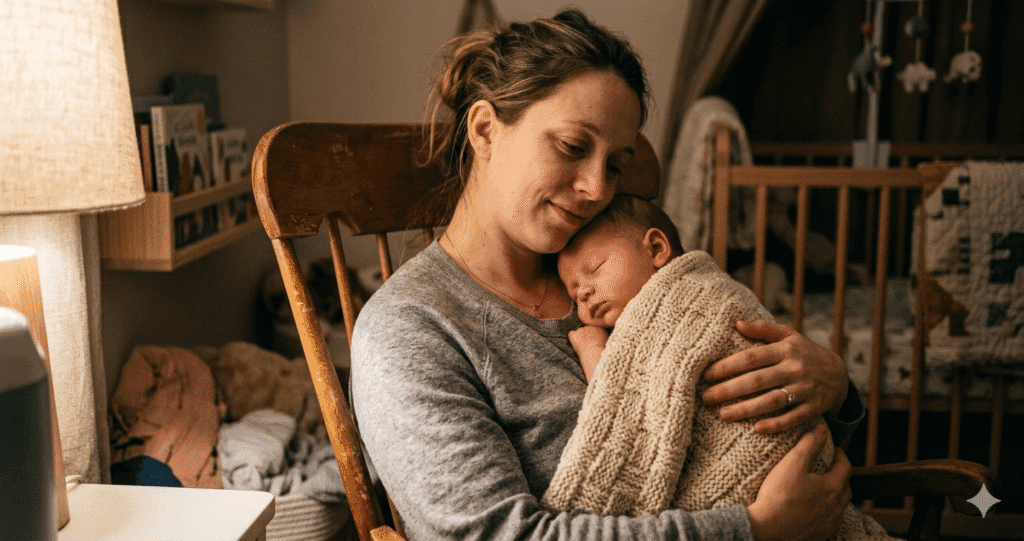
When I brought my little one home to our place in Georgia, I had all these Pinterest-perfect, aesthetic ideas about a nursery—you know the ones, filled with plush pillows, heirloom blankets, and cute stuffed animals everywhere. Then reality hit me like a freight train. The sheer, heavy weight of responsibility for this tiny human’s safety at night… it’s enough to keep any new parent wide awake, even in those rare moments when the baby is actually, miraculously sleeping. It’s like you’re sleeping with one eye open anyway, right?
That’s why I felt I had to put together this massive guide. We need to talk about creating a safe sleep environment for newborns at home without the fluff, without the judgy “perfect mom” tone, and just give you the cold, hard facts. This isn’t just about “getting more sleep” (though God knows we’re all dying for it); it’s about the scary stuff—preventing sids in the fourth trimester—and making sure we can all close our eyes without that constant, nagging knot of anxiety in our stomachs.
The Emotional Toll (aka Survival Mode is Real)
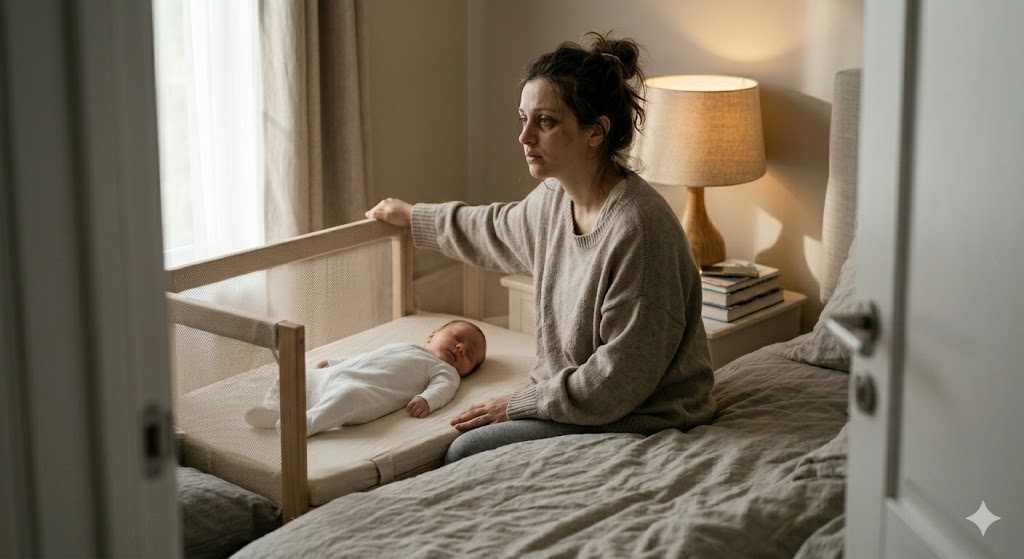
Before we get into the technical, “how-to” part, let’s just acknowledge the elephant in the room: Sleep deprivation is legit a form of torture. I’m not even joking.
In those first few weeks, you aren’t just tired; your brain literally stops working. You forget basic words (like “remote” or “keys”), you burst into tears because you dropped a spoon, and you find yourself staring at your baby’s chest for twenty minutes straight just to watch it rise and fall. Is she breathing? Yes. Okay. Wait, is she? This heightened anxiety? It’s natural, but it makes following safe infant sleep practices for new parents feel like some high-stakes final exam you never even studied for.
I remember my own “breaking point” during those first blurry weeks. I was sitting there staring at the monitor, my eyes burning from the blue light of my phone as I obsessively checked my SEO rankings for this very blog—because apparently, work-brain never shuts off—while simultaneously panicking if the baby’s slight whistle while breathing was “normal” or an emergency. I felt like a technician trying to reboot a complex system without a manual. You feel so incredibly alone in that 3 AM darkness, but I promise, every other mom is staring at the same shadows right now, wondering the exact same thing.
Safety isn’t about being a “perfect mom” (spoiler: she doesn’t exist, she’s a myth). It’s about building a solid system that protects the baby when you are at your absolute weakest and can barely remember your own name.
The “Un-Fancy” Rules I Actually Live By
Look, if your brain is currently fried and you can only remember one thing from this whole caffeinated rant, let it be this: keep it simple. We’ve all heard those rigid rules, but here’s how they actually look when you’re half-dead from exhaustion at 4 AM.
First off, the “Alone” thing. This was the hardest for me because a bare crib looks so… sad? I wanted to put the cute stuffed giraffe or that soft, knitted blanket in there. But honestly, your baby doesn’t care about aesthetics. “Alone” means zero friends in the crib. No bumpers (seriously, ignore the “breathable” marketing BS), no pillows, and definitely no blankets. It looks cold and empty to us, but for them, it’s just a sanctuary of clear, unobstructed airways. No clutter. Just the baby.
Then there’s the “Back Sleep” battle. Getting a newborn sleeping on back on firm mattress is the single most important thing you can do to lower the SIDS risk. Period. End of story.
I’ll be totally honest—when we first got home from the hospital, I spent hours propping her up with a rolled-up towel because I was terrified she’d choke on reflux. I’d seen so many weird “hacks” on TikTok and it completely messed with my head. But then I actually looked at the science, not the “influencer” advice. Even when she’d grunt and wiggle like a little worm, I had to fight the urge to “fix” her. Keeping a newborn sleeping on back on firm mattress is basically a mental wrestling match between your anxious gut and actual safety guidelines.
And for everyone worrying about the “Choking Myth” (I was one of them!)—the anatomy is actually on our side. Gravity keeps the gross stuff down in the esophagus when they’re on their back. So yeah, back is always best.
Lastly, they just need their own Space. A crib, a bassinet, whatever—as long as it’s a real, flat surface that meets safety standards. I know the sofa looks comfy and those “lounger” nests look like a dream, but they’re not for sleeping. And your bed? I know it’s tempting when you just want to snuggle and pass out, but it’s just not worth the risk.
The Anatomy of a Safe Crib (The “Bare” Truth)
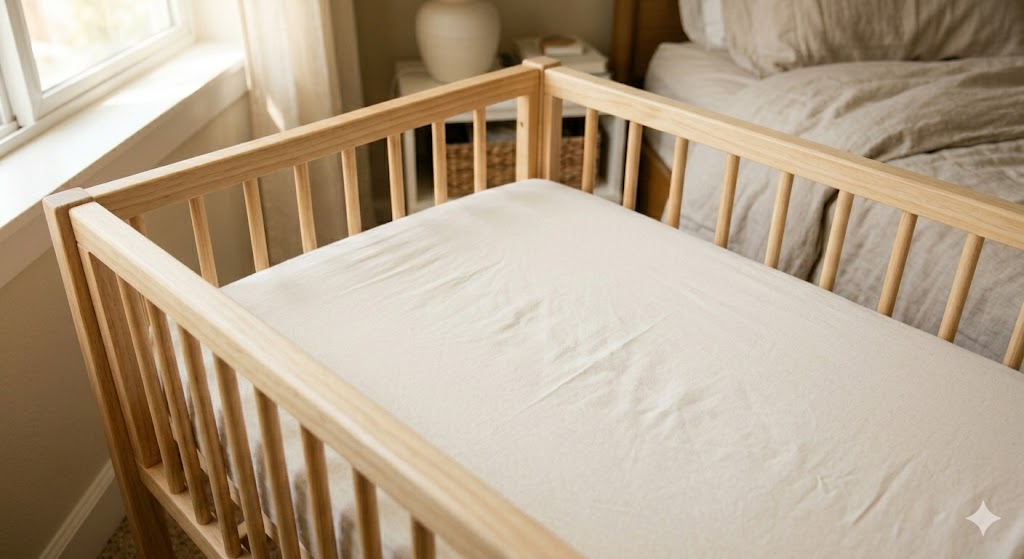
Let’s talk about the furniture. You don’t need a $1,000 designer bassinet that matches your curtains. You just need a safe one.
The Mattress Matters
A newborn sleeping on back on firm mattress is a total dealbreaker. What does “firm” even mean? If you press your hand down and it leaves a little dent, it’s too soft. It should feel more like a firm yoga mat than a fluffy cloud. Soft surfaces can conform to a baby’s face if they turn, and that leads to suffocation. It’s that simple and that scary.
The “Bare” Rule
I know, I know—those “knot” bumpers and “nest” loungers look amazing on Instagram and in those nursery reveals. But for preventing sids in the fourth trimester, they are straight-up dangerous.
I actually had to return this gorgeous, hand-knitted blanket my aunt gave me—well, I didn’t “return” it to her because that would be awkward, I just tucked it deep in a drawer for when she’s much older. It felt heart-wrenching because I wanted her to be “cozy,” but every time I looked at those loose threads, I saw a hazard, not a cute decoration. Creating a safe sleep environment for newborns at home often means choosing boring safety over the aesthetic you’ve spent nine months dreaming about during all those ultrasound appointments.
Room-Sharing vs. Co-Sleeping: The Hard, Honest Truths
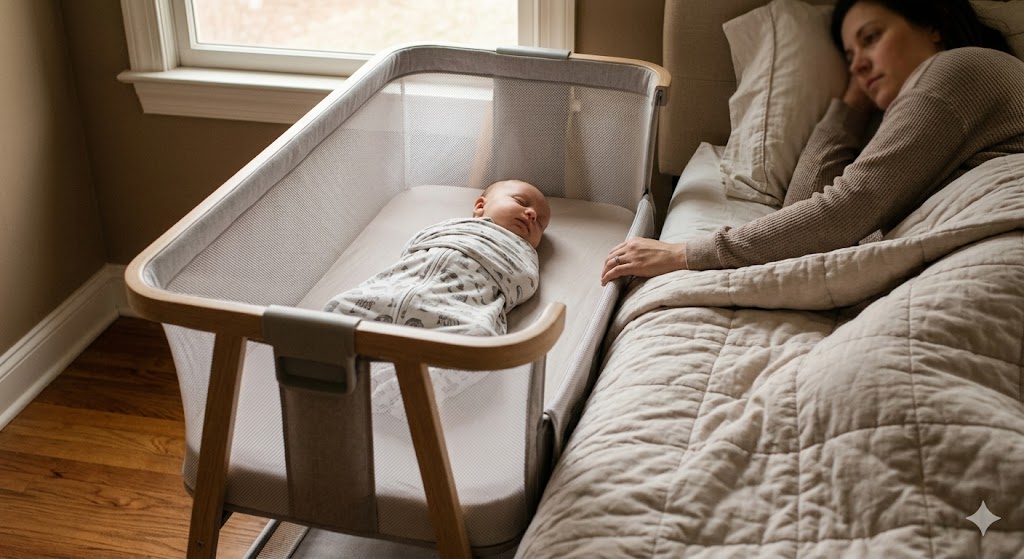
This is where the “mom guilt” usually starts to kick in, so let’s breathe. Room-sharing—having the baby in their own bassinet in your room—is highly recommended for at least the first six months. It makes those zombie-like middle-of-the-night feedings easier and it’s proven to decrease the risk of SIDS by half.
Co-sleeping or Bed-sharing, though? That’s where the risk skyrockets.
I get it. You’re nursing, you’re beyond exhausted, and it’s so tempting to just let them drift off next to you so you don’t have to get up for the tenth time. But adult beds are death traps for tiny newborns. Our mattresses are too soft, our duvets are too heavy, and we—the parents—can roll over in a deep sleep without ever realizing it. If you find yourself nursing in bed because you’re too tired to stand, clear the bed of pillows and blankets just in case you doze off. But the goal? Move them back to their own space the second they’re done.
Temperature Control: Not Too Hot, Not Too Cold
Did you know that overheating is a major risk factor for SIDS? Newborns are just terrible at regulating their body temperature.
- The Room Temp: Aim for 68–72°F (20–22°C). If you’re comfortable in a t-shirt, they probably are too.
- The “One Extra Layer” Rule: Generally, babies need just one more layer than you’re wearing.
- Check the Chest: Don’t trust their hands or feet; they’re almost always cold. Feel their chest or the back of their neck. If they’re sweaty, pull a layer off immediately.
Swaddling Safety: The “Straight-Jacket” Debate
Swaddling is a total lifesaver for preventing sids in the fourth trimester because it stops that startle reflex from waking them up every five minutes. But you have to do it right:
- Hip Healthy: Snug on top, loose on the bottom so their legs can flop like a frog.
- The “Two-Finger” Rule: You should fit two fingers between the swaddle and their chest.
- The Roll-Over Rule: The very second your baby shows signs of trying to roll—the swaddle is over. No exceptions. Time to switch to a sleep sack!
Why “Back is Best” (And Dealing with the “Flat Head” Panic)
I’ve hammered the newborn sleeping on back on firm mattress point, but I have to mention the “Flat Head” fear because I know you’re worried about it. I was too. Yes, back-sleepers can get a flat spot. But guess what? A flat head can be fixed with tummy time or a helmet; SIDS cannot be fixed.
To prevent it, just do plenty of supervised tummy time when they’re awake and rotate which end of the crib you put their head in each night. It’s a small price to pay for a safe sleep environment for newborns at home.
The Danger of “Non-Sleep” Surfaces
- The Swing: If they fall asleep in the swing, move them. Their heavy heads can flop forward and literally cut off their airway. It’s called positional asphyxiation and it’s terrifyingly silent.
- The Car Seat: They’re for the car. When a car seat is on the floor, the angle is different and it can become dangerous for a sleeping baby. Safe infant sleep practices for new parents mean realizing that just because they’re quiet doesn’t mean they’re in a safe spot.
The “Fourth Trimester” Survival Mindset
We are bombarded with these fake, filtered images of what motherhood should look like. But when it comes to safe infant sleep practices for new parents, function has to beat fashion every single time.
Trust me, as someone who is currently balancing a 5-month-old’s feeding schedule while trying to monetize this very blog, I know that “correct” isn’t always “easy.” There were nights when the only way she’d settle was if I hummed a specific song for forty minutes straight while swaying in the dark like a crazy person. You do what you have to do to survive, but you keep those safety walls up because they are the only thing that lets you actually drift off when you finally get the chance.
The goal of a safe sleep environment for newborns at home isn’t to make your life harder—it’s to create a baseline of safety so when the chaos happens, your baby is protected. Be kind to yourself. You’re doing a huge, exhausting job.
Hungry for more (or just need more distractions)?
If you found this helpful (or if your baby finally fell asleep and you’ve got five minutes of peace), check out some of my other “mom-life” survival guides:
- 5 Months: The Age of “I Want Everything But I Can’t Crawl Yet” — 10 Lazy Mom Games to Save Your Sanity – Because keeping them entertained is a whole different battle.
- The Yogurt Face, Gallstones, and My 2 AM Fat Panic: Why I’m Done Forcing It – My raw and messy journey with introducing solids.
- Easy 6-Month-Old Baby Feeding Schedule: A Stress-Free Guide to Starting Solids – For when you’re ready to tackle the high chair drama.
Disclaimer
I’m just a mom in the trenches, a marketer, and a blogger—not a doctor, pediatrician, or certified sleep expert. This is based on my own obsessive research and experience with preventing sids in the fourth trimester. Always, always talk to your pediatrician for real medical advice and to stay up-to-date on safe infant sleep practices for new parents for your specific baby. Don’t take a blogger’s word over a doctor’s!