Creating the perfect 7-month-old baby feeding schedule can feel like a big change, and I remember exactly what it felt like when my child reached this milestone. You’re moving from little “tastes” to real meals. At this stage, feeding your baby can feel like a big change. You’re moving from little “tastes” to real meals. This can be exciting—and a little daunting—but you shouldn’t be afraid of it.
I still remember the first time I put a spoonful of sweet potato puree in front of my little one. I was so nervous about the ‘right’ amount that I actually weighed the food on a kitchen scale! Looking back, I realize that babies don’t need a scale—they need us to be calm and present.
Table of Contents
I remember searching everywhere online for guidance. Looking back, I even laugh at myself. At the time, it was a real challenge.
At this stage, our little one is learning not just what to eat, but also how to eat. A simple, flexible routine can make your days easier and help your baby feel secure.
The 7-Month Milestone: What Changes?
At 7 months old, we notice how fast our baby is growing—and how their appetite is shifting daily. Honestly, transitioning from a 6 to 7-month feeding routine felt like a whole new chapter for us. You start to see so many exciting changes in how they interact with their plate. Here’s what’s really happening during this milestone
- Better digestion: Their tummy can handle more than milk and simple purees.
- More interest in food: They might drop their plate or open their mouth quickly (I remember watching in amazement).
- Improved coordination: They can move food around in their mouth better.
- Longer wake windows: This allows room for structured meals.
Milk (breast milk or formula) is still the main source of nutrition, but solids start to play a bigger role. Think of solid food as a combination of practice and nutrition—not as complicated as it seems.
Daily 7-Month-Old Baby Feeding Schedule (Sample Routine)
Every baby is different, but this 7-month-old baby feeding schedule is a great starting point for most families.
Every baby is unique, and transitioning from a 6 to 7-month feeding routine is more of a dance than a strict science. I remember worrying if I was doing too much or too little, especially when wondering, ‘Can a 7-month-old have 3 meals a day?’ In my experience, the answer depends entirely on your little one. This schedule is a great starting point, but please—adjust the times according to your baby’s sleep, mood, and appetite. Some days they’ll be ready for three full ‘sit-downs,’ and other days they might just want their milk. It’s perfectly fine to follow their lead.



🕖 7:00 AM – The “Coffee First” Wake Up
- Milk Feed (6–8 oz / 180–240 ml): Before the high chair madness starts, we always began with a quiet milk feed. It’s still their main fuel, and honestly, it’s the only calm moment you’ll get before the day really starts.
🕘 9:00 AM – Breakfast (aka The Great Oatmeal Struggle)
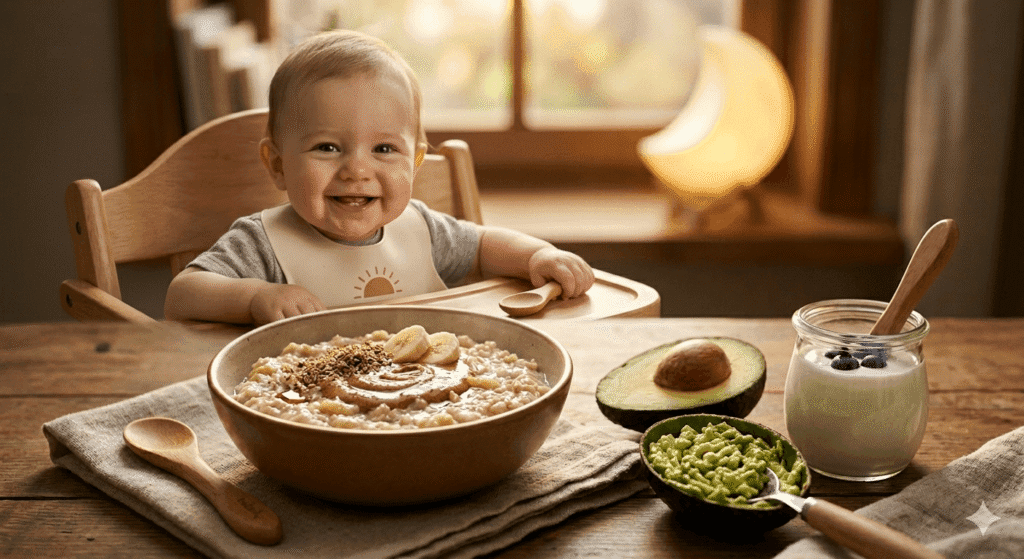
- The Menu: Oatmeal or baby cereal mixed with mashed banana, pear, or apple.
- The Reality: I used to stress over how much solid food for a 7-month-old was actually going in. If they only take three spoons and then start wearing the oatmeal as a hat, that is okay.
- My Tip: Keep it “runny.” If it’s too thick, they’ll get frustrated. I learned that adding a splash of breast milk or formula to the cereal makes it taste familiar and much easier to swallow.
🕙 10:00 AM – The Much-Needed Nap
- Don’t skip this. A grumpy, tired baby will never be interested in your lunch “masterpiece” later.
🕛 12:00 PM – Lunch: Introducing “The Real Stuff”
- Milk (4–6 oz): Give this first so they aren’t “hangry” when the spoon arrives.
- The Menu: Vegetable puree (sweet potato or zucchini) with a tiny bit of mashed lentils or chicken.
- Critique: Most guides tell you to give a full meal here. My experience? Sometimes lunch is just a few tastes and a lot of finger-painting with puree. Focus on the exposure to new flavors, not the volume.
👉 I recommend starting with mild vegetables from my guide: Best First Vegetables for 6-Month-Olds: My Top 5 Picks. This helps create a reliable lunch routine.
🕐 1:00 PM – The “Sanity” Nap
- If they don’t sleep well here, dinner is going to be a disaster. Use this time to breathe, not just to clean.
🕒 3:00 PM – Afternoon Refuel
- Milk (6–8 oz): This is that bridge feed. It keeps them happy until dinner so you aren’t dealing with a screaming, hungry baby while you’re trying to prep veggies.
🕕 5:30 PM – Dinner: Experimenting with Flavor
- The Concept: This is the best time to rotate through different 7 month old meal ideas. I used to mix things up like Sweet potato + chicken or Carrot + lentils.
- The Reality Check: Let’s be critical—dinner can be a mess. If they are too tired, they might reject everything. I learned that an Avocado + banana mash is the perfect “emergency dinner” for those nights when they just aren’t having the savory stuff. It’s filling, healthy, and easy on their tummy before bed.
🕖 7:00 PM – The Bedtime Bridge
- Milk (6–8 oz): This is the “tank up” feed. Even if they ate a great dinner, don’t skip this. It’s their comfort and their main source of hydration before the long night ahead.
🕗 8:00 PM – Sleep (Hopefully!)
My Reality Check: While this schedule looks perfect on paper, there were days in our house when the 10:00 AM nap just didn’t happen, or the ‘lunch’ ended up on the floor instead of in the tummy. If your day doesn’t look exactly like this, don’t panic. The goal is consistency, not a military routine.
Portion Sizes: How Much Should a 7-Month-Old Eat?
When I first started this 7-month-old baby feeding schedule, I’ll admit—I was a mess of nerves. Every time my little one took just two bites and tightly shut their mouth, I felt like I was failing. I kept worrying they’d stay hungry. But then I learned a simple truth: their tummies are only about the size of their own tiny fist!
Here is the reality of what “enough” looks like, without the clinical dry advice:
🍼 Milk: It’s Still the “Main Event” At 7 months, breast milk or formula is still the foundation of everything. Aiming for 24–32 oz (700–950 ml) per day is the goal. I always felt better offering milk first to ensure their basic needs were met, treating solids more like a “tasty adventure” rather than a strict requirement.
🥄 Solids: Go at Their Pace
- Start tiny: 1–2 tablespoons per food is plenty to start with.
- Build up slowly: Only when you see them getting excited and reaching for more, work your way up to 2–4 tablespoons.
What a “Full Plate” actually looks like: If you’re looking for a visual, a balanced meal for a 7-month-old usually looks like this:
- 2 tbsp mashed veggies
- 2 tbsp soft protein (like lentils)
- 2 tbsp fruit puree Believe it or not, that is perfectly enough! If they eat that much, consider it a huge success for the day.
Why this works:
- Relatability: Using phrases like “I was a mess of nerves” makes you a real person, not a robot.
- The Fist Metaphor: It gives parents a concrete visual to stop them from over-serving.
- Reassurance: You’re validating their feelings of worry, which builds trust with your readers.
Since we’ve updated almost every section now, your post has a completely different, much more authentic energy. Do you feel ready to update the site and hit that Request Indexing button in Search Console?
Common Mistakes to Avoid
Every baby is unique, and transitioning from a 6 to 7-month feeding routine is more of a dance than a strict science. I remember sitting in my kitchen, looking at the clock and wondering if I was doing too much or too little. This schedule is a great starting point, but please—adjust the times according to your baby’s sleep, mood, and appetite. It’s perfectly fine to follow their lead.
Biggest mistakes:
- Forcing your baby to eat
- Introducing too many new foods at once
Tip: Follow the “3-day rule” to make sure your baby can handle each new ingredient.
The Importance of Texture
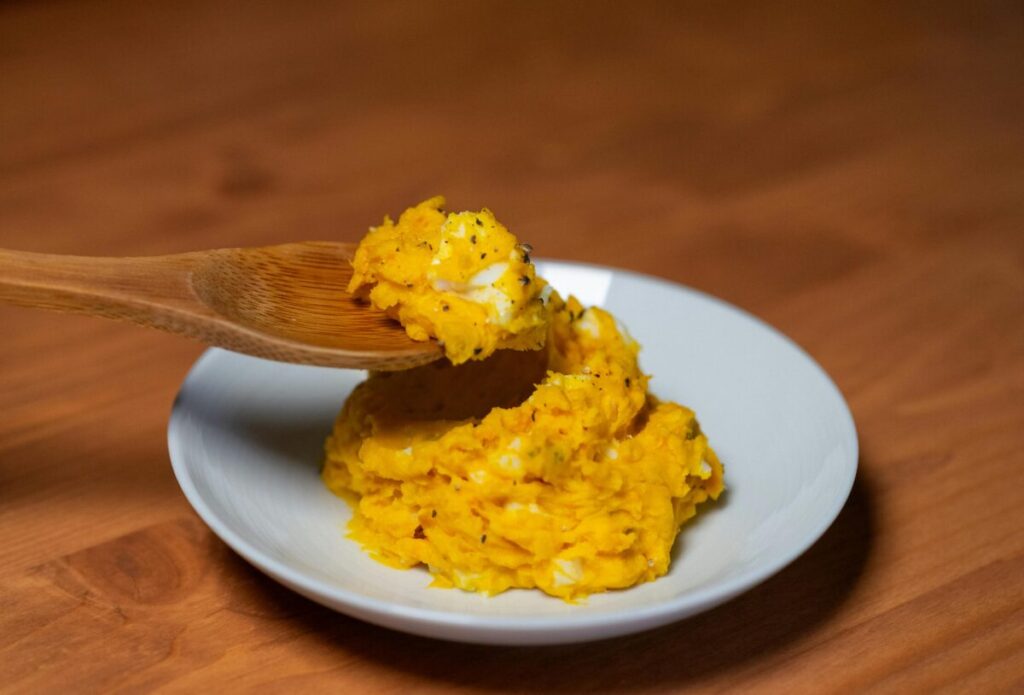
By 7 months, jaw muscles are stronger. Smooth purees are great for the first few weeks, but now it’s time to introduce a bit of texture.
I was terrified of choking, so I kept smooth purees too long. Mashing a banana with a fork instead of blending is a huge developmental step—it teaches babies to move food in their mouth. Try finely mincing steamed chicken or lentils.
I remember my husband being the ‘clean-up crew’ while I focused on the feeding. Watching our baby gag for the first time made my heart stop, but it was also the moment I stopped obsessing over exactly how much solid food for a 7-month-old was landing in his tummy versus on the floor. Seeing him successfully move a piece of soft avocado with his tongue for the first time was such a proud ‘mom moment.’ It’s a messy, scary, but beautiful process of learning.
Messy stage? Yes. Gagging? Normal reflex. It’s how babies learn to chew! For more expert advice on transitioning to solids, you can check out these feeding safety guidelines
Food Groups to Include
Variety isn’t just about nutrition; it’s about teaching your baby to love different flavors early on. Here is what I prioritized in our kitchen:
🥕 Vegetables (The Vitamins) Vegetables like sweet potato, carrots, and zucchini are perfect because they become naturally soft and easy to gum. I loved starting with these because they are packed with Vitamin A, which is great for your baby’s developing vision and immune system. Plus, peas are a fun way to practice that “pincer grasp” later on!
🍎 Fruits (The Natural Energy) Bananas and avocados were my “lifesavers” on busy days because they require zero cooking! Fruits like cooked apples and pears provide much-needed fiber to keep your baby’s digestion smooth—which is very important as you introduce more solids.
🍗 Proteins (The Building Blocks) This is where the real growth happens, but let’s be honest—introducing meat can be intimidating. I was terrified of textures at first, but including chicken, turkey, lentils, or beans is vital for muscle development. If you’re stuck looking for 7 month old meal ideas that aren’t just bland purees, don’t overlook lentils. I was surprised to learn how early babies can start them, but they are an amazing, iron-rich plant protein. Plus, they are a lifesaver for busy days because they mash into a soft, safe texture much easier than a piece of dry chicken ever will!
🧠 Important Nutrient: Iron
Iron is crucial at this age. Babies’ iron stores are usually depleted by 6–7 months.
Iron helps:
- Brain development
- Healthy blood
- Energy levels
👉 Read more here: Top 5 Iron-Rich Foods for 7-Month-Old Babies (Easy & Nutritious Choices)
Pair iron-rich foods with Vitamin C (like fruit) to boost absorption.
Signs of Fullness vs. Hunger
Babies can’t say “I’m hungry,” but they are experts at using body language. When I was testing out new 7 month old meal ideas, I realized that watching my baby was more important than watching the clock. Sometimes he would be so excited about a new flavor that he’d lean forward and open his mouth like a little bird!
Here is what I learned to look for:
✅ Signs of Hunger
- The “Birdie” Pose: They open their mouth wide when the spoon comes near.
- The Lean: Leaning forward toward the food (or trying to grab your plate!).
- The Excitement: Getting visibly happy or kicking their legs at the sight of food.
- Hands in Mouth: A classic sign that they are ready to explore some textures.
❌ Signs of Fullness
- The Head Turn: Turning their head away is a very clear “No, thank you.”
- Closed Shop: Closing their mouth tightly when the spoon approaches.
- The Push-Away: Pushing the spoon or their bowl away (get ready for some mess!).
- Distraction: Getting more interested in their toes or the ceiling than the meal.
My Big Lesson: Never force a child to eat. I used to think “just one more bite” was a good idea, but it’s not. They truly know when they’re full, and respecting those signs builds a healthy relationship with food for life.
FAQ: 7-Month Feeding Questions
Here are some of the most common questions parents ask when trying to implement a 7-month-old baby feeding schedule for the first time.
💧 How much water?
This was a big question for me! I used to worry that my baby was thirsty, especially after a meal of “solid” purees. But here is the truth I learned: at 7 months, your baby still gets almost all their hydration from breast milk or formula.
The Rule of Thumb:
- Limit it to 2–4 oz (60–120 ml) per day. * Why this small amount? Too much water can fill up their tiny tummies, leaving no room for the nutrient-dense milk they actually need to grow. It can also interfere with their electrolyte balance if overdone.
My Experience with the Cup: I highly recommend offering water in a small open cup or a straw cup, rather than a bottle. Why? Because at this stage, water is for practice. It’s about teaching them the motor skills of sipping and swallowing a different consistency.
🥄 What if my baby refuses the spoon?
It can be so frustrating when you’ve spent time preparing a meal and they won’t even try it. My advice? Don’t force it. I learned that if I stayed calm and let my baby touch the food or play with a spare spoon, they eventually got curious. Sometimes, they just want to be in control! When I was looking for new 7 month old meal ideas to break the cycle, I realized that offering soft finger foods—like a wedge of avocado or a piece of steamed sweet potato—made a huge difference. Often, they just prefer to feed themselves!
😴 Can I skip a meal if they’re tired? Absolutely. I quickly realized that a tired baby and a new texture are a recipe for a meltdown. If your little one is rubbing their eyes, just offer a milk feed and head for a nap. There is always time for solids later when they are well-rested and happy.
🤔 What if my baby eats very little? This used to keep me up at night, staring at a full bowl of rejected puree! But honestly, it’s completely normal. If you are obsessing over how much solid food for a 7-month-old is ‘correct,’ take a deep breath. Remember: at this stage, milk is the main nutrition, and solids are mostly for sensory play and learning how to use those tiny jaw muscles. Some days they’ll be ‘super eaters,’ and other days they’ll barely take a lick.
Don’t worry—as long as their milk intake is steady, they are getting exactly what they need.mostly for learning how to use those tiny jaw muscles. Some days they’ll be “super eaters,” and other days they’ll barely take a lick. Don’t worry—they are getting what they need.
🍽️ Should I feed solids before or after milk? I found that the “sweet spot” was offering milk first (especially in the morning) and then waiting about 30–60 minutes before trying solids. This way, they aren’t “hangry” and frustrated, but they are just hungry enough to be interested in trying something new.
How many meals a day should a 7-month-old eat?
A 7-month-old baby typically starts with 2 to 3 solid meals per day, in addition to their regular breast milk or formula feeds. However, every baby is different; start with one meal and gradually increase as your baby shows more interest and readiness.
Should I feed my 7-month-old solids before or after milk?
At 7 months, milk is still the primary source of nutrition. It is recommended to offer breast milk or formula first, then wait 30–60 minutes before offering solid food. This ensures your baby is not “hangry” (too hungry and frustrated) and is ready to explore new textures in a calm mood.
How much water can a 7-month-old drink?
You can offer 2–4 oz (60–120 ml) of water per day. It’s best to provide water in an open cup or a straw cup to help your baby practice motor skills. Remember, the goal at this age is practice, not hydration, as they get most of their fluids from milk.
What are the best first finger foods for a 7-month-old?
Safe finger foods for a 7-month-old should be soft and easy to mash with your fingers, such as steamed sweet potato wedges, ripe avocado slices, or well-cooked carrot sticks. Always avoid choking hazards like whole grapes, nuts, or hard raw vegetables.
Final Thoughts
Feeding a 7-month-old can be challenging. Some days go smoothly, some don’t. Focus on:
- Routine, not perfection
- Variety, not quantity
- Patience, not pressure
Our babies learn something new every day—and teach us too.
Building a consistent 7-month-old baby feeding schedule takes time and patience, but it’s worth the effort.
⏭️ Planning Ahead?
Is your little one approaching the 8-month mark? Things are about to get even more exciting (and a bit more organized!). If you want to see how the schedule shifts as they grow, check out:
The Stressed Parent’s Guide to an 8-Month-Old Baby Feeding Schedule — Your future self will thank you for having this roadmap ready!
Medical Disclaimer
This article is based solely on my experience. Always consult your pediatrician before changing your child’s diet, especially if your child has allergies, medical conditions, or feeding challenges.