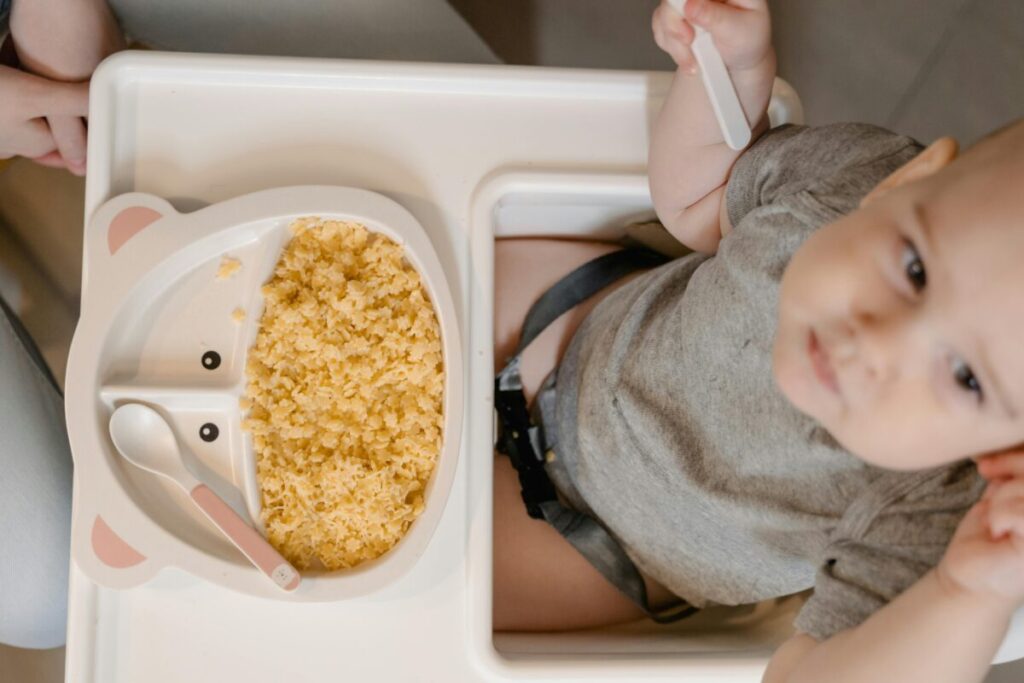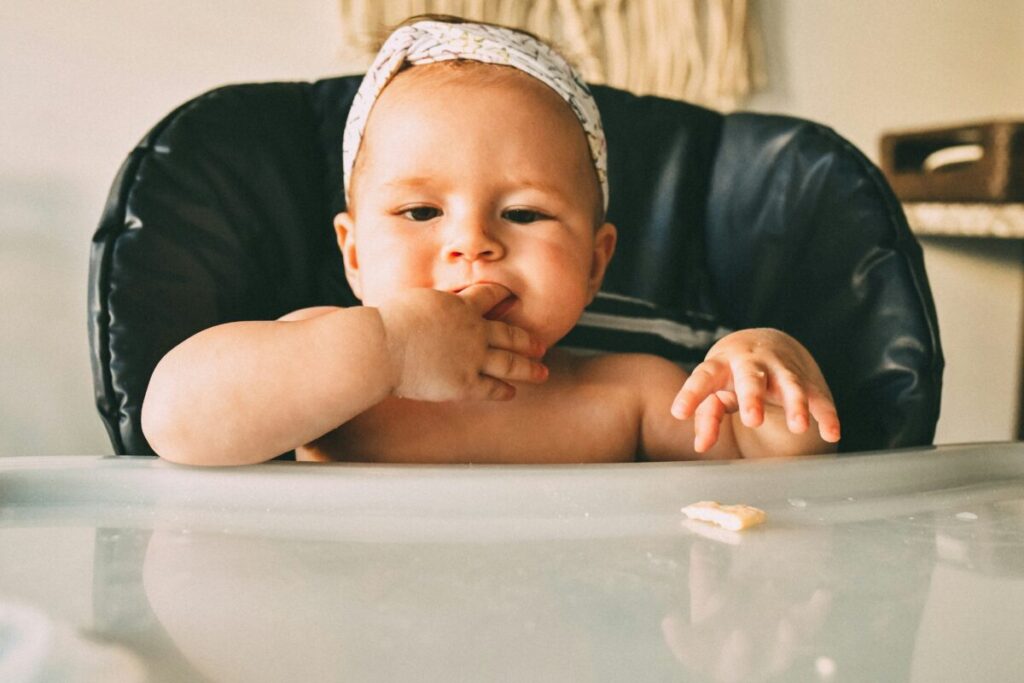
If you’re wondering how to organize your day, a solid 8-month-old baby feeding schedule is the secret to keeping your sanity while introducing new flavors.
The “Food Kindergarten” phase is officially over! If you feel like you just finally got the hang of those first tiny spoonfuls of carrot puree, only to realize your baby is now eyeing your avocado toast with newfound intensity, you aren’t alone. Navigating a predictable 8-month-old baby feeding schedule can feel like a big leap, but I promise, it’s the start of the most fun chapter yet.
At six months, it was all about the “first taste” and sensory exploration. But at eight months? The game changes. We are moving from mere exploration to actual nutrition, thicker textures, and the exciting (albeit messy) world of finger foods. If you’ve been following my [6-month schedule], you know we started slow. Now, we’re picking up the pace.
In this guide, I’m going to break down exactly how to transition your little one to a more robust 8 month old meal plan, which nutrients actually matter right now, and how to survive the “splat factor” on your kitchen floor.
Table of Contents
The Big 8-Month Transition: What’s Changing?
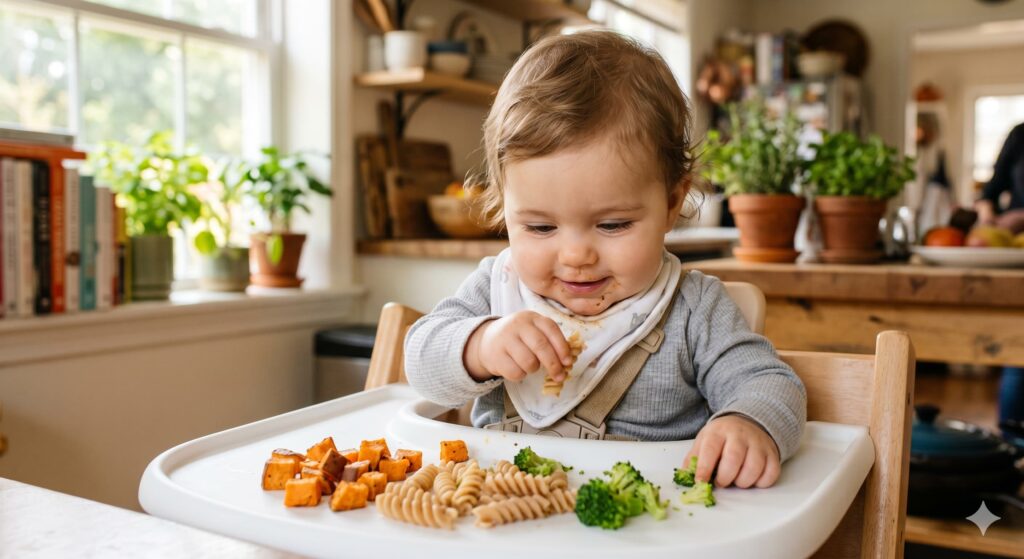
By eight months, your baby’s digestive system and motor skills are having a major “level up” moment. You’ll notice they aren’t just swallowing; they are actively chewing (even with naked gums!) and trying to grab the spoon from your hand.
If you’re coming here from our [7-Month-Old Baby Feeding Schedule], you’ll notice that while the foundation is similar, the focus is now shifting toward more independence and texture.
Around this age, a few big things start happening all at once:
- Increased Textures: We are moving away from completely smooth liquids toward mashed and chunky consistencies. This is vital for speech development and oral motor skills. Moving to chunkier foods is a major milestone in your 8-month-old baby feeding schedule as it helps strengthen their jaw muscles.
- Finger Foods and the Pincer Grasp in an 8-Month-Old Baby Feeding Schedule: This is the adorable (and functional) milestone where your baby starts using their thumb and forefinger to pick up objects. This makes finger foods for 8 month old babies a primary focus.
- Establishing a 3-Meal-a-Day Rhythm: While milk is still the main event, we are now aiming for three consistent solid meals a day to mimic a family eating pattern.
Essential Nutrients for an 8-Month-Old
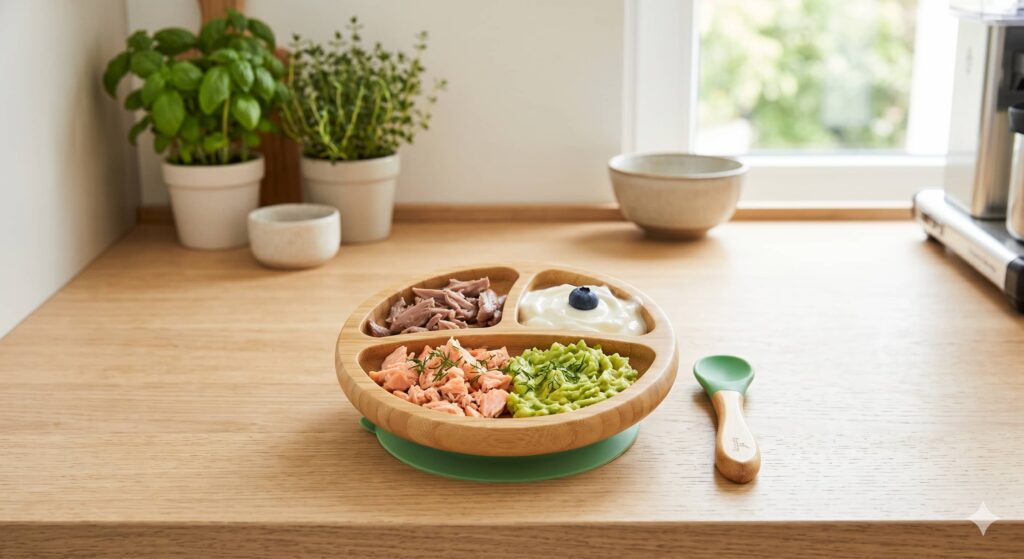
When you start an 8-month-old baby feeding schedule, iron and healthy fats become your top priority. As your baby becomes more active—scooting, crawling, or pulling up—their nutritional needs increase. If your little one has suddenly turned into a tiny athlete and you want to know what’s driving this physical explosion, check out my guide on [The “Cruising” Stage: Why Your Baby is Using Your Sofa as a Treadmill (And How to Survive It)] to balance their newfound energy. Here’s what I personally try to focus on around this stage:
Iron: The Brain Builder
By 8 months, a baby’s natural iron stores (from birth) have depleted. While iron-fortified cereals are okay, we want to prioritize iron-rich whole foods. Think finely minced dark poultry, lentils, beans, and even egg yolks. Iron is the fuel for their rapidly growing brain.
Providing enough iron is one of the most critical goals of any 8-month-old baby feeding schedule, as it supports rapid cognitive growth.
Omega-3 (DHA/EPA): The Cognitive Spark
Fat is a baby’s best friend. Omega-3 fatty acids are essential for vision and brain health. I love introducing smashed avocado or very finely flaked, low-mercury fish like wild-caught salmon into their 8 month old meal plan.
Calcium & Vitamin D: The Bone Support
As they prep for those first steps, bone density is key. Since they aren’t drinking cow’s milk yet, they get this from breast milk/formula, but you can also introduce full-fat plain Greek yogurt or cottage cheese for an extra calcium boost.
From Puree to Mash: The Great Texture Evolution
If we stay on smooth purees for too long, babies can sometimes become “texture averse.” Eight months is the window of opportunity to challenge their palate. So how do you actually move past purees without it turning into chaos?
Transitioning textures is a huge part of your 8-month-old baby feeding schedule journey.
Mashed with a Fork
Instead of the blender, use a fork. Whether it’s sweet potato, banana, or avocado, leave some small, soft lumps in the mix. This teaches them that food requires a little “munching” before swallowing.
Soft Chunky Mixes
Start combining textures. Try mixing a smooth yogurt with tiny bits of mashed raspberries, or a thick lentil dahl with some soft-cooked rice grains.
Introducing Soft Finger Foods
This is the big one! We start with foods that are squishable between your fingers. A classic example is a steamed broccoli floret. The “handle” of the stem makes it easy to grab, while the soft top provides a new sensory experience.
According to the American Academy of Pediatrics (AAP), introducing a variety of textures at 8 months is key to developing healthy eating habits.
Your Go-To 8-Month-Old Baby Feeding Schedule (Sample Day)
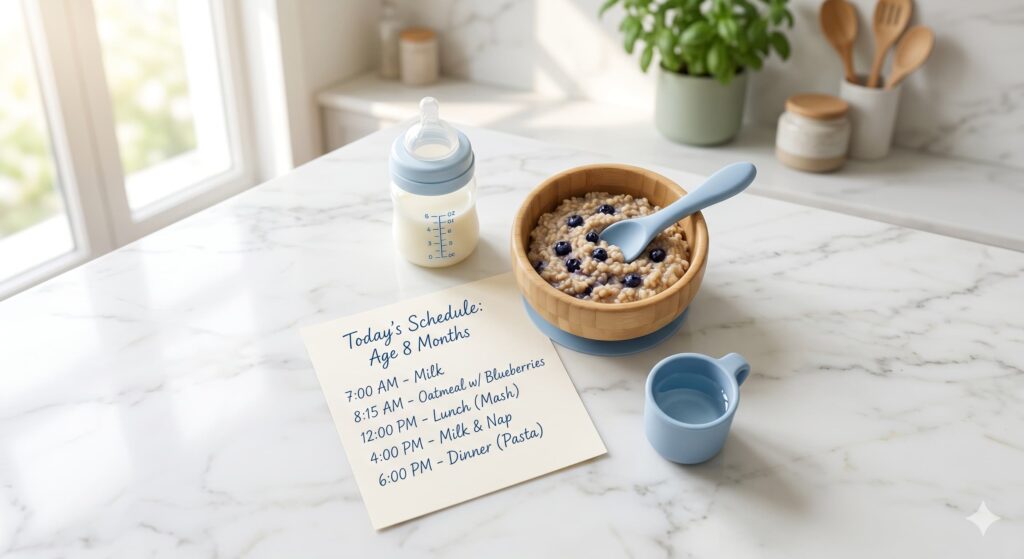
I know you’re busy, so let’s look at what a “real life” day looks like. Remember, this is a goal, not a rigid law. If a nap goes long or a tooth is coming in, the schedule will shift—and that is okay!
- 7:00 AM: Wake up & Milk. Breast milk or a 6-8 oz bottle.
- 8:30 AM: Breakfast. Solids (e.g., Oatmeal with mashed blueberries) + 1-2 oz of water in a straw or open cup.
- 10:00 AM: Nap 1.
- 11:30 AM: Milk. Breast milk or a 6 oz bottle.
- 12:30 PM: Lunch. Solids (e.g., Mashed beans and avocado) + Water.
- 2:00 PM: Nap 2.
- 3:30 PM: Milk. Breast milk or a 4-6 oz bottle.
- 5:30 PM: Dinner. Solids (e.g., Soft pasta with meat sauce) + Water.
- 7:00 PM: Bedtime Routine & Milk. Final breast milk or 8 oz bottle.
If you’re struggling with wake-ups despite a full tummy, you might find my guide on [Sleep Training & Nutrition: How to Help Your Baby Sleep Through the Night] incredibly helpful for those long nights.
Note on Water: At this age, water is “complementary.” We offer it with meals mainly to help with digestion and to teach the skill of cup-drinking. Don’t worry if they only take a few sips at first; water is just a supportive player in the overall 8-month-old baby feeding schedule.
Best 8-Month-Old Baby Food Ideas (Finger Foods & More)
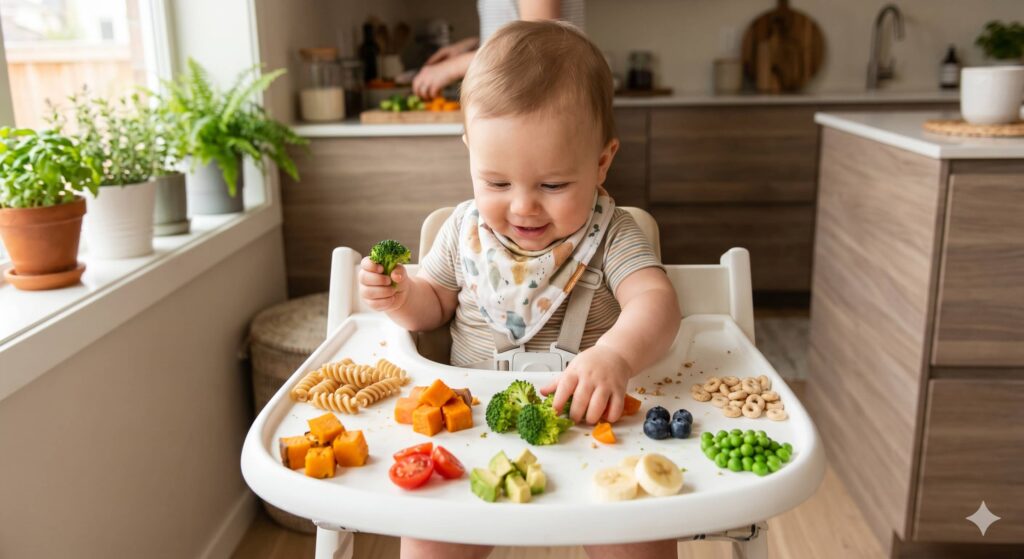
If you’re staring into your fridge thinking “what am I even supposed to make?” — here are a few easy ideas. If you are looking for even more inspiration to keep your menu fresh and healthy, check out my Lunchtime Power Mash: The Ultimate Guide to Nutritious Baby Meals (6–12 Months) for more combinations your little one will love.
The Oatmeal Berry Mix
Cook old-fashioned oats with water or a bit of breast milk/formula. Instead of pureeing the berries, smash them with a fork. It’s sweet, lumpy, and full of fiber.
This easy breakfast is a staple in any healthy 8-month-old baby feeding schedule, providing long-lasting energy for morning play.
Salmon and Sweet Potato Mash
Bake a sweet potato until very soft. Flake a tiny bit of cooked salmon into it. The sweetness of the potato helps balance the savory fish, and it’s an Omega-3 powerhouse.
Soft Pasta with Lentil Sauce
Use a large pasta shape (like fusilli) cooked slightly past al dente so it’s very soft. Toss it in a simple sauce of red lentils pureed with a bit of tomato. This is a great finger food for 8 month old exploration because they can grab the pasta easily. Pasta is a fun and easy way to introduce complex carbs into your 8-month-old baby feeding schedule while practicing those chewing skills.
Apple Oat Breakfast Bites
If you want to spice up your morning menu, you should definitely try our Healthy Apple Oat Breakfast Bites for Babies: A Mom-Tested BLW Recipe. These are perfect for little hands to hold, helping with fine motor skills while providing a nutritious, fiber-packed start to the day.
Finger Foods for the Pincer Grasp
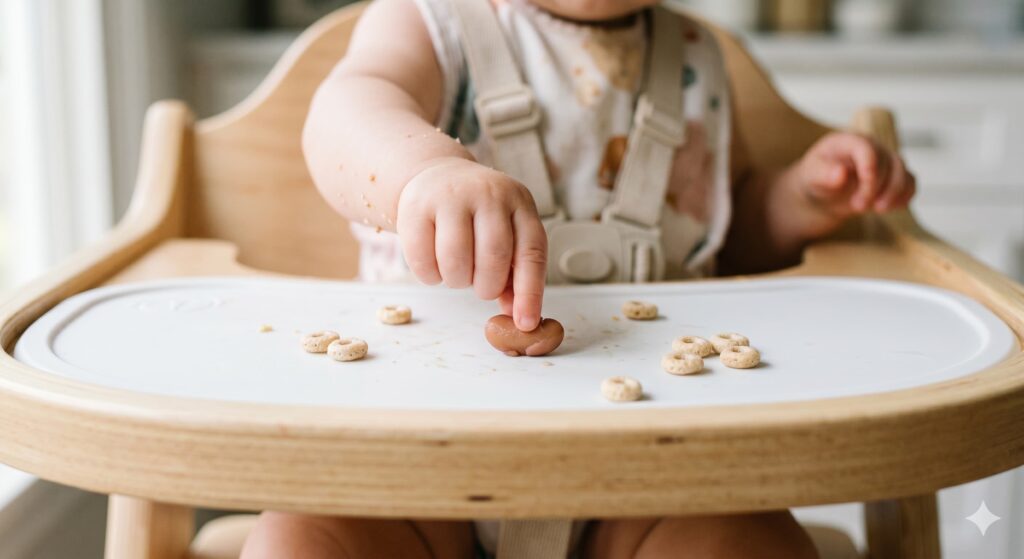
Around now, you’ll see your baby trying to pick up a single crumb with their thumb and index finger. This is the pincer grasp. To encourage this fine motor skill, offer small, soft pieces of food on their tray.
Safe options include:
- O-shaped toasted whole-grain cereal (that dissolves easily).
- Cooked beans (slightly flattened between your fingers).
- Soft-boiled carrot sticks (cut into the size of an adult finger so they can hold the “log”).
- Ripe pear or peach pieces (skin removed).
Encouraging your baby to pick up these tiny bits is not just fun; it’s a key milestone within your 8-month-old baby feeding schedule development.
8-Month-Old Feeding Challenges: What To Do When Baby Refuses Food
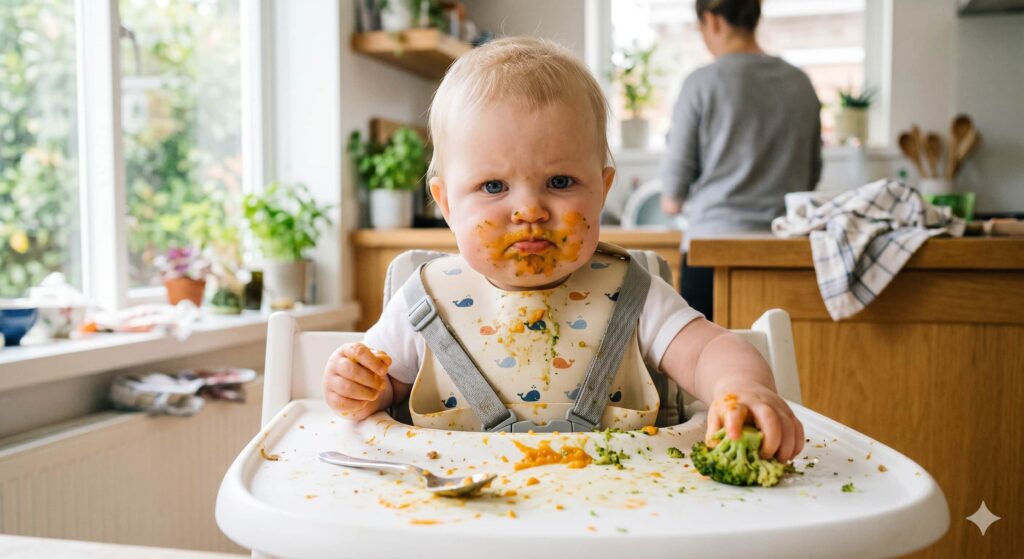
It’s easy to look at a perfect 8-month-old baby feeding schedule online and feel discouraged if your baby refuses to cooperate, but remember: every child is different.
Let’s be real for a second—some days are just hard. Here is the reality check:
“My Baby Only Wants Purees!”
If your baby gags or pushes away chunky food, don’t panic. Go back to a texture they like and add just one teaspoon of a thicker texture. Slowly increase the ratio. It’s a marathon, not a sprint.
The Mess is Back (And Worse)
At eight months, the “splat” is a feature, not a bug. They are learning gravity! It feels like a lot of cleaning, but this sensory play is how they learn to love food. A “splat mat” under the high chair is a lifesaver.
Accepting the mess as part of your 8-month-old baby feeding schedule will make the whole experience much more enjoyable for both you and your little one.
Gagging vs. Choking (The Recap)
Remember: Gagging is a loud, rhythmic reflex that helps your baby move food forward. Choking is silent and dangerous. As long as they are making noise and coughing, they are managing the situation.
Knowing the difference between gagging and choking can save a life. Review the Mayo Clinic’s safety guidelines for infant choking first aid.
Balancing Solids with Milk
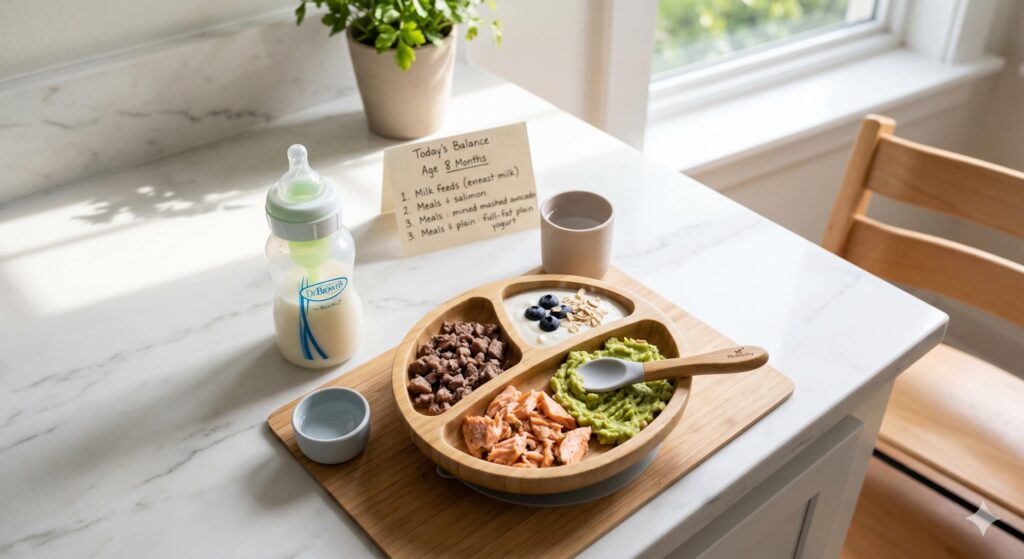
It is so easy to get caught up in the 8-month-old baby feeding schedule that we forget the liquid gold. At 8 months, breast milk or formula still provides the majority of their calories and hydration.
Solids are becoming more important, but they aren’t replacing milk just yet. Think of solids as the “bonus” nutrition while milk remains the foundation. If your baby takes fewer solids one day, don’t stress—they will make it up with their next bottle or nursing session.
Conclusion
Looking Ahead: Transitioning further can be tricky, but my guide on [The 8 to 12 Month Transition: How to Balance Solids, Milk, and Naps Without the Chaos] will help you stay ahead of the game. Mastering an 8-month-old baby feeding schedule isn’t about perfection; it’s about progress.
Transitioning to an 8-month rhythm is such an exciting time. You are moving away from being the “waiter” who feeds them to the “facilitator” who watches them discover the joy of eating. Whether you are doing Baby Led Weaning or traditional spoon-feeding, the goal is the same: a happy, curious eater.
Be patient with yourself and your kitchen floor. It’s a journey, not a race. Every baby moves at their own pace, and as long as they are growing and curious, Some days it’ll feel like a win. Some days… not so much. Both are normal.
From my kitchen to yours, you’re doing a great job, Mama and Papa!
What’s your little one’s favorite finger food right now? Are they a broccoli fan or a sweet potato lover? I’m curious—what’s your baby actually loving right now? (or refusing dramatically 😅)
Finding the perfect 8-month-old baby feeding schedule takes a little bit of trial and error, but you’re doing great!
Getting ready for the next big milestone? Check out my guide on The 9-Month-Old Baby Feeding Schedule: Hello Independence! to stay ahead of the game!
Disclaimer
Just a quick note—this is all based on my own experience (and a lot of trial and error 😅), not medical advice. Every baby does their own thing, so if something feels off or you’re unsure, definitely check in with your pediatrician.