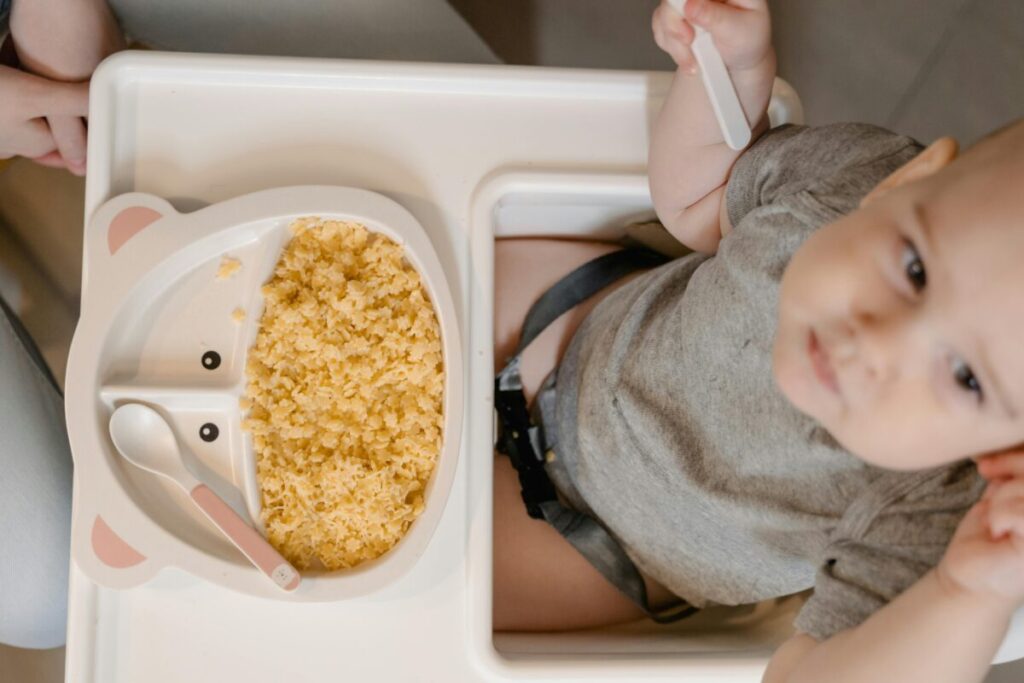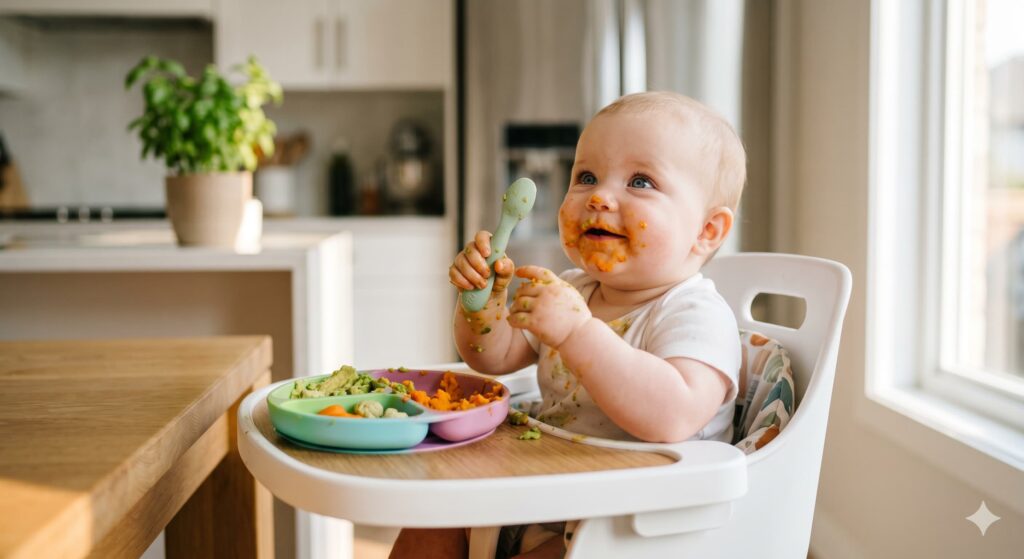
If you’re currently Googling a 9-month-old baby feeding schedule while staring at a kitchen that looks like a sweet potato explosion, welcome to the club! I know the feeling—your kitchen has basically turned into a high-stakes laboratory where you’re constantly measuring puree consistencies and calculating iron intake. But here is the good news: nine months is a total game-changer. By now, your little one is likely sitting up like a pro, babbling away, and—most importantly—eying your dinner plate with the intensity of a food critic.
Somewhere around now, it hits you—you don’t really have a “baby-baby” anymore. It’s like… a tiny human with opinions. Strong ones. It’s a time of messy faces, incredible milestones, and the transition to a more structured routine. In this guide, I’ll help you build a solid 9-month-old baby feeding schedule that balances milk, solids, and your own sanity.
What’s New at 9 Months? The Milestone Shift
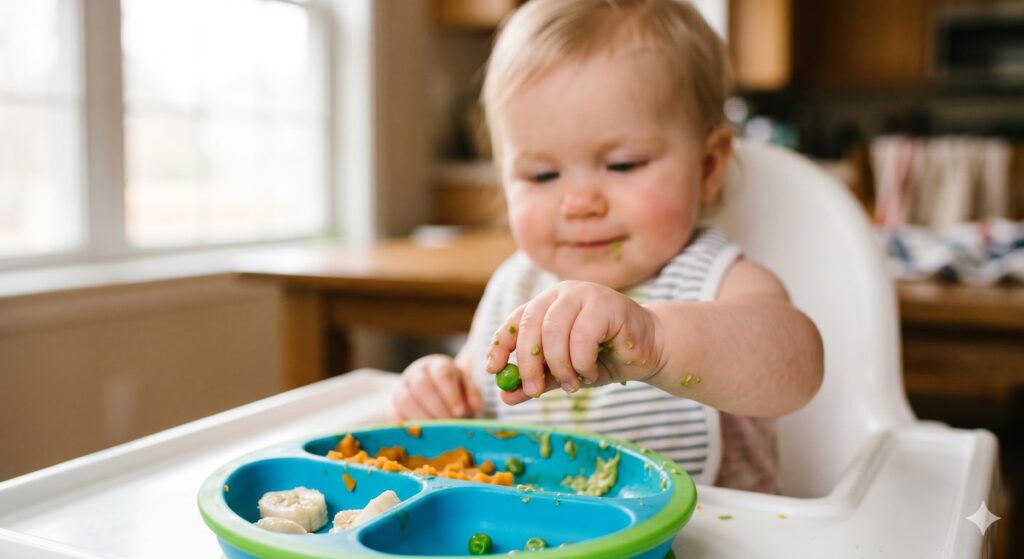
At nine months, your baby is experiencing a massive developmental “level up.” One big thing you’ll notice? The mastery of the pincer grasp. That adorable (and functional) ability to pick up a single pea with their thumb and index finger changes everything. It means your 9-month-old baby feeding schedule can now include more variety and less spoon-feeding.
They aren’t just reflexively swallowing anymore; they are actively chewing, even if they only have a couple of teeth (or none at all—those gums are surprisingly strong!). You’ll also notice they are becoming more vocal about what they like and, more importantly, what they don’t. This independence is the core of a successful 9-month-old baby feeding schedule.
The pincer grasp is a huge leap compared to the palm grasp you might have seen when you first followed our [6-month feeding guide]
What actually matters nutrition-wise right now
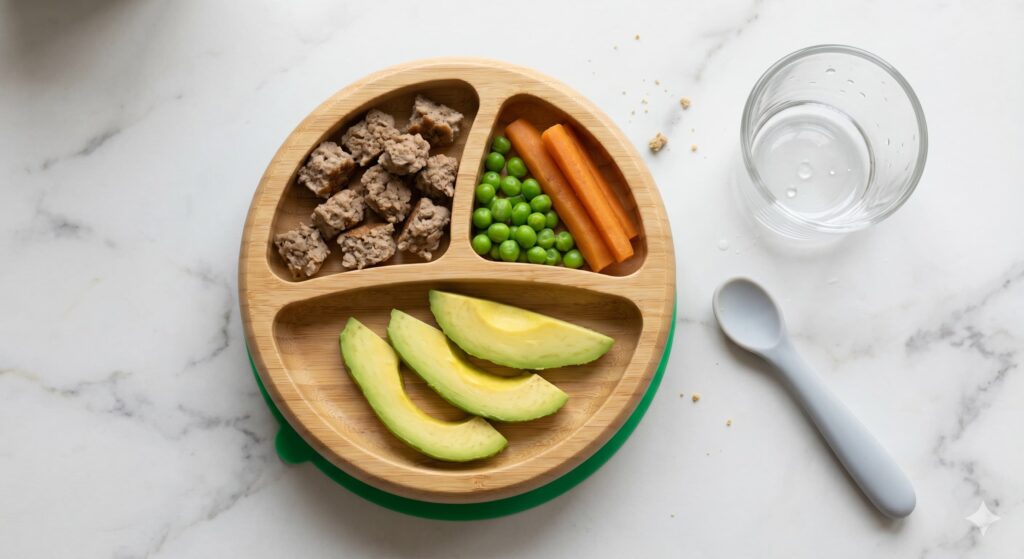
As your baby becomes more mobile—crawling, pulling up, or cruising—their nutritional needs skyrocket. When planning your 9-month-old baby feeding schedule, Okay, if you’re like me, at some point you go down a Google rabbit hole and panic about nutrients 😅
So here’s what actually matters (without overcomplicating your life):
- Iron: By 9 months, birth stores are long gone. Iron is vital for brain development and energy. Think lentils, finely minced beef, or egg yolks. Providing enough iron is one of the most critical goals of any 9-month-old baby feeding schedule.
- Zinc: This supports a healthy immune system and cell growth. You’ll find it in beans, meat, and fortified cereals.
- Healthy Fats: Babies need fat for brain growth. Avocado, wild-caught salmon, and full-fat Greek yogurt are staples in any robust 9-month-old baby feeding schedule.
The Hydration Question: Water, Juice, or Milk?
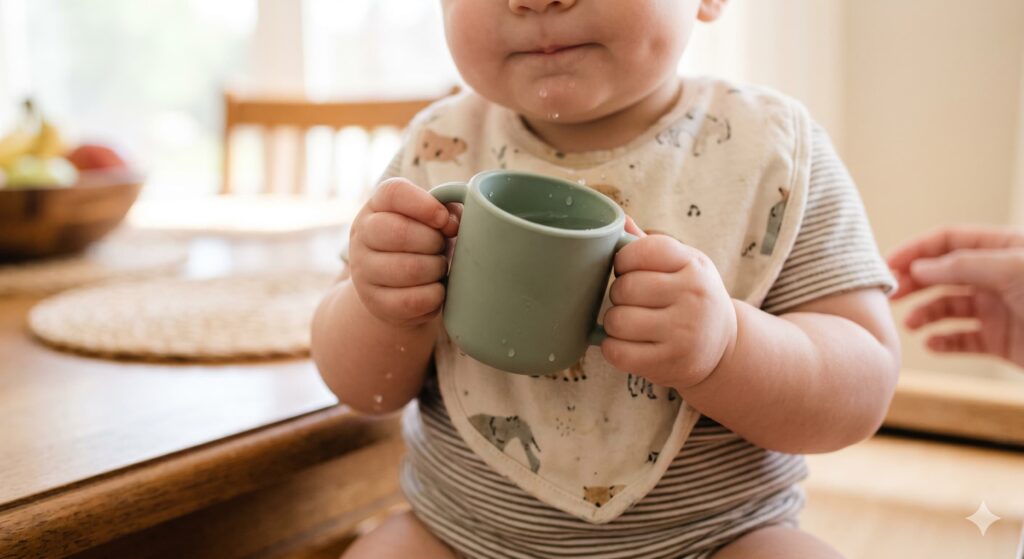
At nine months, milk is still the primary source of hydration, but water starts playing a more supportive role. In a typical 9-month-old baby feeding schedule, you should offer 2-4 ounces of water in an open cup or straw cup during meal times. This isn’t just about thirst; it’s about teaching the motor skill of sipping rather than sucking.
Avoid fruit juices entirely. They offer no nutritional benefit compared to whole fruit and can lead to a preference for overly sweet drinks. If you’re worried about constipation—a common roadblock when increasing solids—ensure your 9-month-old baby feeding schedule includes high-fiber foods like pears or prunes alongside those few sips of water.
The 9-Month-Old Baby Feeding Schedule (Sample Day)
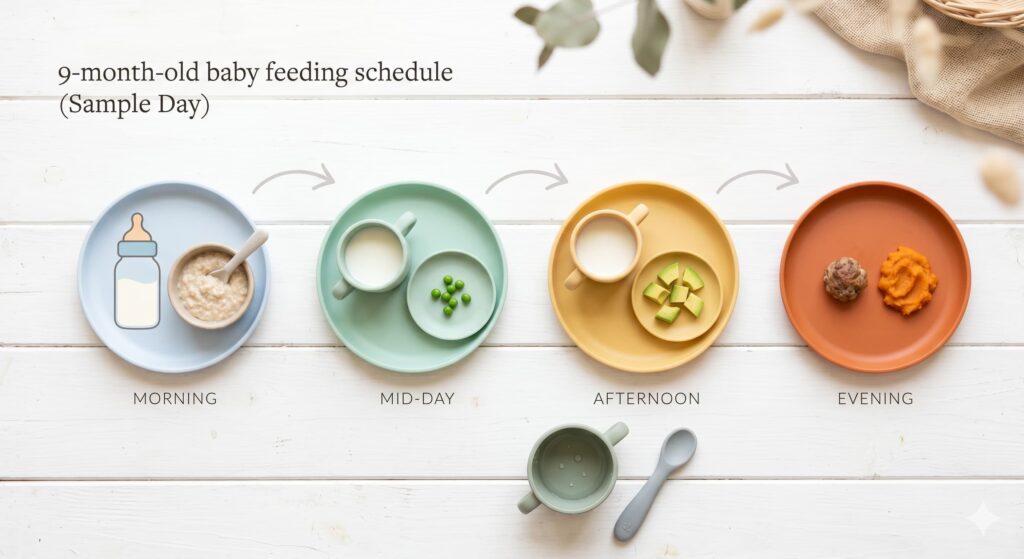
I know you’re busy, so let’s look at what a “real life” day looks like. Remember, this 9-month-old baby feeding schedule is a goal, not a rigid law. If a nap runs late or a tooth is bothering them, just roll with it.
Pro Tip:Just as we focused on textures in our [8-month-old guide], the 9-month-old baby feeding schedulepushes those boundaries even further.
- 7:00 AM: Wake up & Milk. Breast milk or a 6-8 oz bottle.
- 8:30 AM: Breakfast (Solids). E.g., Scrambled eggs or oatmeal with mashed fruit.
- 10:00 AM: Morning Nap.
- 11:30 AM: Milk Snack. A smaller breast milk session or a 4-6 oz bottle.
- 12:30 PM: Lunch (Solids). E.g., Soft-cooked pasta with veggie sauce or mashed beans.
- 2:00 PM: Afternoon Nap.
- 3:30 PM: Milk. Breast milk or a 6 oz bottle.
- 5:30 PM: Dinner (Solids). E.g., Tiny meatballs with mashed sweet potato. This is a great time for transition to table foods.
- 7:00 PM: Bedtime Routine & Final Milk.
This 9-month-old baby feeding schedule ensures they are getting enough calories from both solids and milk, which still provides about half of their daily nutrition.
Finding the right rhythm between meals and sleep can be tricky. For a deeper look at managing this whole stage, check out our guide on [The 8 to 12 Month Transition: How to Balance Solids, Milk, and Naps]
Best 9-Month-Old Meal Ideas: Transitioning to Table Foods
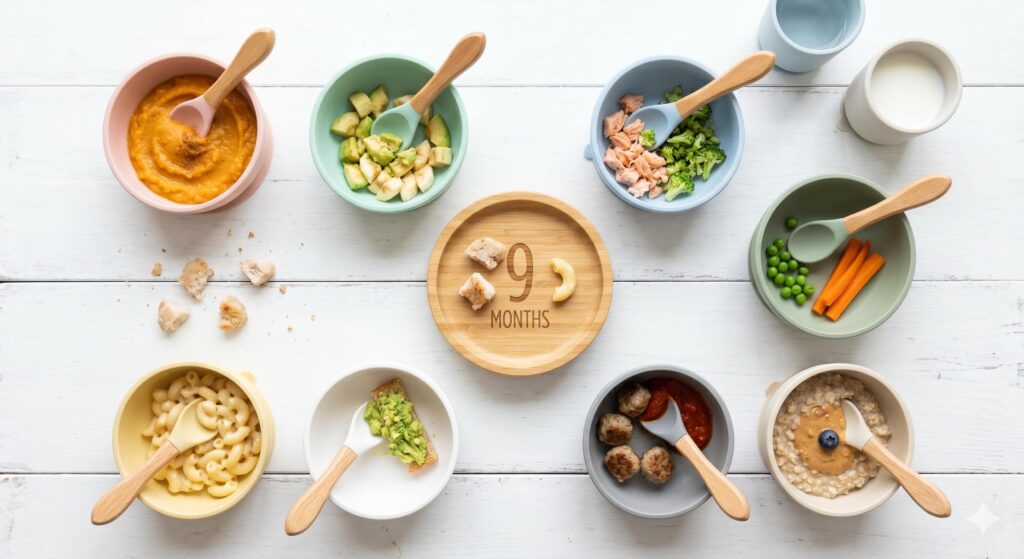
At this stage, you don’t always need to make “special” baby food. You can start sharing what you eat, provided it’s low in salt and sugar. And honestly? This makes life easier because you’re not cooking a separate Michelin-star baby menu every day.
1. The Pincer-Grasp Meatballs
Ground turkey or beef mixed with a little bit of breadcrumbs and steamed spinach. Roll them into tiny, soft balls. This is an iron-powerhouse for any 9-month-old meal plan.
2. Scrambled Eggs with Avocado
Whisk an egg with a splash of breast milk or formula for extra creaminess. Serve with small chunks of ripe avocado. It’s the perfect mix of protein and healthy fats in a 9-month-old baby feeding schedule.
3. Soft Finger Foods for 9-Month-Old Exploration
- Steamed broccoli florets (the “tree” shape is easy to hold).
- Soft-cooked rotini pasta (easier to grab than penne).
- Ripe banana or peach slices.
Incorporating finger foods for 9 month old babies helps them gain confidence and reduces the likelihood of picky eating later on.
Snack Time: Do 9-Month-Olds Need Snacks?
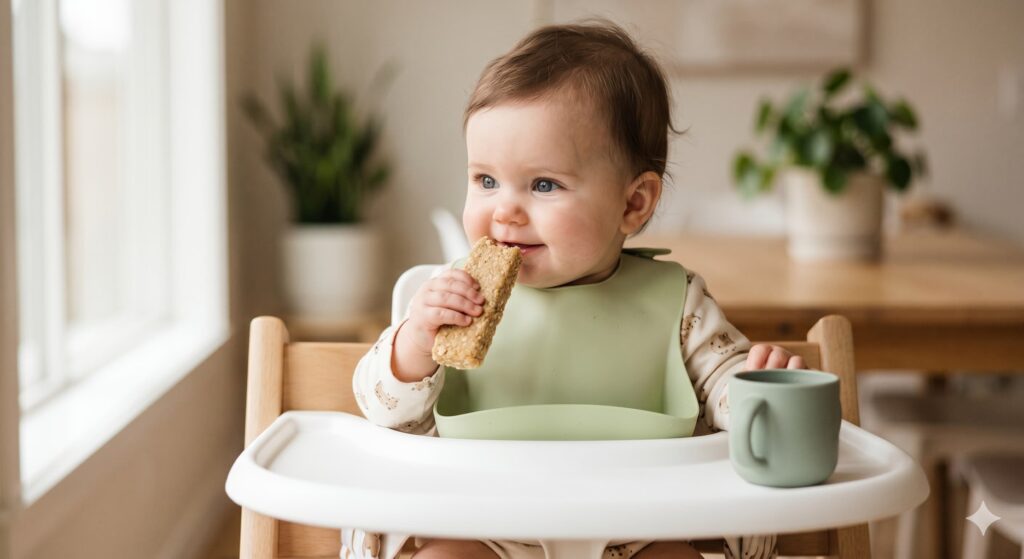
This is a question I get all the time. In a well-structured 9-month-old baby feeding schedule, “snacks” are usually just small milk sessions. However, if your baby is extremely active or has a long gap between lunch and dinner, a small solid snack can be helpful.
Think of snacks as “mini-meals.” A few puffs, a small piece of cheese, or some mashed berries are perfect. The goal is to bridge the hunger gap without ruining their appetite for the next main meal in your 9-month-old baby feeding schedule.
Gagging vs. Choking: Safety First
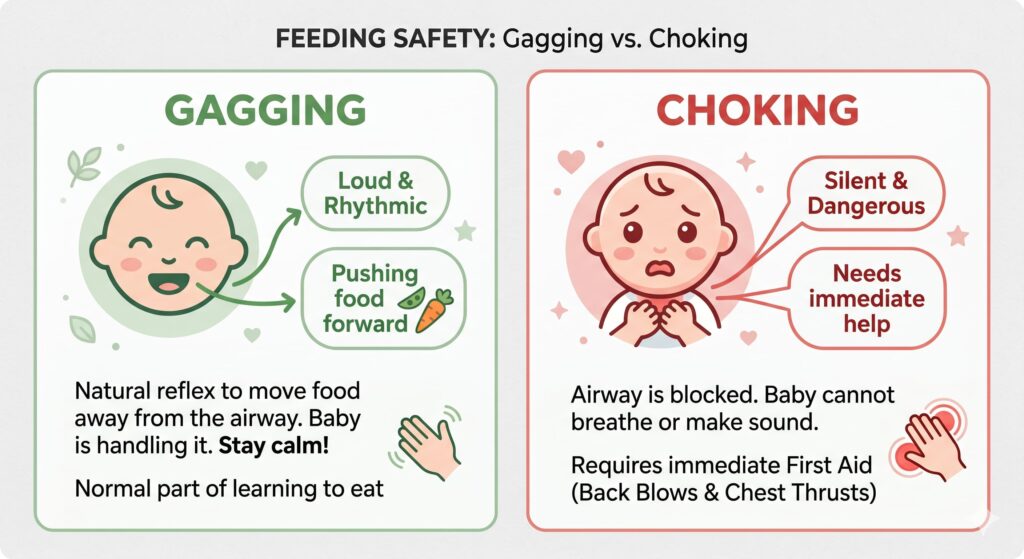
As we move toward more complex textures in the 9-month-old baby feeding schedule, safety obviously matters a lot here. It’s vital to understand the difference between gagging and choking. Gagging is a loud, rhythmic, and natural reflex that helps your baby learn how to manage food. It means the system is working!
Choking, on the other hand, is silent and dangerous. Always ensure that every food item in your 9-month-old meal plan is “squishable” between your fingers. Staying present and attentive during every mealtime is the best safety measure you can take.
Handling Picky Eating and Refusal: The Reality Check
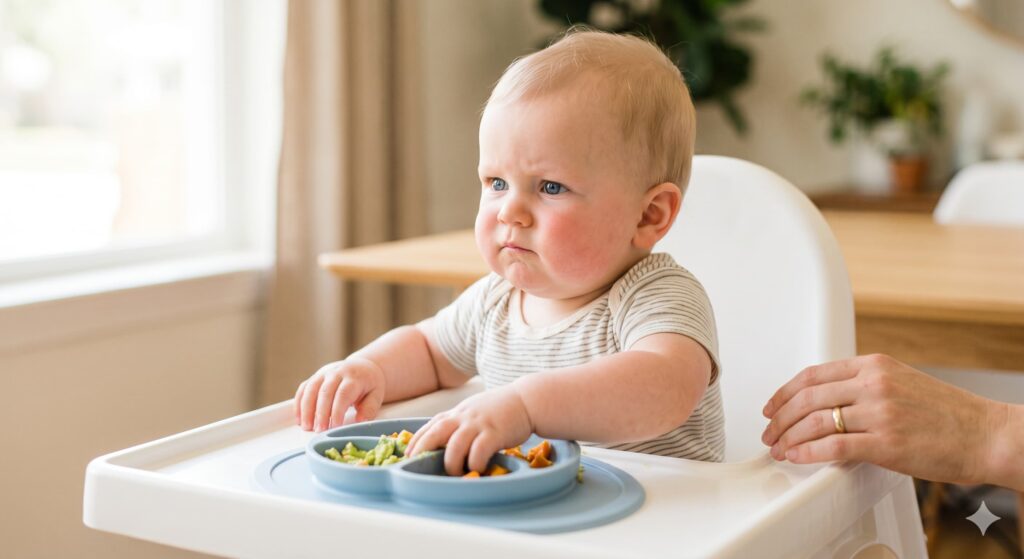
Let’s be real: some days, your carefully crafted 9-month-old baby feeding schedule will be met with a dramatic head turn or a flying piece of broccoli. This is normal. Refusal isn’t always about the food; it can be about autonomy, teething, or simply not being that hungry. If they refuse a meal, don’t force it. Try again later. A healthy 9-month-old baby feeding schedule has room for “off” days.
Don’t worry if they don’t finish their dinner; forcing extra calories, like cereal in a bottle, won’t actually help. In fact, find out [why filling their tummy too much might be ruining their sleep]
Conclusion: Trust the Process (and the Mess)
Mastering a 9-month-old baby feeding schedule is a journey of discovery. If there’s one thing I’ve learned, it’s that a 9-month-old baby feeding schedule looks different for everyone. Some days your baby will eat like a champion, and other days they will survive on air and three sips of milk.
Trust their internal hunger cues. By providing a consistent 9-month-old baby feeding schedule, you are giving them the structure they need to become confident eaters for life. Enjoy the mess, celebrate the new textures, and remember that you’re doing an amazing job.
What is your baby’s favorite finger food right now? Let me know in the comments!
Getting ready for the next big milestone? Check out my guide on 10-Month-Old Feeding Schedule: The Ultimate Guide to Solids, Textures, and a Whole Lot of Mess to stay ahead of the game
Disclaimer: Just a quick note—this is all based on my own experience (and a lot of trial and error 😅), not medical advice. Every baby does their own thing, so if something feels off or you’re unsure, definitely check in with your pediatrician.