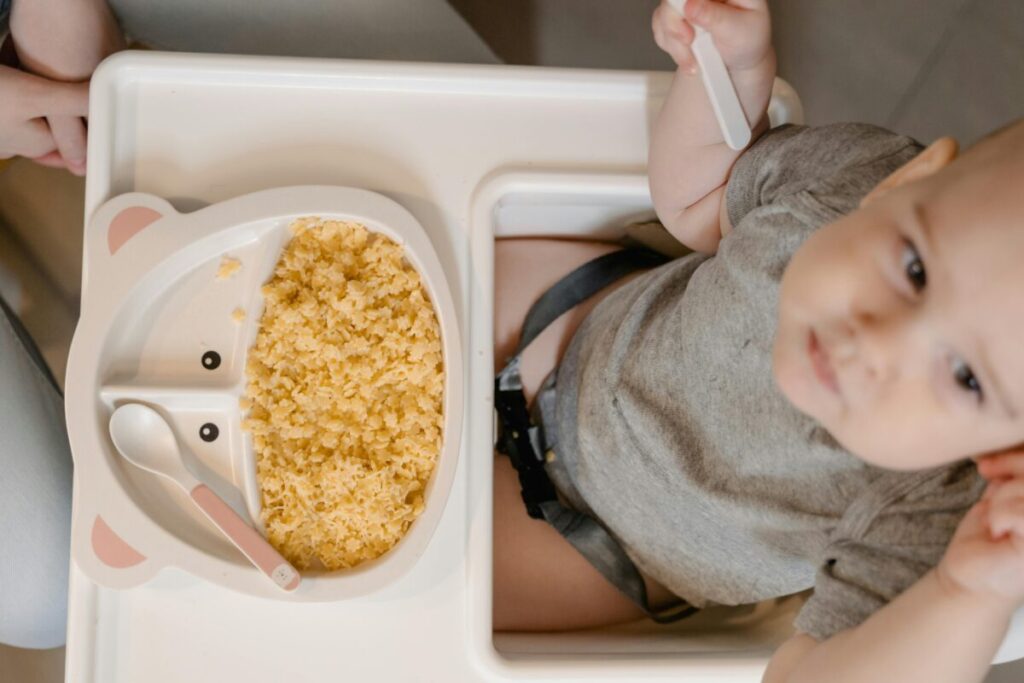
I’ll never forget the night I decided to try putting cereal in bottle for sleep, thinking it was the magic answer to my exhaustion. It was 3:14 AM. My hair was a bird’s nest, I had old spit-up crusting on my shoulder, and I was staring at my 9-month-old who was currently performing a world-class wrestling match with her sleep sack.
I remember thinking, “How is this possible? I gave her a massive bowl of cereal before bed! Her stomach should’ve been so full she’d just… pass out, right?
But that was my first big mistake.
If you’re reading this while nursing a third cup of cold coffee, wondering why your baby wakes up every two hours despite eating a “heavy” dinner, you’re in the right place. We’ve been told for generations that a belly full of cereal is the ticket to a full night’s sleep. Here’s the reality: that myth might actually be the reason you haven’t slept in… I don’t even know how long anymore.
The Science Behind Cereal in Bottle for Sleep (And the “Heavy Tummy” Myth)


So… what’s actually going on in that tiny body when we do this?
Think about how you feel after you’ve eaten way too much… like uncomfortably full. Do you sprint to bed and have the most restorative sleep of your life? Usually, no. You feel bloated, your heart might race a bit, and you toss and turn because your body is working overtime to digest that mountain of food.
Babies are no different. Their digestive systems are brand new—literally “fresh out of the box.” When we give them a heavy, starch-heavy meal like cereal in bottle for sleep at 7:30 PM, their tiny gut has to go into overdrive. Instead of their brain sending signals to produce melatonin (the ‘sleepy hormone’) and establishing natural sleep cycles, their body is basically busy trying to deal with all that food.
The result? They never really drop into deep sleep. They move “A LOT” (as I see so many moms describe it) because their digestive system is physically uncomfortable. It’s not a food coma… it’s more like their body is struggling with it.
The Cortisol Connection: Why Being Overtired Looks Like Being “Not Hungry”
Here is where it gets tricky. Many of us see our babies fussing at night and think they’re hungry… but wait, that’s not always what’s happening. So we feed them. Then they wake up an hour later, and we feed them again.
By the time 8 or 9 months roll around, this often turns into The Overtired Trap. When a baby misses their ideal sleep window, their brain goes, “Oh, I guess we’re staying awake!” and their body goes into full “stay awake” mode. This stress response is even more common when they are fighting off those first school sniffles. If you’re struggling with health-related wakeups, check out our Daycare Germs: The ‘No-Panic’ Guide to Building Immunity to help their system stay strong.
This is why your baby might refuse to eat while awake but eagerly takes a bottle or breast while half-asleep. When they are awake, they are too “wired” and stressed to focus on a full meal. When they sleep, their guard is down, and they eat out of habit and comfort. And then this weird cycle starts — they eat more at night, and less during the day.
When your baby misses their sleep window, it adds to your own stress. This is a huge part of The Mental Load of Motherhood, which is why you’re exhausted even when your baby finally sleeps.
Mom-to-Mom Advice
If your baby is meeting their growth milestones (even if they are in the 15th percentile like some of our community members!), they usually don’t actually need to eat every two hours at night. Most of the time, they are seeking the sucking reflex to lower that cortisol and get back to sleep. They’re not starving… they’re just overwhelmed.
So many of us try cereal in bottle for sleep because we’re desperate for rest, but it often backfires.
Breaking the Cycle: How to Rebalance the Day

Breaking the habit of using cereal in bottle for sleep starts with rebalancing how your baby gets their calories during the day.
So… how do you even fix this? It starts with moving the “big” meal.
1. The “Big Meal” Shift
Instead of a heavy dinner at 7:00 PM, try making lunch or early afternoon (around 4:00 PM) the time for those denser foods. Offer the proteins, the healthy fats, and the grains then. This gives their body hours to process the nutrients before they need to settle down for the night.
By moving those denser calories to midday, you can finally move away from the habit of relying on cereal in bottle for sleep.
Moving the denser nutrients to midday helps digestion, but it’s also about the quality of those calories. If you’re struggling to get those healthy fats and proteins in, check out our strategies for [winning the toddler dinner battle without losing your mind]
2. High-Quality Bedtime Snacks
If you feel like they truly need a ‘top-off’ before bed, focus on foods that align with infant feeding guidelines and actually promote sleep. You don’t need anything fancy here.
- A little bit of mashed banana.
- A small portion of avocado.
- Breast milk or formula.
These are much easier on the stomach and actually help the brain transition into sleep mode.
3. Spotting the Cues Before the Meltdown
The key to avoiding the “wired” baby who moves all night is catching them before they get overtired. Look for the subtle signs:
- The “thousand-yard stare” (they just look blankly into space).
- Pulling at their ears.
- Losing interest in toys.
- Turning their head away from you.
If these cues are happening earlier or later than usual, it’s a clear sign of sleep pressure building. For some age-specific tips, check out our 18-Month Sleep Regression Survival Guide to see how to adjust their routine before it’s too late.
A Sample Routine for a Restful Night (8–12 Months)

Every baby is different, but here is a sample of what a “balanced” day looks like to ensure a better night:
- 7:00 AM: Wake up and milk feed (Formula or Breast).
- 8:30 AM: Breakfast (Think fruit and soft textures).
- 10:00 AM: Nap 1.
- 12:30 PM: Main Solid Meal (Protein, veggies, and healthy fats). This is where the “heavy” stuff belongs!
- 2:30 PM: Nap 2.
- 5:00 PM: Light Dinner (Easy-to-digest veggies or a light puree).
- 6:30 PM: Start the wind-down. No loud toys, dim lights.
- 7:00 PM: Final milk feed.
- 7:30 PM: In the cot/crib, awake but drowsy.
This routine is designed to provide lasting energy without the digestive distress caused by the old-school cereal in bottle for sleep method.
Dealing with the Family Pressure (The “MIL” Factor)
Believe me, I know the pressure. Your mother-in-law or even your own mom might be whispering in your ear, “Just put some cereal in the bottle, they’ll sleep like a log!”
They mean well. They really do. In their generation, that was the gold standard. But we know more now about infant gut health and sleep science. You are the expert on your baby. If you notice that your baby is “moving a lot” or restless after a heavy meal, trust that observation over old-school advice.
WIC purees and jars are a fantastic resource, but remember that many of them are high in water and natural sugars. To keep a baby full, we need protein and healthy fats. A jar of pears won’t keep them as full as a piece of soft-cooked salmon or mashed beans would.
When your family insists that cereal in bottle for sleep worked for them, remember that we now have better science on infant digestion.
Validate their experience, but stand firm in your choice to skip cereal in bottle for sleep for your baby’s safety.
FAQ: What Moms Are Asking Right Now
“My baby is teething and only eats while sleeping. What do I do?”
This is so common! Teething makes their gums sensitive, and sucking can actually hurt when they are awake and focused on it. Try a cold teether or a chilled washcloth 10 minutes before a feed. It numbs the area enough so they can get a full meal while awake.
“Does putting cereal in bottle for sleep help with reflux?“
Unless your pediatrician specifically told you to do it for a medical reason, putting cereal in bottle for sleep can actually be a choking risk and isn’t recommended for reflux anymore. Honestly, it’s usually better to just keep them upright for 20 minutes after a feed instead of thickening the milk with grains.
“What if my baby wakes up and won’t settle without milk?”
If they are 9+ months and healthy, try “water-loading” or simply offering comfort without the feed for one of those wake-ups. It takes 3-4 nights to break a sleep-association habit, but once they realize the “all-night buffet” is closed, they start eating much better during the day.
“Is cow’s milk better for sleep than formula?”
Actually, no. Cow’s milk is harder for babies under 12 months to digest. Stick to formula or breast milk until that first birthday milestone to avoid tummy aches that cause more night waking.
Just like cereal in bottle for sleep, cow’s milk before 12 months is simply too heavy for their developing system to handle at night.
Transitioning from formula to other drinks can be tricky, especially when you’re trying to avoid hidden sweeteners. For more on managing sweets and behavior, check out our guide on Healthy Sugar Boundaries for Toddlers to keep your routine on track.
You’ve Got This, Mama
Parenting is basically one long trial-and-error situation. If you’ve been doing the bedtime cereal trick, don’t beat yourself up. We all do what we think will help us get that extra hour of sleep.
The transition from 8 to 12 months is one of the biggest “routine shuffles” you’ll ever go through. It’s messy, it’s exhausting, and there will be nights where none of this works. But by focusing on daytime calories and catching those sleep cues early, you’re giving both of you a much better shot at a decent night.
Go easy on yourself today… but wait, really. You don’t have to fix everything tonight. Put down the cereal box, pick up a coffee, and remember—you’re doing more than enough, even if it doesn’t feel like it.
You’re doing a great job, and moving away from cereal in bottle for sleep is just one step toward better rest for the whole family.