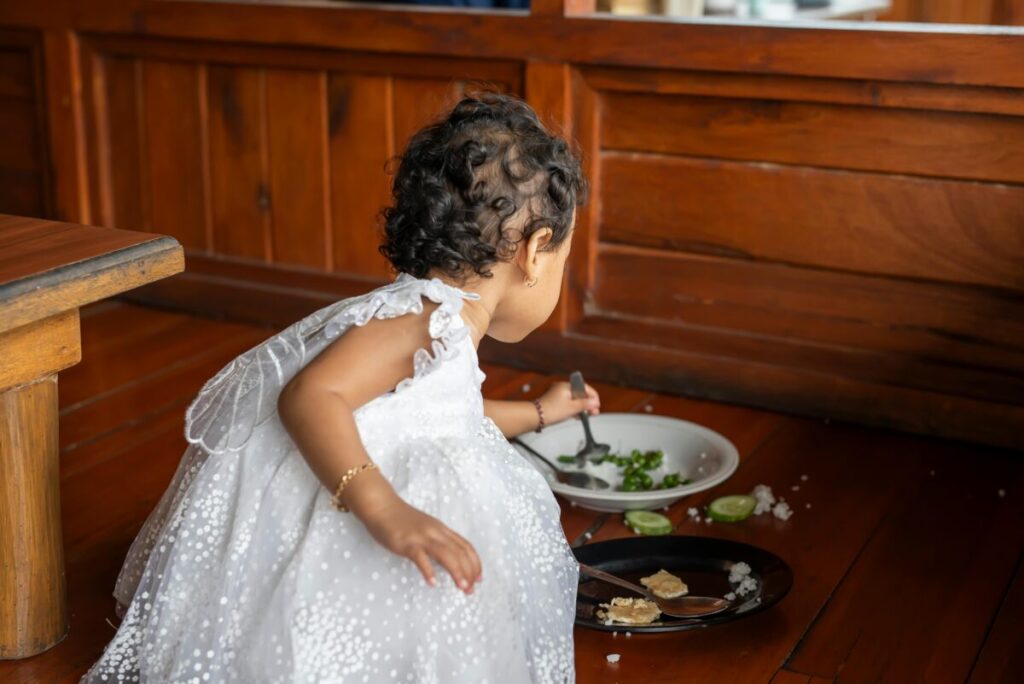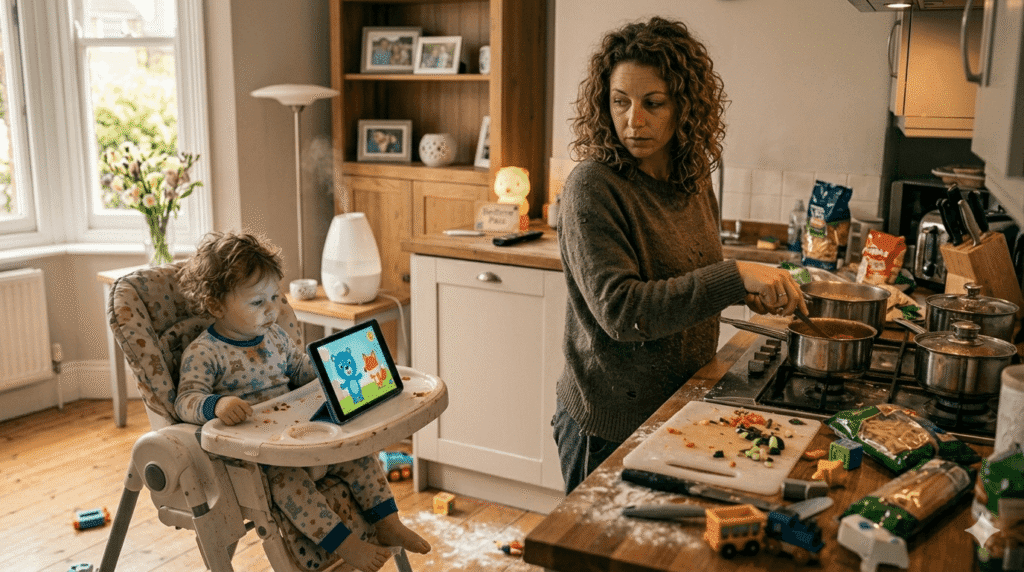
Managing sugar boundaries for toddlers is something every parent struggles with at some point. I remember the moment my “perfect parent” phase kind of fell apart. My daughter was fourteen months old, and we were at a cousin’s birthday party. You know the one… yeah. I made my own organic kale-and-pear purees. I looked at a box of flavored crackers like it contained toxic waste. I genuinely believed my kid would think steamed cauliflower was basically candy. I mean… what was I thinking. Seriously.
Then… she found a random cupcake. Of course she did.
It wasn’t even a fancy cupcake. It was a supermarket-shelf, neon-blue-frosting-covered disaster. Before I could swoop in with my slice of apple, she had plunged her entire fist into the frosting and shoved it into her mouth. Her eyes didn’t just widen; they lit up like she’d finally seen the face of God. It was… honestly kind of a moment. In that single, sticky second, the veil was lifted. She realized I’d been holding out on the good stuff, and yeah… that’s when the whole sugar struggle started. Whether I liked it or not.
If you’re currently hiding in your pantry eating a Snickers bar so your toddler doesn’t hear the wrapper crinkle, welcome. This is a safe space. We’re going to talk about the messy, loud, and often infuriating reality of sugar and toddlers without a single drop of judgment.
The “Forbidden Fruit” Paradox: Why Total Bans Backfire

Here’s the thing — the more you treat sugar like a radioactive substance, the more your toddler is going to treat it like the Holy Grail.
We’ve all seen that kid — the one whose parents don’t allow any sugar at all. What is that kid doing? They aren’t playing with the blocks. They’re just hovering around the snack table the whole time, waiting for someone to drop a stray Cheeto or a crumb of a cookie. When they finally get it, it’s not just a snack; it’s an obsession. It’s like they’re trying to inhale a lifetime’s worth of sugar in thirty seconds before Mom looks over. It’s chaos.
When we create a “forbidden fruit” narrative, we accidentally teach our kids that sugar is the most high-value, exciting thing in the world. It makes them feel like they have to grab it while they can. Like it might disappear. If they don’t know when they’ll ever see a lollipop again, they’re going to lose their absolute minds trying to get one now.
I’m not saying you should give them a bowl of frosting for breakfast—God, no. But I am saying that when sugar is just “another food” that occasionally shows up on the plate, the power dynamic shifts. It stops being a weapon and starts being… well, just a cookie.
By normalizing treats, you’re creating sustainable sugar boundaries for toddlers that prevent obsession later on.
The “Grandparent Factor” and Social Pressure
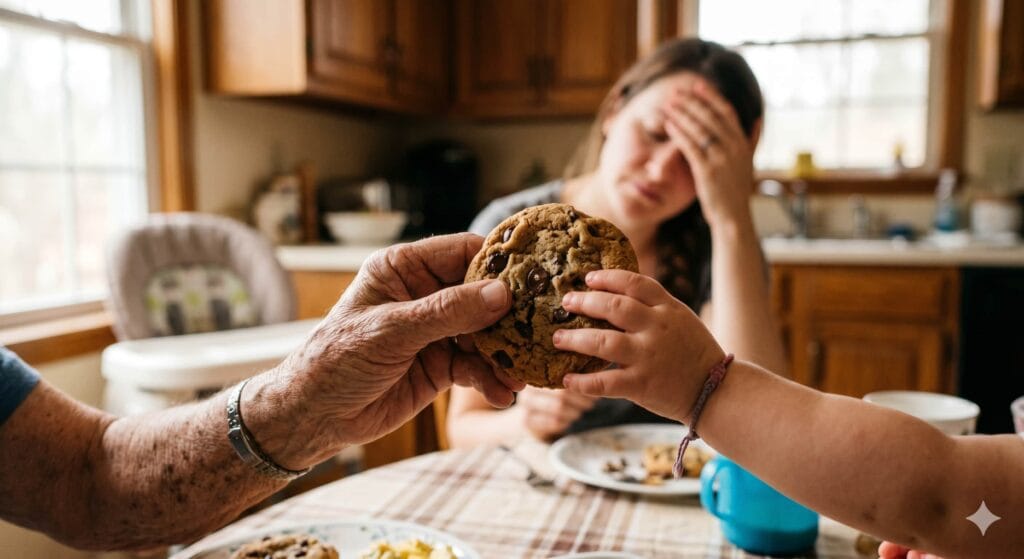
It’s one thing to have rules at home, but maintaining sugar boundaries for toddlers becomes much harder when grandparents are involved.
Let’s talk about something that makes this way harder — other adults.
You’ve done the work. You’ve curated the pantry. You’re feeling good. And then you go to Grandma’s house. Within five minutes, she’s handing your eighteen-month-old a “little piece” of chocolate that is roughly the size of a brick. Or you’re at a birthday party, and a well-meaning mom hands your toddler a juice box that contains more sugar than a liter of soda.
It is incredibly awkward to be the “No” parent in a room full of “Yes” people. You don’t want to be the buzzkill, but you’re also the one who has to deal with the 7:00 PM meltdown when the sugar high turns into a biological crash.
How to handle it without starting a family feud:
- Set the “One Treat” Rule: Tell the grandparents, “Hey, we’re cool with a treat, but let’s just stick to one small thing so they actually eat dinner.” (Spoiler: they’ll still sneak them extra, but at least you tried).
- Pick your battles: If it’s once a month at a party… honestly, just let it go. The stress of the fight is often worse for your toddler’s nervous system than the actual cake.
- Bring Your Own “Middle Ground”: I started carrying “fun” snacks that were lower in sugar but looked exciting. Sometimes, a bag of freeze-dried strawberries can distract them from the neon-pink donut… sometimes.
Reframing “Treats”: Killing the Hierarchy of Food
“If you eat three more bites of broccoli, you can have a brownie.”
I’ve said it. You’ve said it. Every parent since the dawn of time has said it. But here’s the problem: when we use sugar as a reward for eating “boring” food, we are effectively telling our kids that the broccoli is a chore and the brownie is the prize.
We’re basically teaching them the wrong thing. We’re teaching them that healthy food is something you have to suffer through to get to the good stuff.
As they move into the 1-3 year range, toddlers are becoming master negotiators. If they learn that food is a currency, they will bankrupt you. They’ll hold out on every meal until they see the “bribe.” To break the cycle, we have to stop treating sugar like a gold medal and start treating it like a side dish.
This is exactly how many food strikes begin. If you’re currently dealing with a child who suddenly treats a home-cooked meal like a personal insult, you’re not alone. Our guide on threenagers and food strikes explains why your toddler suddenly hates everything you cook and how to handle the ‘picky eater’ phase without losing your mind.
This constant negotiation is often part of a bigger developmental phase. If you feel like your house has turned into a courtroom, you might want to check out our guide on why your toddler says ‘no’ to everything. Understanding their need for autonomy helps you hold your sugar boundaries without it turning into a three-hour power struggle.
By stopping the ‘food-as-a-reward’ cycle, you are actually building much stronger sugar boundaries for toddlers that will last a lifetime.
Practical Strategies for Setting Sugar Boundaries for Toddlers
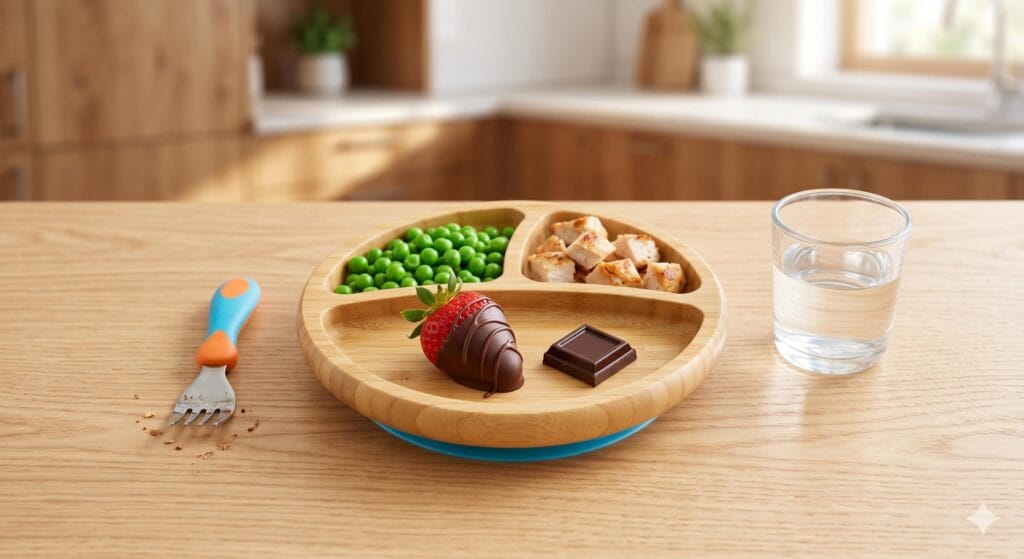
The “Neutralization” Technique
Implementing these techniques helps reinforce healthy sugar boundaries for toddlers without turning every meal into a negotiation.
This felt weird to me at first, but it actually works: Serve the treat with the meal. Yes, put that small cookie or that square of chocolate right there on the plate next to the chicken and the peas. What happens? Usually, the toddler eats the cookie first. (Duh.) But then, something magical happens—the cookie is gone. It’s no longer a “distraction” at the end of the meal. They realize the “prize” is finished, and they often turn around and actually eat their dinner because they’re still hungry. It removes the “reward” power of the sugar.
Beware the Hidden Sugar Bombs
Honestly, the grocery store can be really misleading. Some of the biggest sugar offenders are hiding in plain sight under labels like “All Natural” or “Organic.”
- Yogurt: Some toddler yogurts have as much sugar as a scoop of ice cream. Seriously. Stick to plain whole-milk yogurt and add your own mashed fruit.
- Juice: Even 100% fruit juice is just concentrated sugar without the fiber. Treat juice like a soda—it’s an occasional thing, not a hydration source.
- Granola Bars: Most of these are just candy bars in a “nature” costume. Check the labels for honey, syrups, and cane sugar.
According to the American Academy of Pediatrics, children under two should ideally avoid added sugars entirely to support healthy taste development.
Achievable Swaps (That Aren’t Just Carrot Sticks)
Healthy swaps are a fantastic way to maintain sugar boundaries for toddlers while still letting them enjoy a sweet treat.
If I give my toddler a carrot stick when they wanted a gummy bear, I’m asking for a riot. Try these instead:
- “Nice Cream”: Frozen bananas blended until they have the texture of soft-serve. It’s a game-changer.
- Frozen Grapes: (Sliced longways for safety, obviously!) They’re like tiny sorbet bites.
- Peanut Butter “Cookies”: Just a slice of apple with a smear of nut butter and maybe three dark chocolate chips on top. It feels like a treat, but it’s 90% nutrition.
Dealing with the Sugar Crash: That post-sugar meltdown phase
We’ve all been there. You let them have the cake. They were so happy. They were laughing! They were the life of the party!
Then, twenty minutes later, the “Sugar Exorcist” arrives. Their eyes glaze over, their coordination drops, and suddenly the fact that their sock is “too tight” becomes a reason to scream for forty-five minutes straight.
The post-sugar meltdown is exactly why we need clear sugar boundaries for toddlers – to protect their developing nervous systems from these spikes.
The sugar crash is a physiological reaction. Their blood sugar spiked, and now it’s plummeting. They aren’t being “bad” or manipulative; their brain is literally struggling to stabilize.
Survival Tips for the Crash:
- Don’t Reason with the Kraken: You cannot logic a toddler out of a sugar crash. Don’t explain why they’re upset. Just keep them safe and stay calm.
- Protein is the Antidote: Try to get them to eat a piece of cheese or a bit of turkey. Protein helps stabilize blood sugar and can soften the landing.
- Low Sensory Mode: Turn off the TV, dim the lights, and stop asking them questions. Their nervous system is already overloaded.
Addressing Mom Guilt: You Are Not a “Bad” Parent

Just to say this clearly — Giving your child a lollipop does not make you a failure.
We live in a culture of extremes. We’re told that if we let our kids have sugar, we’re setting them up for a lifetime of health issues. It’s a heavy burden to carry, and it’s largely nonsense.
Parenting is about the “Big Picture.” If 80% of the time your toddler is eating whole foods, drinking water, and getting their nutrients, that 20% of birthday cake and Grandma’s cookies isn’t going to ruin them.
The stress of trying to be a “perfect” sugar-free parent is often more damaging than the sugar itself. It makes us tense, it makes meals a battlefield, and it robs us of the joy of sharing a treat with our kids. Consistency matters way more than perfection. If you had a “bad” sugar day today? Tomorrow is a new day. The pantry is still there. The kale is still in the fridge. You’re doing fine.
Remember, your long-term goal for sugar boundaries for toddlers is balance, not perfection.
Parenting is a big-picture game. Just like you focus on building your baby’s immunity for daycare, setting long-term sugar boundaries for toddlers is about overall health, not one-day perfection. If they’re eating well and staying active, that occasional cupcake is just a part of a happy childhood.
Low-Stress Sugar Boundaries
Setting these limits is very similar to how we manage digital habits. Just as we look for balance with screen time for toddlers to avoid overstimulation, having a clear set of household rules for sweets makes it much easier to enforce sugar boundaries without the daily struggle.
Creating a set of household rules makes it much easier to enforce sugar boundaries for toddlers without having to say ‘no’ every five minutes.
To keep your sanity intact, try implementing these “house rules” that focus on balance rather than restriction:
- No Sugar Before 2 (Ideally): Try to hold the line for the first two years while their taste buds are developing, but don’t beat yourself up if a stray fry gets in there.
- Water is the Default: Milk and water are for thirst. Juice and sodas are “party drinks.”
- The “One Hand” Rule: At parties, they can have what fits in one hand. It gives them a sense of control without the total sugar-coma overload.
- Don’t Comment on the Food: Try to stop saying “That’s too much sugar” or “That’s bad for you.” It just makes it more alluring. Just serve the portions you’re comfortable with and let them eat.
- Be the Example: If you’re telling them sugar is “bad” while you’re hiding in the kitchen eating Oreos (guilty!), they’ll catch on. Let them see you enjoy a small treat in moderation.
Final Thoughts: You’ve Got This
The sugar struggle is one of the first big “values” tests we face as parents. It feels high-stakes because we want the best for our kids, but remember that your toddler is also a little human with their own preferences and a very loud voice.
Some days you’ll win. You’ll serve a beautifully balanced plate, and they’ll eat every pea. Other days, you’ll be tired, the toddler will be screaming, and you’ll hand them a cookie just so you can have five minutes of silence to drink your lukewarm coffee.
That’s not failing. That’s just real life.
Keep the boundaries clear, keep the protein handy, and remember that a childhood without a single sprinkle is a little less colorful. You’re doing a great job navigating this sticky, sweet, chaotic phase of life.
It takes time and patience to find the right sugar boundaries for toddlers, but your consistency will pay off in the long run.