⚠️ Important Disclaimer: I am a mom sharing my personal experience and the tips that helped me get through endless nights of baby sniffles. I am not a medical professional. The information in this post is for educational purposes and is based on general pediatric guidelines. Every baby is different, so please consult your pediatrician before trying new remedies or if you’re worried about your little one’s health.
Is it teething symptoms vs cold germs again? It was 2:42 AM, and I was standing in the middle of the nursery, bathed in the judgmental blue light of a digital thermometer. My shirt was—as usual—a permanent towel, soaked through with a questionable mix of lukewarm spit-up and enough drool to fill a small aquarium. It’s the ultimate parenting guessing game: trying to distinguish teething symptoms vs cold signs while functioning on zero sleep.
I stood there, completely paralyzed by the “Parent’s Detective Dilemma.” Was she sick? Did she have that nasty bug going around the playgroup? Or was there a tiny, jagged tooth finally making its grand debut through her poor, swollen gums? I had the saline drops in one hand(pretty sure I dropped them like three times before that, but anyway) and a frozen silicone giraffe in the other.
I felt like a bomb technician trying to decide which wire to cut. And yes, I absolutely made the wrong call the first time. Let’s be real: when you’re comparing teething symptoms vs cold, the overlap can feel like a cruel joke played on tired parents. One minute you’re desperately searching for infant congestion remedies, and the next, you’re wondering if you should just let them chew on your frozen knuckle. If you’re currently in the trenches, squinting at your baby’s gums with a flashlight while they sneeze directly into your open mouth, this guide is for you. No judgment, just the messy truth.
Teething Symptoms vs Cold: Why It Drives You Crazy
Here’s the frustrating truth: teething and colds are like identical twins with slightly different personalities. Both cause sleep strikes. Both turn your sweet, bubbly infant into a tiny, clingy hurricane of fussiness. And both involve a runny nose. It’s enough to make you want to just… disappear for a week.
Wait, teething causes a runny nose? Technically, no. But honestly? All that intense drooling and inflammation in the mouth can lead to a bit of clear nasal drainage. Plus, teething babies put everything in their mouths—remote controls, dog toys, your dusty shoes—which is basically an open invitation for actual cold germs to move in. This is why comparing teething symptoms vs cold signs becomes such a challenge for us parents.
The 2AM Checklist: How to Actually Tell the Difference
To help you make the right call, let’s break down the exact differences between teething symptoms vs cold indicators.
Grab your magnifying glass (and maybe another cup of coffee, even if it’s your fourth). Here is how you differentiate the two based on what’s actually happening in that tiny, precious, chaotic body.
🚩 Team Teething: The “Oral” Indicators
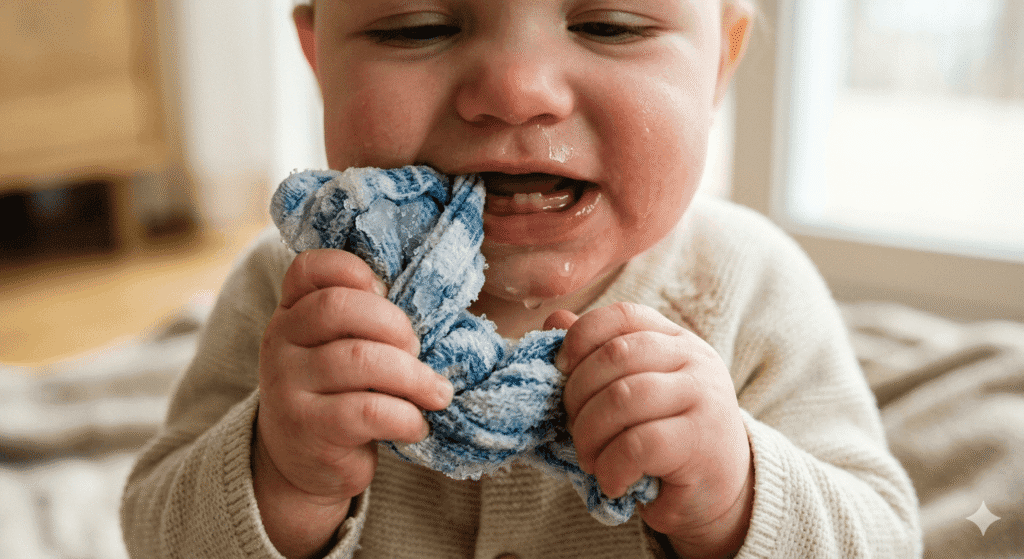
- The Waterfall of Drool: If you’re changing their bib every 20 minutes because it’s soaked? It’s probably a tooth.
- The Hand-Chomp: If they are trying to shove their entire fist (and yours) into the back of their jaw. Those gums are definitely aching.
- The “Teething Rash”: All that drool sitting on their chin can cause a red, bumpy rash. It’s annoying, but it’s a classic tooth sign.
- Red, Angry Gums: If you can get them to open up for a split second without getting bitten, look for a white bump or a firm area.
🚩 Team Cold: The “Systemic” Indicators

- The Cough and Sneeze: Teething usually doesn’t cause a real cough… at least not in my experience. If they sound “chesty,” it’s a virus. And let’s be real, you’ll probably catch it too.
- Thick Mucus: Clear drainage can be teething. Yellow or thick green mucus? That’s a cold, Mama. Paying attention to the color and consistency is the easiest way to separate teething symptoms vs cold infections.
- The Fever Factor: Teething might cause a “low-grade” temp. But a real fever over 101°F (38.3°C)? That’s a virus fighting back.
- Lethargy: If your baby is unusually “flat” instead of just cranky, their body is working hard to kick a bug.
Parent Tip: If the runny nose turns into thick green mucus and a cough, you’re likely dealing with a virus. In that case, jump over to my Baby Cold Survival Guide for the next steps on suctioning and steam.
If you’re worried about a high temperature, always check the official pediatric fever guidelines to be safe.
Why Your Baby Suddenly Refuses Food (And What It Really Means)
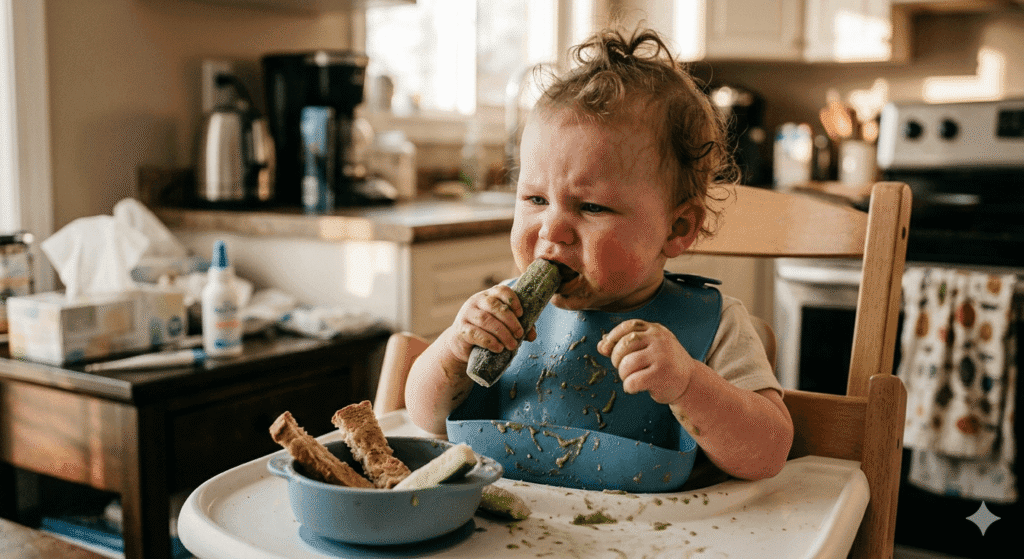
Teething is the ultimate enemy of a good meal. Imagine trying to eat a crusty piece of bread when you have a massive canker sore. You wouldn’t want to do it, and neither does your baby. It’s heartbreaking to see them hungry but too sore to eat.
If your baby is suddenly pushing away those Top 5 Iron-Rich Foods, don’t panic. Teething gums are sore, and sometimes they just need a break from chewing.
BLW vs. Purees: The Teething Pivot
In my BLW vs. Purees Guide, I talk about the importance of flexibility. Teething is the ultimate test of that flexibility. * The Cold Factor: Cold purees or yogurt act like an edible ice pack. It’s a sanity-saver.
- The Resistance: On the flip side, some babies love a hard, cold finger food (like a frozen cucumber spear) because the pressure feels good.
- The “No-Judgment” Rule: If they only want milk for 24 hours because their mouth hurts? Let them have the milk. They won’t be 15 and still only drinking formula, I promise.
The 7-Month Slump: When the Schedule Breaks (And You Cry)
You might have the most perfect 7-Month-Old Feeding Schedule, but a new molar doesn’t care about your plans. The pain usually worsens when they lie down—blood flow to the head, yay science!—which means those naps you worked so hard for are now 20-minute scream-fests.
How to survive:
- Shift the big meals: Try offering solids when the pain meds (if you’re using them) are at their peak.
- Don’t Stress the Ounces: If they drop an ounce or two of milk because sucking hurts, just offer more frequent, shorter sessions. It’s annoying for you, but better for them.
What Actually Helps (And What’s Honestly a Waste of Time)
- The Frozen Washcloth: This is the GOAT (Greatest Of All Time). Soak a clean washcloth, twist it up, and freeze it. It’s cheap, it’s easy, and it works.
- Silicone Teethers: Look for the ones with “nubs.” The best teethers for 7 month olds are usually the ones they can easily grip.
- The “Wrist Test”: When they’re teething, they are extra sensitive to heat. I always give it a good stir and a little taste test (on my wrist, of course!) before it goes anywhere near the baby. Lukewarm or cold is the way to go.
- Pain Relief: If they are truly miserable and can’t sleep, talk to your pediatrician about meds. Sometimes, a tiny dose is the only way anyone is getting any rest without losing their mind.
Sanity Check: This “Drool Phase” is Temporary (I Promise)
I know it feels like you’ve been living in a house of screams and snot for a month. I know your favorite sweater is now 40% baby saliva. But you are doing a phenomenal job.
Whether it’s a cold or a tooth, your baby is learning that when they hurt, you are the one who shows up. Deciphering teething symptoms vs cold indicators is exhausting, but you are the one with the cold washcloth, the snuggle, and the patience (even when that patience is wearing paper-thin).
This phase is messy, but it’s temporary. Soon enough, those tiny white pearls will pop through, and you’ll get your happy, broccoli-throwing baby back. Until then, stay hydrated (with coffee or wine, I don’t judge), and remember: you’ve got this.
And if you’re reading this in the middle of the night, save it—you’ll probably need it again. Or send it to another tired parent. Trust me, they’re Googling the same thing right now.