Navigating daycare immunity first year can feel like a never-ending battle against the sniffles. Let’s be real for a second — before I had kids, I thought I had everything figured out. I pictured my baby in a perfectly curated, neutral-toned nursery, playing with organic wooden toys. I really believed I could control everything — the environment, the germs… all of it.
Then daycare happened. And honestly? I was not ready. And let me tell you, reality hit me like a wet, snotty diaper to the face.
Within the very first week, I watched my child—the one I had painstakingly protected from every draft and unwashed hand—crawl over to a “new friend” and literally lick their forehead. Five minutes later, they were happily swapping a half-chewed teething ring like it was some kind of sacred peace treaty. I stood there, frozen, realizing that all my sanitizing efforts were about as effective as bringing a plastic spoon to a knife fight.
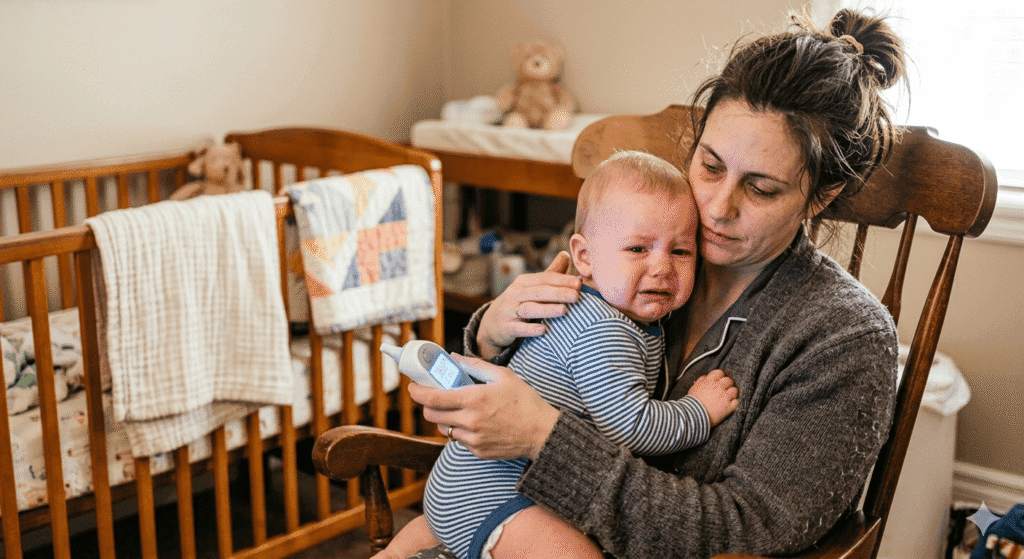
If you’re reading this while staring at a thermometer or listening to that distinct, heavy thump-thump of a toddler’s cough through the baby monitor, welcome to the club. You’re in the trenches. Grab a coffee (or a glass of wine, I’m not judging), and let’s talk about why your kid is currently a walking petri dish and why—believe it or not—it’s actually a good thing.
The Sticky, Snotty Reality: Babies Are Germ Magnets

When you drop your kid off at a playgroup or daycare, you aren’t just dropping off a human being; you’re dropping off a biological experiment. Daycare is basically a hotspot for every cold and virus out there. It’s basically kids passing germs around like snacks.
Babies put everything in their mouths — everything. To them, a shared toy isn’t a vector for the flu; it’s a delicious-looking curiosity that needs to be tasted immediately. Watching a group of toddlers socialize is like watching a slow-motion exchange of spit, snot, and tears. It’s messy, it’s loud, and honestly, it’s enough to make any parent want to douse their entire house in bleach and move to a remote island. It’s hard to watch, but it’s the messy reality of starting the daycare immunity first year journey.
Here’s the thing — you can’t keep them germ-free. You just can’t. Unless you plan on raising your child in a literal bubble (which would totally ruin the nursery aesthetic anyway), they are going to get sick. The socialization they get—learning to share, watching other kids, and developing those tiny, stubborn personalities—comes with a ‘germ tax.’ It’s a package deal.
The socialization they get—learning to share, watching other kids, and developing those tiny personalities—comes with a ‘germ tax.’ It’s a package deal. It’s also the time when they start testing boundaries, which is why I’ve moved away from traditional punishments and found a discipline method that actually sticks without using the naughty chair. And along with the germs, you might notice them finding their voice in other ways, like when your toddler suddenly starts saying ‘no’ to absolutely everything. It’s all part of the same big leap toward independence.
Reframing the Nightmare: The Immune System “Workout”

For the first few months, every sniffle felt like a personal failure.I remember sitting t here thinking, “what am I doing wrong?” I’d be up at 3 a.m. Googling “how to stop daycare colds” (don’t do that, it’s a dark hole of despair). But eventually, a pediatrician friend sat me down and gave me the reality check I desperately needed.
Stop thinking of your baby’s immune system as a fragile glass vase. It’s not. It’s more like a muscle than something fragile.
When a muscle wants to get stronger, it needs resistance. It needs to work. Every time your little one catches a common cold, their immune system is essentially “hitting the gym.” It’s learning how to recognize a “bad guy,” how to build an army of antibodies, and how to win the fight.
If they never met a germ, their immune “muscle” would be weak and flabby. This exposure now—while it feels like a never-ending cycle of snotty noses and ruined plans—is actually the groundwork for a robust defense system later in life. We aren’t just “surviving” daycare germs; we are training a world-class security team inside their tiny bodies. This is the essential groundwork for daycare immunity first year success.
Fueling the “Army”: The Nutrition-Immunity Connection

Since we can’t stop the germs from knocking on the door, our job is to make sure the “army” inside is well-fed and ready for war. You don’t need to suddenly become a chef or buy some overpriced “superfood” powder. It’s about the basics that actually work.
The Gut is the Command Center
Most of the immune system actually lives in the gut — which surprised me too. If the belly is happy, the immune system is standing at attention, which is a game-changer for daycare immunity first year challenges.
- Probiotics are the MVP: Think full-fat Greek yogurt, kefir, or a high-quality baby probiotic drop. Probiotics are the MVP: Think full-fat Greek yogurt, kefir, or a high-quality baby probiotic drop. These are especially important if you are in the middle of transitioning away from breastfeeding and looking for a gentle way to wean your toddler, as your child’s gut needs that extra support during the change.
- Fiber (Prebiotics): This is the food for the “good guys.” Bananas, oats, and steamed asparagus are great “gut fuel.”
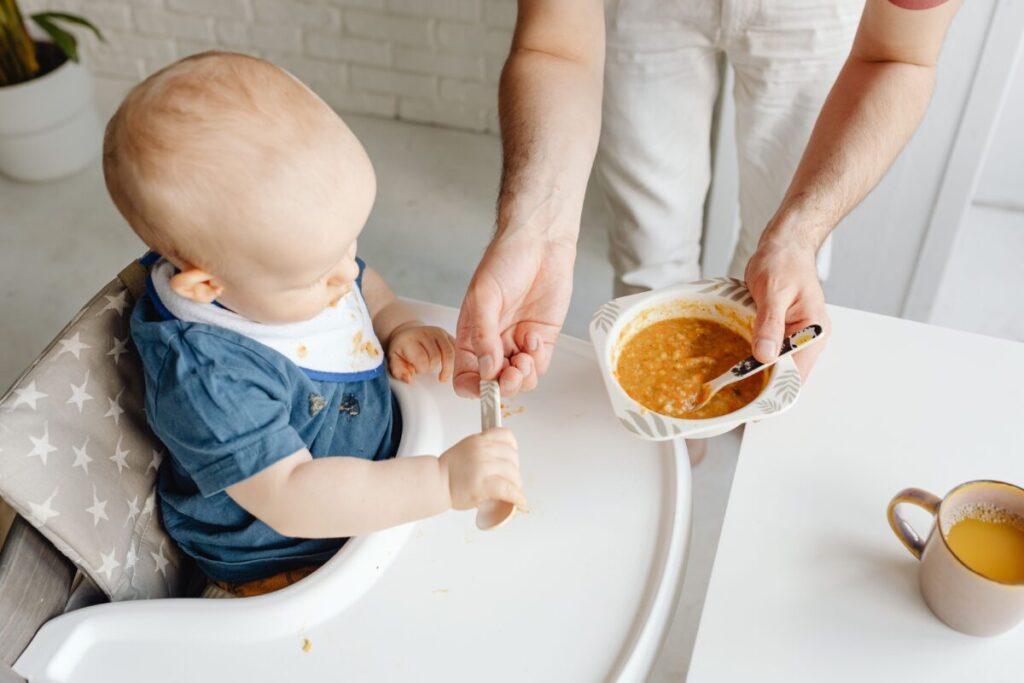
- The “Color” Rule: Try to get at least two different colors on their plate. Berries for antioxidants, sweet potatoes for Vitamin A, and broccoli for… well, for them to throw on the floor (but hey, maybe one tiny floret will make it in).
Shortcuts for Parents Who Are Over It
We don’t have time to peel, steam, and puree everything from scratch every single day. Here’s how I “cheat” my way to better nutrition:
- The “Garbage Disposal” Smoothie: Spinach, blueberries, hemp seeds, and yogurt. They think it’s a purple treat; you know it’s a nutritional power-bomb.
- Bone Broth Rice: I use broth to cook their rice or pasta instead of water. It’s packed with amino acids that support the gut lining, making it an easy win for daycare immunity first year nutrition.
- Healthy Fats: Avocado and olive oil aren’t just for weight gain; they help the body absorb those fat-soluble vitamins (A, D, E, K) that are crucial for fighting off bugs.
Daycare Immunity First Year: Surviving the Cycle
The “Daycare Cycle” is a brutal, repeating loop. It’s usually two weeks of “Hey, we’re actually healthy!” followed by ten days of “What is that weird rattling sound they’re making when they breathe?” Repeat for 12 months.
It’s exhausting. Not gonna lie. It’s soul-crushing when you have a massive meeting at work and the daycare calls at 10 a.m. because “Tommy has a slight fever and a runny nose.” Every sniffle is just a building block for their daycare immunity first year resilience.
How to manage the chaos without losing your mind:
- The Snot Sucker is Your Best Friend: Invest in a good nasal aspirator. Yes, it’s gross. Yes, you will eventually get snot on your favorite shirt. Just accept it. Clearing the nose helps prevent those secondary ear infections that turn a cold into a nightmare.
- Hydration Over Everything: When they’re sick, they might quit eating solids. Don’t fight them. Focus on milk, water, or homemade electrolyte popsicles. If they’re peeing, you’re winning.
- Steam is Free Therapy: Sit in a foggy, steamy bathroom for 15 minutes before bed. It loosens the gunk and helps them breathe, which means you might actually get two hours of sleep.
A Note on “Mom Guilt” (Let’s Kill It Right Now)
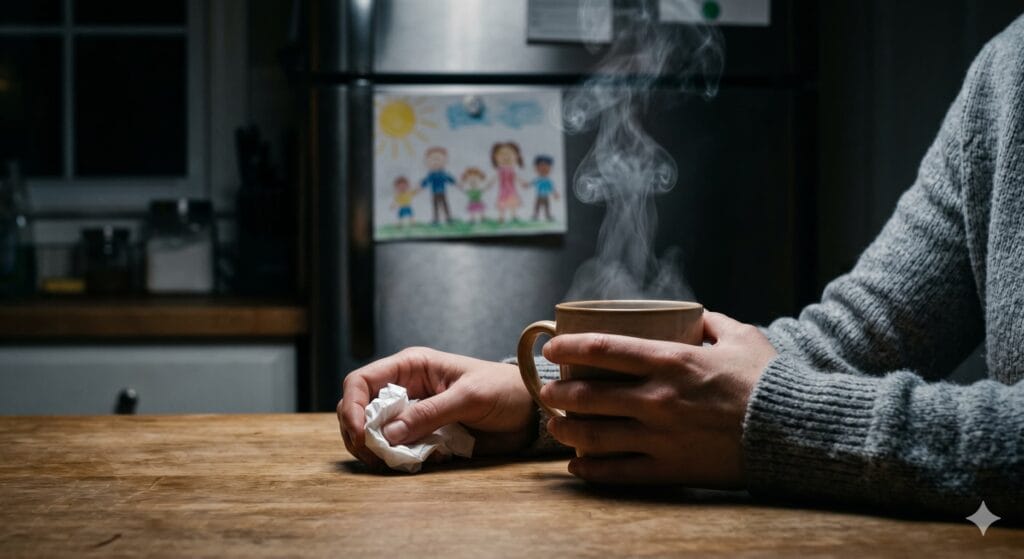
I need you to look at me: A sick child is not a reflection of your parenting.
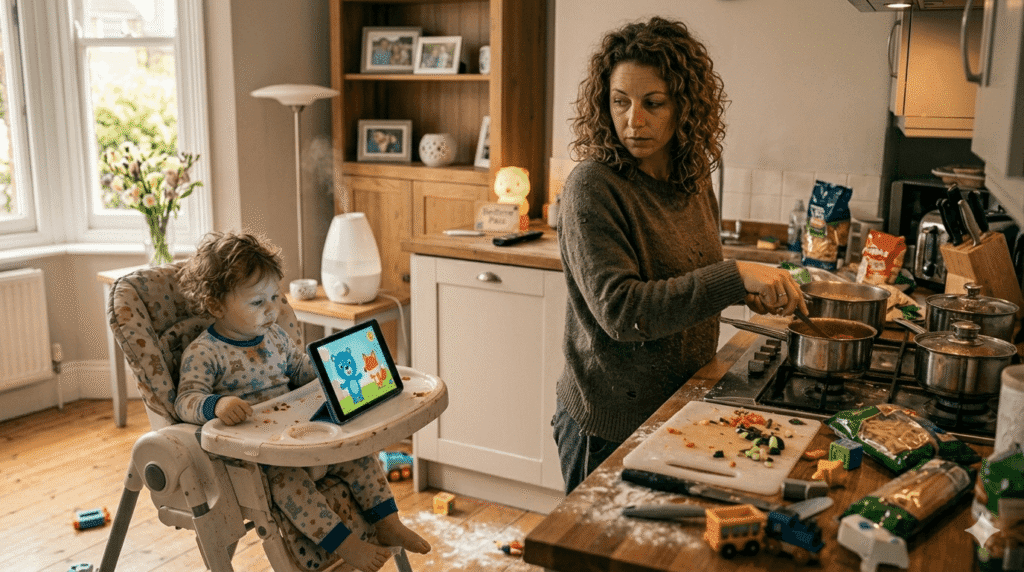
There is this toxic voice in our heads that says if we just fed them more kale, or kept the floor cleaner, it wouldn’t be this way. This is just another layer of the ‘motherhood guilt’ we all carry. Whether it’s the pressure of daycare germs or the crushing screen-time guilt we feel when we need a break, we need to remember: a sick child—or a child watching a show—is not a reflection of your parenting. We feel like failures when we see them looking miserable with red eyes and a crusty nose.
Stop. Just stop.
Illness is a part of the human experience. It is a biological necessity. You are providing your child with a home filled with love, a diet that supports them, and the socialization they need to become a functioning human. The germs are just part of the package deal. You’re just witnessing a very messy, very snotty part of growth. Managing the stress of daycare immunity first year is part of the journey.
What actually helped (and what didn’t)
When you’re in the thick of it, you don’t need high-level theory. You need a plan.
1. The Power of Sleep
Sleep is when the body does its best repair work. If your kid is sick, throw the “perfect schedule” out the window and let them nap. A well-rested body fights viruses ten times better than an overtired one.
2. Handwashing (The Realistic Version)
You can’t wash their hands every 5 minutes. You’d go insane. But, make it a ritual the second you get home from daycare or the park. “Wash away the school day” helps keep the outside germs from settling onto your couch and bed.
3. When to Truly Worry vs. When to Brew Coffee
Most daycare colds are just… annoying. But keep an eye out for:
- Dehydration: Fewer than 4 wet diapers in 24 hours.
- Labored Breathing: If they are using their chest muscles to pull in air (you’ll see their ribs).
- The “No-Budge” Fever: A high fever that won’t come down with meds or lasts more than 3 days.
Most other symptoms are just standard milestones of daycare immunity first year growth—brew another cup of coffee and wait it out.
If you’re in this phase right now…
The first year of socialization feels like a marathon run through a swamp. It’s heavy, it’s damp, and you feel like you’re barely moving forward. But one day, you’ll realize it’s been three weeks since anyone used a tissue. You’ll realize your “petri dish” has turned into a sturdy, resilient kid who can handle a playground without coming home with a fever.
Hang in there. Wipe the snot, offer the snuggles, and stay focused on the big picture of daycare immunity first year development. This phase is temporary, but the immunity they’re building is for life.