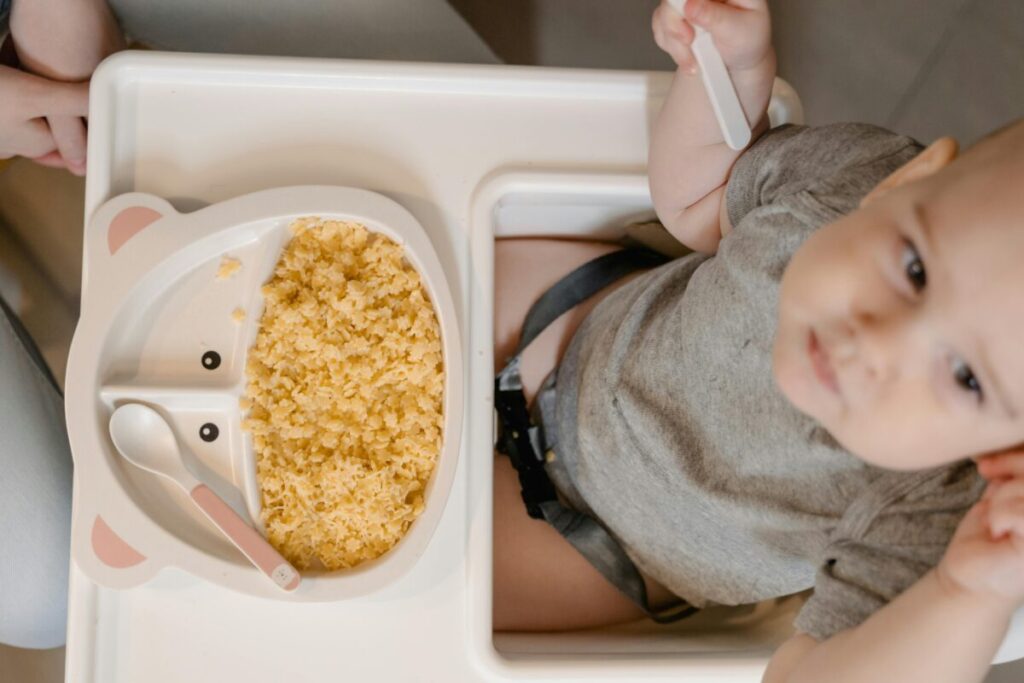
Picture this: It’s 11:45 a.m. You’ve spent twenty minutes carefully steaming carrots, blending a small batch of chicken, and mixing it all into what you are genuinely convinced is a delicious, beautifully smooth puree. You place it in front of your seven-month-old with a hopeful smile. She stares at it. Then she stares at you. Then, without breaking eye contact, she slaps the spoon right out of your hand and sends a spray of orange mash across the kitchen wall. If this feels like your reality, know that you are not alone—I am here to guide you through the process of preparing healthy 6-12 month baby meals that are both nutritious and stress-free.
That was my daughter Mia on a Tuesday in October. I stood there in my kitchen, still in the same oversized sweatshirt I’d slept in, staring at a carrot-splattered wall, genuinely considering just handing her a rice cake for the rest of her life. My husband walked in, took one look at the scene, and wisely said nothing. Smart man.
If any of that sounds familiar, I want you to take a breath. The mess, the rejection, the silent 2 a.m. spiral of am I doing this right? — all of it is completely normal. I’ve cried over wasted batches of food that took me forty minutes to make and lasted approximately two spoonfuls.
I once called my own mother in a panic because Mia hadn’t eaten a proper lunch in four days, and my mum — bless her — just laughed and said, “Neither did you, and you turned out fine.” I’ve been where you are. And I’ve come out the other side with a handful of simple homemade baby food recipes that actually work, a much calmer mindset, and a deep appreciation for bibs with pockets.
This is everything I wish someone had handed me on day one of the solid food journey. Real recipes, honest tips, and the kind of reassurance that only comes from someone who has genuinely been elbow-deep in a failed chicken puree. Whether you are hunting for nutritious lunch ideas for babies or just want to feel more confident as you curate healthy 6-12 month baby meals, you are in the right place.
Something nobody tells you clearly enough when you start introducing solids is that lunch deserves to be the big meal of the day. Not because some parenting book says so, but because it just makes practical sense. Babies in the six-to-twelve month window are growing at a rate that is almost impossible to comprehend — brains developing, muscles building, new movements being wired in every single day.
All of that takes energy, and midday is when most babies are at their most alert and receptive. A lunch that actually delivers something — iron, healthy fat, complex carbohydrates — sets the tone for the whole afternoon. Breast milk or formula is still doing the heavy lifting nutritionally, but a well-made lunch is a genuinely important supporting act.
I started thinking about Mia’s lunches differently when she was around eight months old, standing at the kitchen counter one afternoon with a half-eaten jar of store-bought puree in one hand and a pile of random vegetables on the cutting board, thinking: there has to be a better way. I’d been doing the usual sleep-deprived 2 a.m. internet rabbit holes about infant nutrition, and I kept seeing the same three things come up over and over — protein, healthy fat, a vegetable or complex carb. That was it. That was the formula I’d been missing. I started calling it the Power Mash, and once I had that simple framework in my head, everything got easier.
The idea is straightforward. You pick a protein — chicken, lentils, white fish, egg yolk, cannellini beans. You add a fat — olive oil, avocado, full-fat coconut milk, a splash of breast milk. You throw in a vegetable or starchy base — sweet potato, broccoli, peas, butternut squash.
Blend or mash to the right consistency for your baby’s age, and you have something that is doing real nutritional work, not just filling a gap until the next nursing session. It sounds simple because it is, but the difference between a random single-ingredient puree and a proper Power Mash is enormous — in terms of both nutrition and flavor complexity. This is exactly why these simple homemade baby food recipes are so effective for building a solid nutritional foundation.
Table of Contents
Healthy 6-12 Month Baby Meals: The Recipes
The idea is straightforward. You pick a protein — chicken, lentils, white fish, egg yolk, cannellini beans. If you are wondering about the best way to introduce eggs safely, check out my guide: [How to Serve Egg to 6 Month Old: Safe Methods and Allergy Prevention]. You add a fat — olive oil, avocado, full-fat coconut milk, a splash of breast milk. You throw in a vegetable or starchy base — sweet potato, broccoli, peas, butternut squash.
Chicken & Broccoli Power Mash

You need about 60 g (2 oz) of cooked, shredded chicken breast, 80 g (⅓ cup) of steamed broccoli florets, a tablespoon of olive oil or a splash of breast milk, and two or three tablespoons of the broccoli steaming water to adjust the consistency. Blend everything together until smooth for younger babies, or leave it slightly rough if your baby is past nine months and handling more texture. Serve at room temperature — not straight from the fridge, not hot.
The reason this combination works so well is that chicken is one of the best early sources of heme iron, which babies start needing more of around six months as their birth iron stores deplete. Broccoli is full of vitamin C, which helps the body actually absorb that iron. Olive oil brings in the monounsaturated fats the developing brain needs. Three ingredients, serious nutritional payoff.
The first time I made this for Mia it was a total disaster of texture — grainy, slightly dry, nothing like I’d imagined. She took one sniff, pressed her lips together, and turned her head away with the kind of decisive confidence I genuinely envied.
It wasn’t until I started blending longer than felt necessary and adding a generous splash of breast milk that she finally opened up to it. A close friend of mine had the exact same story — she said she ended up crying into her blender, and honestly, I understood completely. It’s a reminder that even when preparing healthy 6-12 month baby meals, things don’t always go to plan on the first try, and that is perfectly okay.
If your baby rejects this one, thin it down, warm it up just slightly, and try offering it after a small nursing session when they’re curious rather than starving. That small shift made a real difference for us.
Red Lentil & Carrot Mash: A Nutritious Lunch Idea for Babies

Rinse about 50 g (¼ cup dry) of red lentils, peel and chop two medium carrots (roughly 150 g / 5 oz), and simmer them together in 120–180 ml (½ to ¾ cup) of water or low-sodium vegetable broth for around twenty minutes until everything is completely soft. Add a teaspoon of olive oil, a half teaspoon of ground cumin if your baby is past seven months, and blend or mash to your preferred texture. This makes three or four servings and freezes perfectly in ice cube trays — which, if you haven’t discovered ice cube tray batch cooking yet, is genuinely one of the better things to happen to my kitchen routine.
Red lentils are a plant-based iron and folate powerhouse, both of which are critical for neurological development at this stage. Carrots bring beta-carotene and a natural sweetness that most babies go toward instinctively. The cumin introduces a gentle, warming flavor that is completely safe and — I’d argue — important. Exposing babies to spices and aromatic flavors early is one of the most effective things you can do for future food acceptance. Children who eat a variety of flavors in infancy are far more likely to eat a variety of foods as toddlers, and that window is worth using. Incorporating these ingredients is a great way to expand your nutritious lunch ideas for babies and set the stage for adventurous eating.
When I first made this, Mia leaned back in her high chair like I’d placed something personally offensive in front of her. The lentil smell does take some getting used to — it’s earthy and a little funky fresh out of the pot. What turned it around for us was stirring in a teaspoon of sweet potato puree to soften the flavor. By the fourth or fifth attempt, she was actually opening her mouth for the spoon. That number — ten to fifteen exposures before a baby truly accepts a new food — is real and backed by research, and holding onto it kept me from giving up too early.
Salmon & Sweet Potato Velvet Mash

Take about 60 g (2 oz) of baked or steamed salmon fillet — no seasoning — and 100 g (½ cup) of steamed sweet potato. Flake the salmon carefully and check thoroughly for bones before you do anything else. This is the one step in all of baby food preparation that is genuinely non-negotiable. Combine with a tablespoon of full-fat coconut milk or plain whole-milk yogurt, and blend smooth or mash roughly depending on your baby’s age. A tiny pinch of dried dill is a lovely optional addition that takes the flavor somewhere more interesting.
Salmon is one of the richest food sources of DHA — an omega-3 fatty acid directly linked to brain and visual development — and getting it in during the first year is genuinely worthwhile. Sweet potato adds vitamin A, potassium, and gentle fiber. The coconut milk gives the whole thing a silky texture that makes it look and smell far more appealing than plain fish mash has any right to.
When I introduced this to Mia at around nine months, she gagged so dramatically that my husband came running from the living room thinking something was actually wrong. Nothing was wrong. She was just being theatrical, which — honestly — she still is at two years old. The key with fish is to introduce it after a bite or two of something familiar. Let their guard come down first, then offer the salmon. If they reject it completely, keep it in the weekly rotation anyway. Familiarity breeds acceptance, even when it doesn’t feel like it yet. Keep experimenting, because finding these nutritious lunch ideas for babies is a journey that pays off in the long run.
Butternut Squash, Pea & White Bean Mash

Steam or roast about 120 g (½ cup) of butternut squash, lightly steam 50 g (¼ cup) of frozen peas until just soft, and rinse 60 g (¼ cup) of canned cannellini beans well. Blend everything together with a tablespoon of olive oil, adding water or formula gradually until you hit the right consistency. For babies over nine months, leave it slightly chunky by mashing with a fork rather than blending fully. The sweetness of the squash beautifully balances the earthiness of the beans, and the whole thing has a warmth to it that feels genuinely comforting.
This is the fully plant-based Power Mash, and it doesn’t compromise on anything. White beans bring protein, iron, and zinc. Peas add folate and vitamin K. Butternut squash contributes vitamin C and a range of antioxidants. If you’re feeding a baby in a vegetarian or vegan household, this one covers a lot of nutritional ground in a single bowl.
Beans can create a denser texture than babies expect, so if there’s a gag or a face, just thin it right down and try again. A thinner, soupier version — even offered sipped from a small open cup — can be a gentler first introduction before you work back up to the full mash consistency. Remember, adapting these simple homemade baby food recipes to your baby’s comfort level is a normal part of the process.
When should I introduce textures to my baby?
Around 9 months, when the baby develops a pincer grasp, you can start introducing soft lumps and minced food.
Is gagging a sign of choking?
No, gagging is a loud, protective reflex. Choking is silent and a medical emergency.
How many times should I offer a new food?
Research suggests it can take 10 to 15 exposures before a baby truly accepts a new food.
Keep the Momentum Going: More Tips for Your Feeding Journey
Navigating the world of infant feeding can feel like a rollercoaster, but you don’t have to do it alone. If you found this post helpful, here are some other resources to help you manage the journey with confidence:
- First Foods & Finger Foods: A Real-Mom’s Guide to Surviving BLW – Essential reading for those days when you’re ready to move beyond purees and embrace the mess of finger foods.
- The Sweet Potato Guide for Babies: From First Mash to Stress-Free Finger Food – A perfect follow-up for simple, nutrient-dense meal prep that your baby will actually enjoy.
- The Slippery Truth: Avocado for Baby (And Why My Kitchen Looks Like a Shrek Crime Scene) – A little bit of solidarity for when the kitchen gets messy and you need a laugh.
How to Balance Baby Meal Textures
One of the things I got genuinely wrong in the early months was textures. I stayed in smooth-puree territory far longer than I needed to because I was scared of anything chunkier. Mia’s pediatrician gently pointed this out at her nine-month check-up, and I remember driving home thinking, how did I miss that? I hadn’t missed it. I was just scared. And that fear — entirely understandable — can actually work against your baby’s development if you hold onto it too long.
Here’s the rough guide. Between six and eight months, smooth is right. The tongue thrust reflex is still fading, and the mouth is genuinely still learning how to manage food. Think the consistency of yogurt, or thin porridge. Use this window to go wide on flavors, though — mild spices, herbs, aromatic vegetables. This is when flavor preferences are being laid down, and boring single-ingredient purees are a missed opportunity.
From nine months onward, texture becomes the goal. Around that age most babies develop a pincer grasp — picking up small pieces of food between thumb and forefinger — and that’s the developmental signal to start introducing soft lumps, minced meat, and small pieces of very soft cooked vegetables. Learning how to balance baby meal textures is key at this stage, and the rule of thumb that worked for me is simple: if you can squash it easily between your finger and thumb, it’s the right texture. If it resists at all, it’s not ready for a baby yet.
The gagging thing nearly broke me. The first time Mia gagged on a slightly lumpy mash, I snatched her out of the high chair so fast I knocked my own coffee off the table. My heart was going at about double speed. She, meanwhile, had already recovered, swallowed, and was reaching forward for more food. I sat on the kitchen floor for a few minutes just breathing. It took several more incidents — each one slightly less terrifying than the last — before I could stay seated and watch her work through it calmly.
What helped most was understanding the actual difference between gagging and choking, because they are completely different things. Gagging is loud — a reflexive cough or splutter when food moves too far back before the baby is ready to swallow. The face goes red. It’s dramatic. But it is a protective reflex doing exactly what it should do, and stepping in actually interrupts that process. Choking is silent. A choking baby cannot cry or cough effectively, and will go blue rather than red. That is a medical emergency.
Take a pediatric first aid course. I say this as someone who kept meaning to do it and kept putting it off — don’t put it off. Knowing what to do in that scenario is more valuable than anything else you will read in this post or anywhere else. For everyday mealtimes, though, trust your baby. Stay close, always supervise, and let them navigate the textures. Each time they work through a slightly challenging bite, they are building exactly the oral motor skills they need — and that is the real secret behind learning how to balance baby meal textures throughout your child’s growth.
Some days Mia eats beautifully and I feel like I’ve got this figured out. Some days she refuses every single thing I put in front of her and I end up serving a pouch and going to bed wondering what I’m doing wrong. There was one whole week where she barely touched anything I made from scratch — five days of pouches, five days of mum-guilt that I would not wish on anyone.
But here is what I’ve genuinely come to believe after going through all of it: your job is not to ensure a certain number of grams enters their mouth at every meal. Babies are remarkably good at self-regulating appetite. They eat when they are hungry and stop when they are full — a skill that many of us adults have spent years trying to relearn. Your job is to offer. Consistently, without pressure, with as much variety as you can manage. The flavor exposure is happening even when it doesn’t look like it. The mealtime ritual — sitting together, the spoon, the textures, the social experience of eating — is building something real even on the days that look like complete chaos.
Keep making these healthy 6-12 month baby meals. Keep putting the salmon in front of them even though they’ve refused it four times. Keep blending the lentils. And on the days when the mash ends up on the wall, remember that you are doing something genuinely hard, and you are showing up for it anyway.
That is enough. More than enough.
If you have a Power Mash combination that your baby loves, leave it in the comments — this community genuinely grows stronger every time we share what actually works.