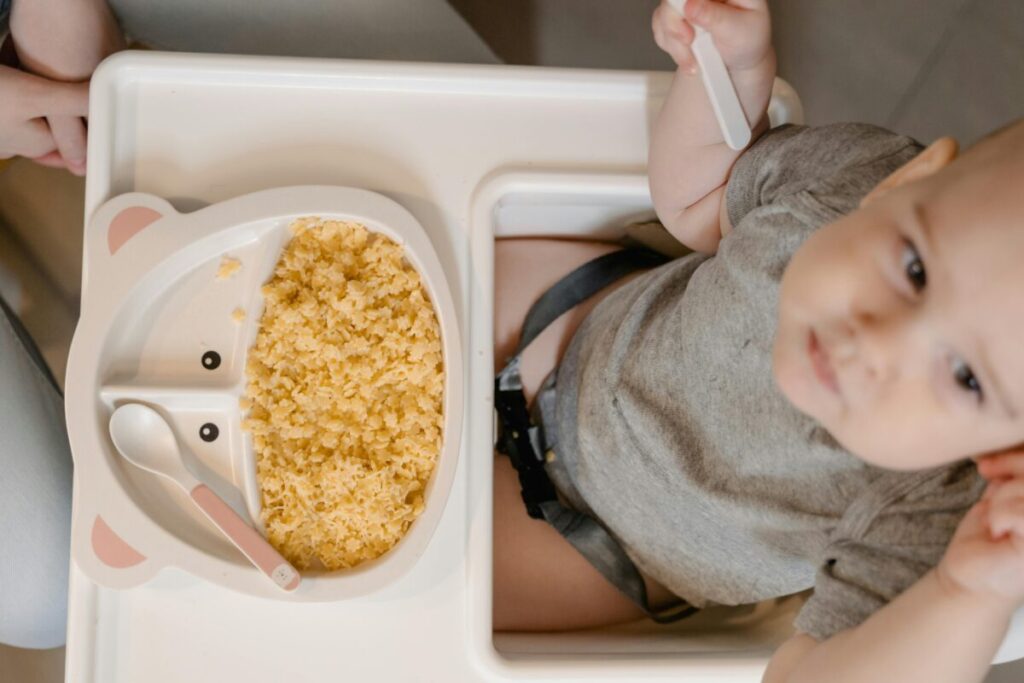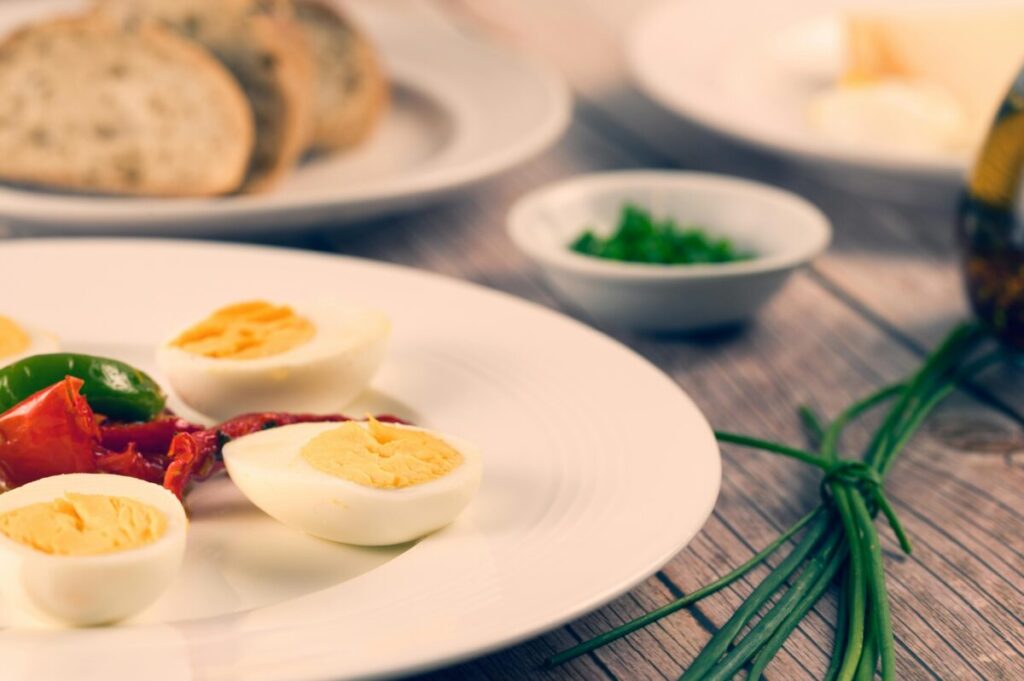
I still remember standing in my kitchen with a single hard-boiled egg in one hand and my phone in the other. My 6-month-old was loudly demanding breakfast from her high chair, banging her spoon against the tray like a rhythmic drum solo.
I kept opening parenting websites and closing them again, searching “how to serve egg to a 6 month old.”
Part of me knew it was just breakfast. The other part was convinced I was about to make a life-changing mistake. I knew eggs were nutritious and versatile, but I also knew they were a common allergen. Learning how to serve egg to 6 month old suddenly felt like a monumental, high-stakes event, rather than just a simple kitchen task.
If you’re feeling that way too, you’re not alone.
Introducing allergens is a parenting milestone that usually comes with a surprising amount of anxiety. You want to do the right thing and keep your baby safe, all while running on very little sleep and constantly cleaning food off your floors. If you are still navigating the lead-up to full meals, you might find my The Ultimate 5 Month Old Feeding Routine: Solid Starts, High-Calories, and Better Sleep helpful for laying the groundwork.
The good news? Eggs are actually one of the best foods you can introduce during the first year. Once you know how to serve them safely, they become your best friend in the kitchen. So, let’s talk about how to serve egg to a 6 month old — the safe ways to introduce it, what signs to watch for, and the easy methods that turned my breakfast panic into a stress-free routine.
Table of Contents
Why Eggs? And Why So Early?

The Science Behind Early Allergen Introduction (Without the Jargon)
For years, the advice was to delay allergens like eggs, peanuts, and fish until after the first year. Turns out, that advice was wrong — and updated research has completely flipped the script.
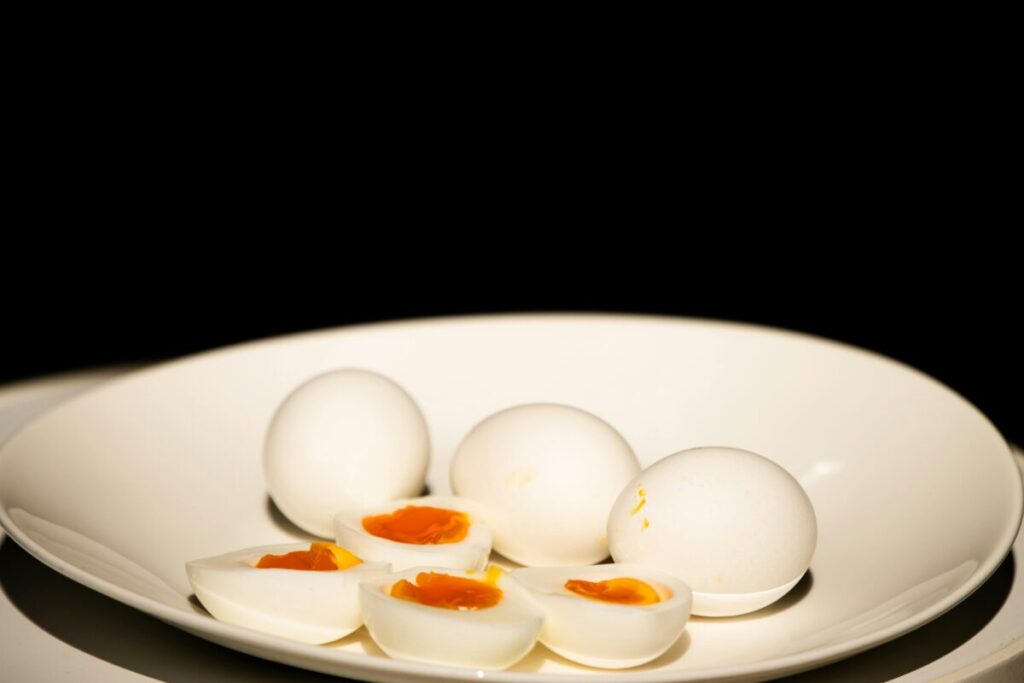
Studies like the LEAP trial and guidance from the American Academy of Pediatrics now tell us that introducing common allergens early and consistently actually reduces the risk of developing an allergy. Your baby’s immune system is incredibly adaptable in that six-to-twelve-month window. Exposure during this time helps it learn, “Oh, this is food, not a threat.”
Waiting too long, ironically, may increase the risk. So if your baby is around six months, showing signs of readiness (sitting up with support, showing interest in food, no longer pushing everything out with their tongue), eggs are absolutely on the table — literally.
When I first learned that, I honestly thought I’d misunderstood. Every instinct I had was telling me to wait longer because eggs felt scary. It took a conversation with our pediatrician before I finally felt confident enough to stop delaying introducing allergens to baby and actually put egg on the menu.
How to Actually Serve Egg to a 6 Month Old
Texture Is Everything
At six months, your baby has zero teeth and limited control over swallowing. This is not the time to hand them a full hard-boiled egg and wish them luck. Texture and size matter enormously for choking prevention.
Here’s the golden rule: anything you serve needs to either dissolve easily or be soft enough to squish between your thumb and forefinger.
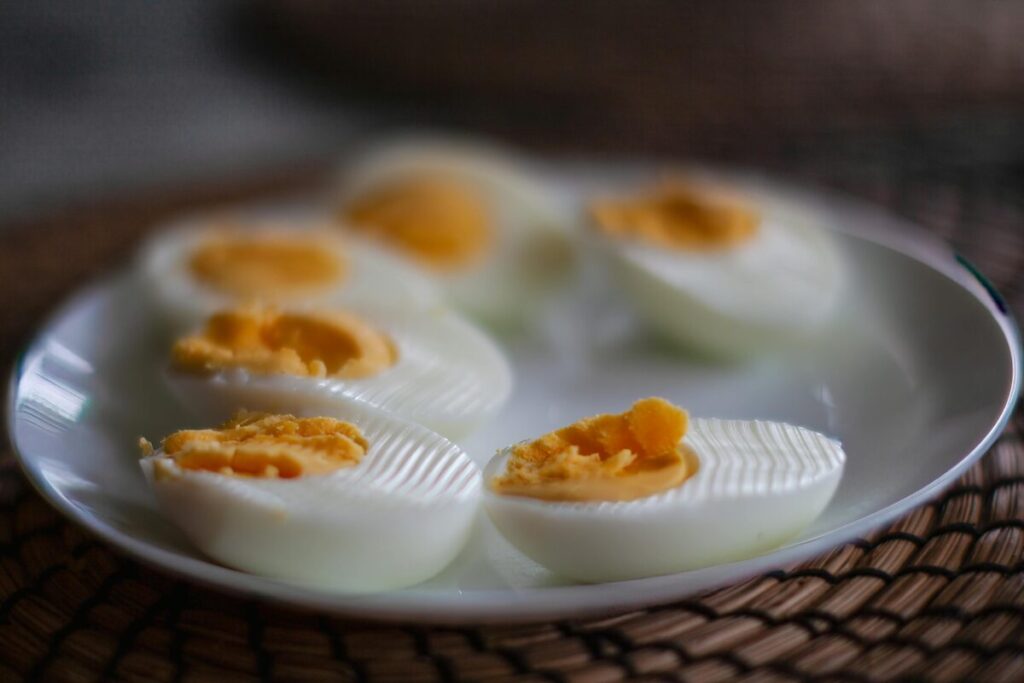
Hard-Boiled Egg Yolk — The Classic First Option
The yolk of a hard-boiled egg is your safest starting point. It’s rich in fat, iron, and choline — basically brain food for babies.
How to prepare it:
- Hard boil an egg for 10–12 minutes.
- Peel it and separate the yolk from the white.
- Mash the yolk with a few drops of breast milk, formula, or water until it becomes a smooth, paste-like consistency.
- Start with a small amount — about a teaspoon or two.
That’s exactly how we started. I remember carefully mashing a tiny spoonful of yolk and placing it on her tray like I was presenting some kind of gourmet meal. She immediately squished it between her fingers, rubbed it into the tray, and only then considered putting a little bit in her mouth. I spent twenty minutes preparing that egg and about ten seconds realizing that feeding a baby is often more about exploration than eating.
Why skip the white at first? Egg whites contain more of the proteins that trigger allergic reactions. Starting with just the yolk is a gentler way to begin introducing allergens to baby.
How to Serve Egg to 6 Month Old: Soft Scrambled Eggs
Scrambled eggs are another fantastic option, but the preparation matters.
Key tips:
- Cook low and slow — no rubbery, dry eggs.
- Skip the salt entirely. Baby kidneys are not ready for added sodium.
- Scrambled eggs should be soft enough to mash with your gums.
- Cut or pull apart into very small, pea-sized pieces for baby-led weaning, or serve mashed for a spoon-fed approach.
What to Avoid
- No fried eggs — too firm and the edges can be tough.
- No whole hard-boiled eggs — a choking hazard.
- No raw or undercooked eggs — the risk of salmonella is real and very serious for infants.
- No added salt, sugar, or seasoning initially.
The Allergy Talk: What to Watch For


Signs of Egg Allergy in Babies
Let’s be real about this part, because it’s what every parent is actually scared of. Knowing the signs of egg allergy in babies is not about scaring yourself — it’s about feeling prepared.
I wasn’t worried about the mechanics of how to serve egg to 6 month old; I was worried about what might happen afterward. The first time she ate egg, I don’t think I actually tasted my own breakfast because I spent the entire meal staring at her face looking for signs of a reaction.
Allergic reactions can happen within minutes to a couple of hours after exposure. Here’s what to look for:
Mild to moderate signs:
- Hives or red, raised, itchy welts on the skin
- Redness or swelling around the mouth, lips, or face
- Watery, itchy eyes
- Runny nose
- Vomiting or diarrhea
Severe signs (anaphylaxis — call 911 immediately):
- Difficulty breathing or wheezing
- Swelling of the throat or tongue
- Sudden drooling or difficulty swallowing
- Limpness or loss of consciousness
- Pale or bluish skin tone
Red Cheeks vs. Real Reaction
One thing I wish someone had told me before introducing eggs is that not every red mark means an allergy.
The first time egg touched my daughter’s cheeks, I immediately panicked. Within minutes, there were little red patches around her mouth, and my brain went straight to worst-case scenarios. I was already mentally preparing myself to call the pediatrician.
But after I gently wiped her face clean and waited a bit, the redness faded almost completely.
What I later learned is that eggs — like many protein-rich foods — can sometimes irritate sensitive baby skin. A contact rash usually shows up only where the food touched the skin and often disappears within 30 to 60 minutes after cleaning the area.
A true allergic reaction tends to look different. Instead of staying in one spot, it may spread or become more noticeable over time, and it’s often accompanied by other symptoms.
The first few times you introduce allergens, it’s completely normal to watch your baby like a hawk and analyze every little spot or blotch. I certainly did. But knowing the difference between simple skin irritation and signs of a genuine allergy can save you a lot of unnecessary panic.
Always talk to your pediatrician before that first introduction if your baby has eczema or a known family history of food allergies. They may recommend doing it in-office.
3 Simple Ways: How to Serve Egg to 6 Month Old (BLW Recipes)

Recipe 1: Mashed Yolk with Avocado
This one is practically perfect — healthy fats from both the egg and the avocado, smooth texture, and naturally creamy.
- 1 hard-boiled egg yolk
- 2 tablespoons ripe avocado
- Tiny splash of breast milk or formula
Mash everything together until completely smooth. Serve on a spoon or pre-loaded spoon for baby to self-feed.
Recipe 2: Soft Scrambled Egg Fingers
This is a baby-led weaning egg recipe designed for the babies who want to feed themselves.
- 1 whole egg (once yolk has been tolerated a few times)
- Splash of whole milk or formula
- Small amount of butter or olive oil
Whisk the egg with the milk, pour into a lightly buttered pan on low heat. Stir constantly until just set. Let it cool, then slice into soft strips about the length and width of your finger. Baby grabs and gums away.
Recipe 3: Egg Yolk Veggie Mash
Great for combining iron-rich egg yolk with first vegetables.
- 1 hard-boiled egg yolk
- 2 tablespoons mashed sweet potato or butternut squash
- Enough breast milk or water to thin to preferred consistency
Mix and mash. Serve with a spoon. Bonus: the orange color makes it look fun, and babies love a colorful plate.
The Messy Story (Or: How I Nearly Called the Pediatrician Over Egg Residue)
I remember sitting there, staring at that boiled egg, wondering if I was making a huge mistake. My daughter was seven months old, chubby-cheeked, absolutely delighted by the world, and blissfully unaware that her mother had been anxiously reading about egg allergy protocols for two days straight.
I mashed the yolk. I pre-loaded the spoon. I handed it over.
She looked at the spoon. She looked at me. Then she grabbed the spoon with both hands and flung the entire thing across the tray. The mashed yolk—which I had spent so long preparing when learning how to serve egg to 6 month old—landed on her cheek, her forehead, somehow in her eyebrow. She thought this was the funniest thing that had ever happened.
I wiped her face. And then I saw it — redness. Right across both cheeks. My stomach dropped.
I grabbed my phone. I started typing “signs of egg allergy in babies.” My husband walked in, took one look at my face, and said, “She has egg on her face.” Not metaphorically. Literally. I had not gotten all the egg off when I wiped her, and the contact with her sensitive skin was causing a little redness.
I wiped her face more thoroughly. Within ten minutes, the redness was gone. She was fine. More than fine — she was grinning and banging her spoon and ready for round two.
Trust me, the first time you feed your baby something that could cause a reaction, your heart is going to be in your throat — it’s totally normal. The key is knowing what you’re watching for, staying calm enough to observe, and trusting yourself to know your baby.
That experience taught me something important: the fear of the first time is almost always worse than the first time itself.
Why You Can’t Just Do It Once
Consistency Is the Whole Point
Introducing allergens to baby isn’t a one-and-done checkbox. Research is clear: regular, repeated exposure is what builds tolerance. Some guidelines suggest offering the allergen two to three times per week consistently.
I’ll be honest — consistency was harder than the first introduction. Life got busy. Some weeks I completely forgot when we’d last served eggs. I eventually started keeping a note in my phone because otherwise I’d find myself standing in the kitchen wondering, “Wait… did she have eggs this week or was that last week?”
If you give eggs once and then don’t offer them again for three weeks, you’re essentially starting over. The immune system needs repetition to learn.
Work eggs into your baby’s rotation alongside whatever else they’re eating. The scrambled egg fingers recipe above is easy enough to throw together twice a week. It doesn’t have to be complicated. If you’re feeling overwhelmed trying to balance all of this, my Easy 6-Month-Old Baby Feeding Schedule: A Stress-Free Guide to Starting Solids can help you take the guesswork out of your daily routine.
Keep a simple note in your phone of introducing allergens to baby — what you’ve introduced and when. Nothing fancy — just enough so you can track the pattern and share it with your pediatrician if questions come up regarding how to serve egg to 6 month old or other foods.
You’ve Got This
Looking back now, it’s funny how much anxiety that first egg caused me. A few months later, my daughter was happily stuffing scrambled egg into her mouth with both hands while most of it ended up in her hair and on the floor. Somewhere between those two moments, I stopped being afraid and started trusting both the process and myself a little more.
Knowing how to serve egg to a 6 month old is honestly one of the more empowering things you can learn as a new parent. You’re not being reckless by introducing it early — you’re being smart. You’re following current science. You’re doing the thing that actually protects your baby in the long run.
The mess is coming. Egg will end up in places you didn’t know food could reach. You will panic at least once over a red cheek that turns out to be nothing. And then, one day, you’ll watch your baby grab a little strip of scrambled egg and gum it down like a total champion, and you’ll feel that specific kind of mom-pride that doesn’t have a name but fills up your whole chest.
As your baby grows and their appetite changes, it’s helpful to have a routine ready. If you’re looking for what comes next, you can check out my Easy 7-Month-Old Baby Feeding Schedule: A Stress-Free Guide to help you navigate your baby’s next month of solids with ease.
Feed that baby. You already know more than you think.
Always consult your pediatrician before introducing new foods, especially if your baby has eczema, existing allergies, or a family history of food allergies. This post is for informational purposes and reflects personal experience alongside current general guidance — not medical advice.