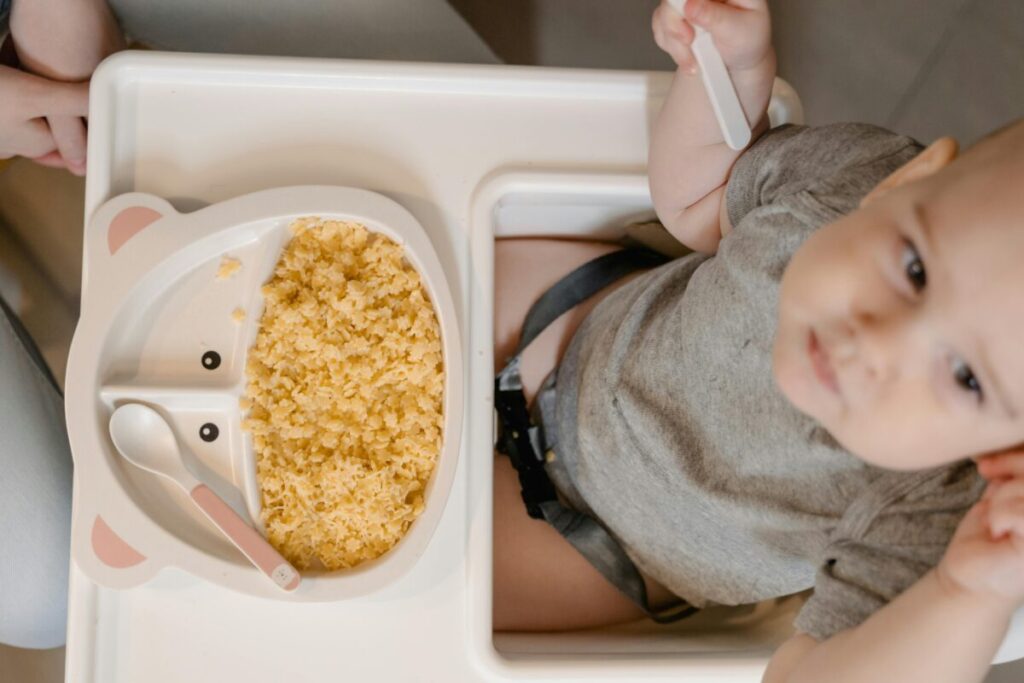
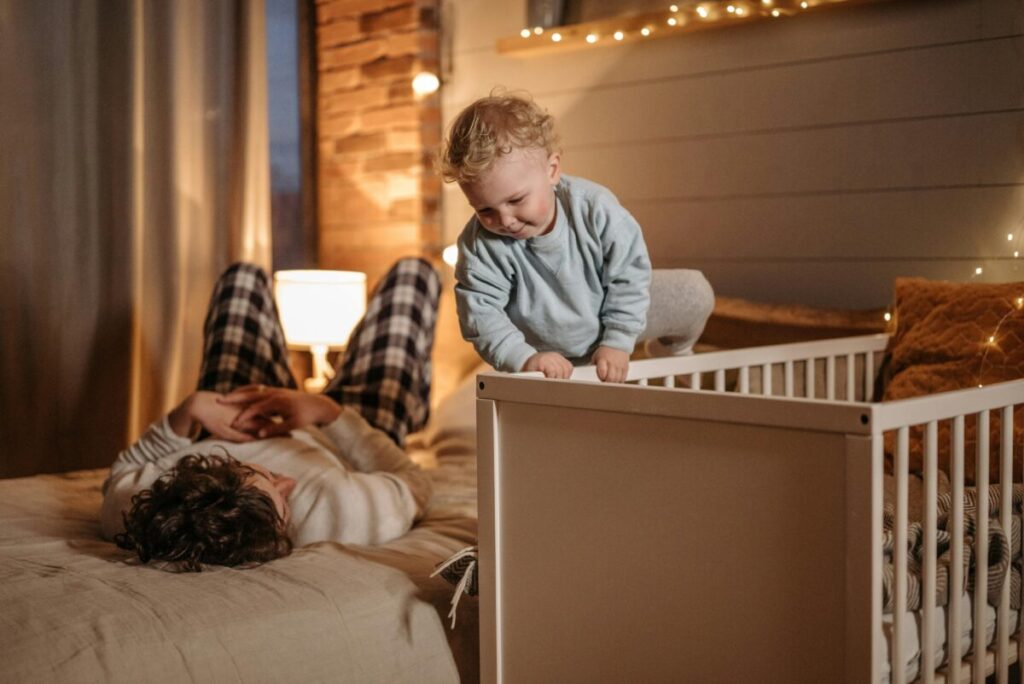
It started at 6:47 AM on a Tuesday. I heard a thud, then silence, then the unmistakable pitter-patter of tiny feet that should not have been able to reach the floor yet. I walked into my son’s room and found him standing beside his crib, grinning like he’d just solved world hunger. He was two years and four months old, and he’d figured out that he could hook his leg over the rail, swing his body like a little gymnast, and bail out entirely. No tears. No drama. Just pure, triumphant chaos.
That was our crib jailbreak moment. And if you’re reading this, you’ve probably had one too—or you’re bracing for it.
Here’s the thing nobody tells you: the crib to bed transition isn’t just logistical. It’s emotional. That crib represents the last tiny baby thing you’ve been clinging to. Once it’s gone, your baby is officially a toddler, and toddlers have opinions and legs that move freely through the house at 2 AM. It’s a lot. You’re allowed to feel it.
But you’ve also got to sleep. So let’s talk about how to actually do this thing.
Table of Contents
The Signs: Is Your Toddler Actually Ready?


Before you run to IKEA and dismantle the crib, pump the brakes and look for the real ready for toddler bed signs. Because sometimes kids can escape the crib but aren’t emotionally ready for the freedom that comes with a big kid bed. Those are two very different things, and confusing them leads to weeks of chaos.
Ready for Toddler Bed Signs to Watch For
They’re climbing out—and you’re terrified. This is the big one. Once a toddler figures out they can get out, the crib becomes a fall hazard more than a sleep solution. If your kid is launching themselves over the rail, it’s time.
They’re asking about a big kid bed. If your toddler is pointing at their older sibling’s bed or talking about sleeping “like a big kid,” that’s genuine interest—and you can use it.
They’re somewhere between 2 and 3.5 years old. Most kids make this transition between 18 months and 3.5 years. Younger than that and they often lack the impulse control to stay in bed. Older, and you might be fighting the change longer than you need to.
Naps are going well and they’re not overtired. If your kid is already running on empty, introducing a new sleep setup will make everything worse. Wait for a calm stretch.
They’re dry through the night (or close to it). Not a requirement, but it helps. If they need to get up to use the potty, having them in a toddler bed makes nighttime bathroom trips safer.
The Preparation: Setting the Stage Before the Switch
Don’t just yank out the crib one afternoon and hope for the best. A little prep work goes a long way.
Safety First, Seriously
The moment your toddler has floor-level freedom, your entire house becomes an obstacle course. Before the first night in the new bed:
- Install a baby gate on their bedroom door or at the top of the stairs. Non-negotiable.
- Anchor bookshelves and dressers to the wall. Toddlers climb. Everything.
- Cover outlets, move cords, clear the floor. They will wander. They will explore. Assume it.
- Consider a floor bed or a low toddler bed with rails. The closer to the ground, the less scary a fall is.
Make the New Bed Feel Special
Involve your toddler in picking out their new sheets. Let them choose a pillowcase with their favorite character on it. Call it their ‘big kid bed’ seventeen times a day leading up to the switch. Hype is your friend. And while you’re helping them embrace this new ‘big kid’ independence, you might also want to check out these Toddler Lunchbox Ideas for Daycare (Nut-Free & Easy), which are perfect for supporting their growing autonomy during the day, too.
Some parents keep the crib in the room for a week or two during the transition, giving the toddler the choice of where to sleep. This can smooth things out—though it does mean you’re living in a furniture obstacle course temporarily.
The Transition: Actually Making the Switch
Okay, game day. Here’s what the actual crib to bed transition looks like when you approach it with some strategy.
Toddler Sleep Transition Tips That Actually Help
Start at naptime, not bedtime. The stakes feel lower at 1 PM than at 8 PM. Let them try out the new bed during nap first. If it goes sideways, you haven’t blown the whole night.
Keep everything else exactly the same. Same bedtime routine. Same pajamas. Same bath, same stories, same songs. The bed is the only variable. Toddlers are creatures of habit, and the more familiar everything else feels, the less destabilizing the new bed will be.
Do a “stay in bed” practice run during the day. Literally practice. Tell them to get in bed and stay there while you count to 30, then praise them like they’ve won a Nobel Prize. It sounds ridiculous. It works.
Use a visual “okay to wake” clock. These are genuinely life-changing. The clock glows one color when it’s sleep time and changes when it’s okay to get up. Toddlers respond to visual cues way better than abstract concepts like “not until 7 AM.”
Front-load your check-ins. For the first few nights, pop in every five minutes or so after you leave the room if they’re having trouble settling. Gradually stretch that out. It reassures them you haven’t evaporated, and it gives you some control over the chaos.
The Struggle: The Midnight Visitor Problem

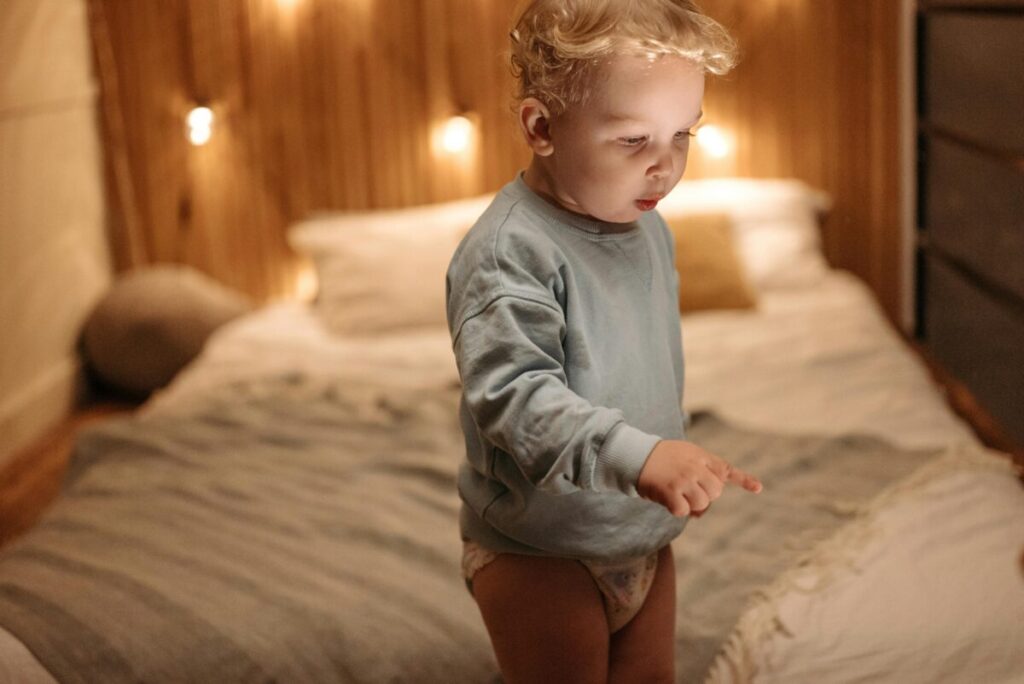

Let’s be honest. The hardest part of the crib to bed transition isn’t the first night. It’s night four, when the novelty has worn off for you but your toddler has fully figured out that they have legs and a hallway and your room is right down it.
The “midnight visitor” phenomenon is real and it is exhausting. You’ll hear small feet. You’ll feel a presence at the side of your bed. You’ll open your eyes and find a tiny human standing six inches from your face, just… watching. It’s unsettling and also kind of hilarious in retrospect.
How to Keep Toddler in Bed (Without Losing Your Mind)
Establish a clear, simple rule. “You stay in your bed until the clock turns green.” That’s it. One rule. Repeat it every single night at bedtime until it becomes their truth.
Return them, boring and quiet, every single time. Don’t talk. Don’t engage. Don’t explain again. Just walk them back, tuck them in, say “it’s sleep time,” and leave. The less interesting the return trip is, the faster they stop making it.
A reward chart can work wonders. A sticker on the chart every morning they stayed in their bed all night. After five stickers, they get a small reward. This is bribery. Effective, acceptable bribery.
Don’t make your bed more comfortable than theirs. Okay, you can’t actually control this—your bed is more comfortable. But you can make their sleeping environment feel cozy and inviting. A nightlight they love, a special stuffed animal that “guards” them, a weighted blanket if they’re into sensory comfort.
Knowing how to keep toddler in bed is less about tricks and more about consistency. The parents who win this battle are boring about it. Every night. Same response. Same return. Until the habit breaks.
My ‘Messy’ Personal Experience
I remember the first night we made the switch. I had done the research, bought the sheets with the dinosaurs, set up the toddler rail, practiced staying in bed, had the whole routine dialed in. I was convinced I was the smartest mom ever.
Then 3 AM happened.
I woke up to something crawling over me, and for one half-asleep second I thought it was the cat. It was not the cat. It was my son, making his way across my body with the stealth and precision of a small ninja, settling himself perpendicular between me and my husband, feet directly in my face.
I was so tired I didn’t even fight it. I just thought, okay, fine, this is our life now, and went back to sleep with toddler toes near my nose.
We ended up like that for three nights straight. Feet in faces, elbows in ribs, that particular chaos of sleeping in a family pile that felt tender and maddening at the same time. On night four, I walked him back to his room. Boring. Quiet. No drama. Tucked him in, said “it’s sleep time,” left.
He stayed.
He has stayed, mostly, every night since. It wasn’t a clean victory. It was messy and inconsistent and I cried about it once in the hallway at 2 AM because I was so tired I didn’t know what else to do. But it worked out. It always works out, eventually.
Survival Guide: When You Feel Like Quitting
There’s going to be a night—maybe several—where you seriously consider just shoving the crib back together and pretending this never happened. Here’s what to do instead.
Give yourself a two-week minimum. Real behavioral change in toddlers takes time. Two weeks of consistent, boring responses to midnight visits before you can fairly assess whether something is “working.” Most parents quit at day five.
Tag-team with your partner if you can. Alternate who does the middle-of-the-night returns. One night on, one night off. You cannot pour from an empty cup, and you cannot do the boring, consistent return if you’re also running on four hours of sleep for ten days straight.
Lower the stakes on everything else. While the sleep transition is happening, let some other things slide. The laundry can wait. Dinner can be cereal. You are in a sprint, not a marathon.
Remember this is temporary. Not in the dismissive “cherish every moment” way. Literally—it is temporary. Toddler sleep disruptions have an end date. It might not feel like it at 3 AM, but it’s true.
Talk to other parents. Not to compare or compete, but to hear “yeah, we went through that too, it was awful, it got better.” That sentence is medicine.
Navigating the Toddler Years?
If you’re currently in the thick of the toddler transition, don’t miss these honest guides to help you survive (and maybe even enjoy) the ride:
Closing Thought: Everything Is a Phase
The crib to bed transition felt like the end of something when we did it. And honestly, it was. That crib is now in a storage unit and I walked past it recently and felt a very stupid amount of feelings about a piece of furniture.
But here’s the thing about parenting: every hard phase ends. Every developmental leap that breaks your sleep eventually stabilizes. Your toddler will sleep in their bed. They will stop appearing at your bedside like a small specter at 3 AM. They will, against all current evidence, become a person who sleeps through the night in their own room.
You’re not failing because the crib to bed transition is bumpy. It’s bumpy for almost everyone. The parents who make it look easy either have unusually easygoing kids or are lying on Instagram.
You’ve got this. Go drink some coffee. Tomorrow night, do the boring return. And the night after that. And the night after that.
It gets better.
Looking for more real-talk parenting content? Browse posts on toddler sleep, big feelings, and surviving the preschool years without losing yourself entirely.