Fair warning: this post is not for moms who have their act together. This one’s for the rest of us.
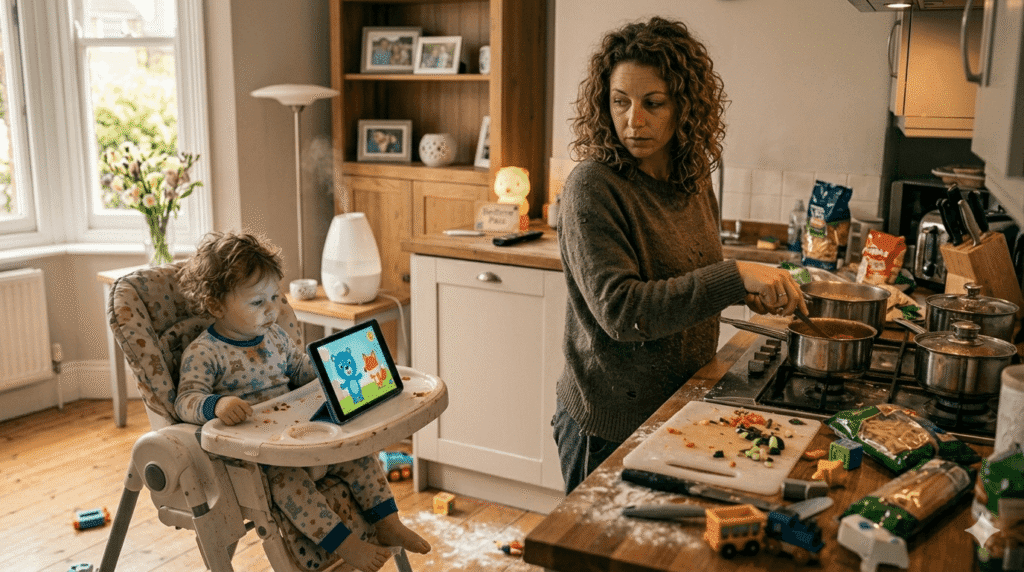
I hadn’t slept properly in weeks. My partner was out of town, the laundry situation had become genuinely concerning, and I’m pretty sure I’d been surviving mostly on coffee and whatever bites of food my toddler didn’t finish. By 5 PM, I was desperate for healthy toddler recipes that didn’t require me to stand over a hot stove for an hour. (These recipes are perfect for toddlers aged 12–36 months, but honest truth? They’re great, nutrient-dense fuel for the whole family, too.) My brain just needed a break. If you’re feeling completely drained right now, I’ve also put together a Mom Burnout Survival Kit to help you navigate those moments when you have nothing left to give.
One evening around dinner time, I opened the fridge and just stood there staring into it while the cold air hit my face. Not even looking for anything specific. I think my brain just needed a pause for a second.
And from the other room I hear:
“Mama?”
Then louder:
“Mamaaaa.”
And I remember feeling this weird wave of exhaustion hit me because I could not think of one more meal. Not a healthy meal. Not a balanced meal. Literally just food. Something she might actually eat without throwing on the floor while I stood there running on fumes.
I must’ve stared at that fridge for a full minute trying to come up with dinner while my brain kept looping:
What do I make.
What do I make.
Please let there be something easy.
In the end I gave her scrambled eggs, strawberries, and dry cereal in a bowl because that was all I had the energy for.
And honestly? She was happy. She ate. Nobody cried. The world kept turning.
I think exhausted moms put so much pressure on themselves to make every moment meaningful and every meal perfect, when sometimes survival dinners are completely okay too.
Table of Contents
You Are Not a Bad Mom. I Need You to Hear That.
There’s a very specific kind of guilt that lives at the bottom of mom exhaustion. It’s not loud. It doesn’t announce itself. It just quietly whispers while you’re staring into the fridge: A good mom would cook something real right now. A good mom wouldn’t be this tired. A good mom—
I spent so long believing that voice.
What I know now — after a lot of hard nights and a lot of grace I had to learn to give myself — is that voice is lying. Consistently, creatively, and with zero evidence to back it up.
Healthy toddler recipes do not have to involve a stove. They don’t have to take an hour. They don’t have to look like something from a parenting magazine. They have to nourish your kid and get done before you fall apart. That’s the whole bar. And on the days when even that feels like too much, you are still not failing — you are surviving, and that matters too.
The Goldfish Cracker Incident
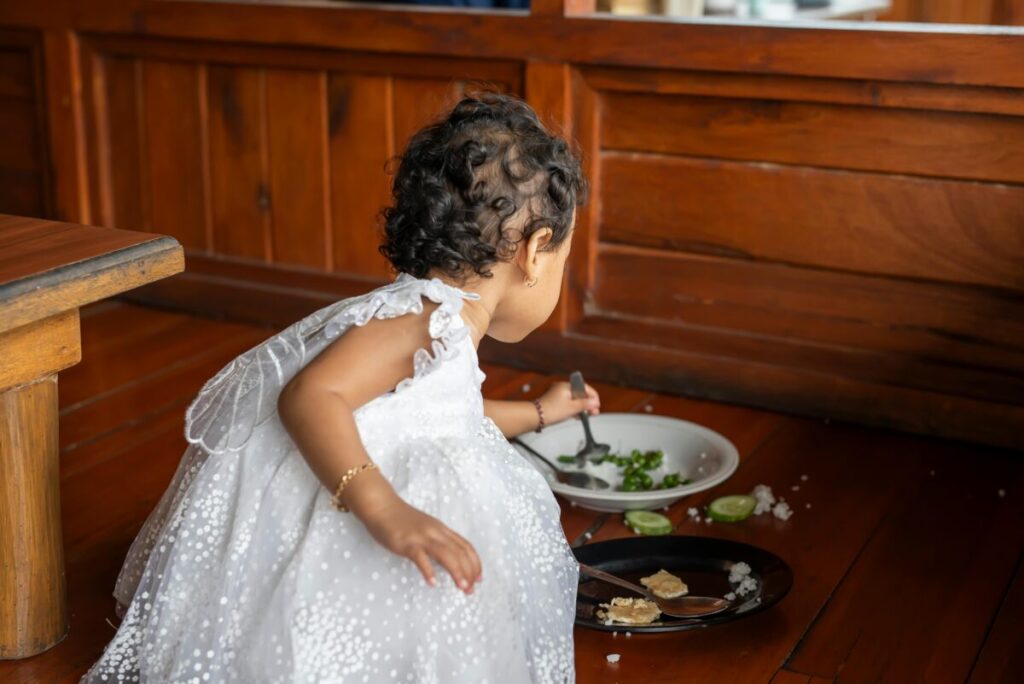
For one full week, my daughter would only eat Goldfish crackers.
Not “mostly Goldfish.” Not “Goldfish with some other stuff on the side.” I mean: exclusively, passionately, operatically — only Goldfish.
I tried everything. I made these sweet little plates — avocado, banana, blueberries, soft cheese. I was proud of those plates, thinking they were the perfect easy toddler meals for tired moms to keep their little ones nourished. She would look at the plate, look at me, and say ‘no tanks’ (she couldn’t do the ‘h’ yet), and then point at the Goldfish bag like she had never wanted anything more in her entire short life.
One afternoon I sat down on the kitchen floor and cried. Not because of the crackers — because I was so tired that a toddler food strike felt like a verdict on who I was as a mother. Like the universe was grading me and I was failing in real time.
Here’s what I’ve learned since then: toddler food refusal is developmental. It’s not personal. It’s not your cooking. It’s not a sign of anything except that your child is a toddler, which is its own complete and exhausting category of human. If you feel like you’re constantly walking on eggshells with your toddler’s behavior, check out my 20 Month Milestones: A Brutally Honest Survival Guide for Tired Moms to help you navigate those ‘big feelings’ that seem to hit out of nowhere.
And in that season — the season of easy toddler meals for tired moms, the season of survival — I learned something that genuinely changed how I approach feeding her: you don’t need heat to feed a child well. You need the right ingredients, assembled. That’s it.
The No-Cook Philosophy (Or: My Logic, At Least)
One thing nobody tells you clearly enough: Cooking is not the same as nourishing. (If you are still navigating the earlier phase of toddlerhood, my 17 Month Old Developmental Milestones: A Realistic Guide for Modern Moms might help you understand the curiosities and challenges that come before the big-feeling tantrums.)
Raw avocado has more bioavailable nutrients than cooked avocado. Full-fat Greek yogurt straight from the fridge is a complete nutritional powerhouse. Ripe fruit, soft cheese, nut butter — these things don’t need a pan. They don’t need twenty minutes. They need a plate and a spoon and maybe thirty seconds of your attention.
Nutrient-dense toddler food is not about effort. It’s about knowing which whole foods pull their weight.
Three things I keep coming back to:
- Fat is essential, not optional. Toddler brains are literally built from fat — the kind found in avocado, whole-milk dairy, and nut butters. The myelination of nerve fibers, the development of language and memory — all of it depends on adequate dietary fat. Stop feeling guilty about giving them full-fat everything. It’s not indulgence. It’s neuroscience.
- Color is your shortcut. Two or three different colors on the plate means variety, which means different nutrients, which means you’re doing great. You don’t need to memorize a vitamin chart.
- Five minutes is enough. I know that sounds like something a wellness influencer would say. I mean it practically: the recipes below take five minutes. Some take three. They are not compromises. They are legitimate meals.
Three Healthy Toddler Recipes I Come Back to Again and Again
The Brain-Power Plate
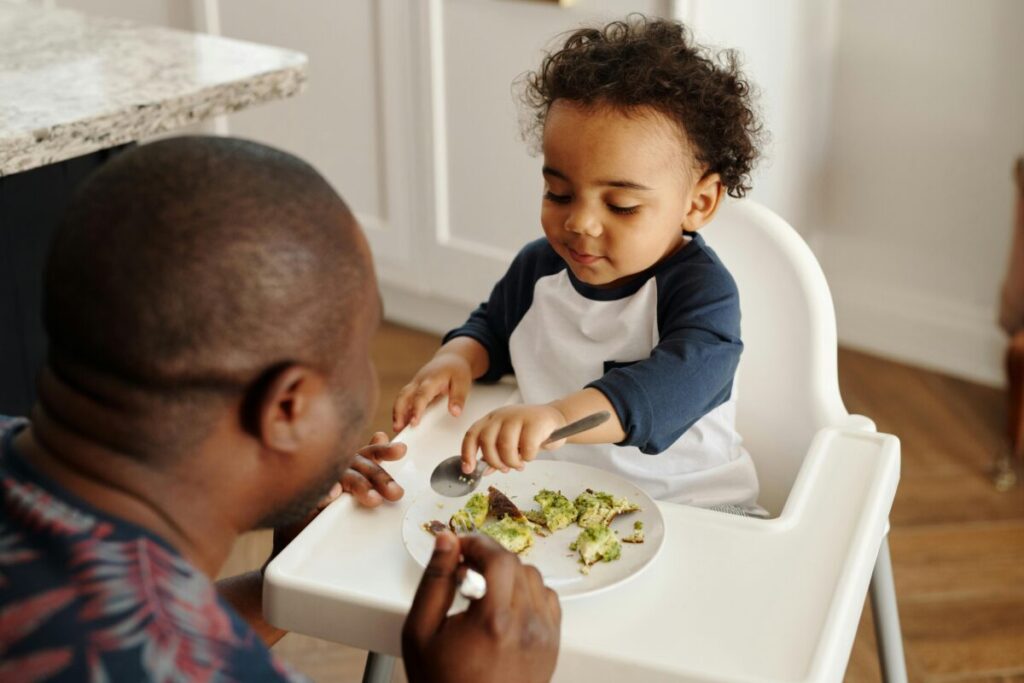
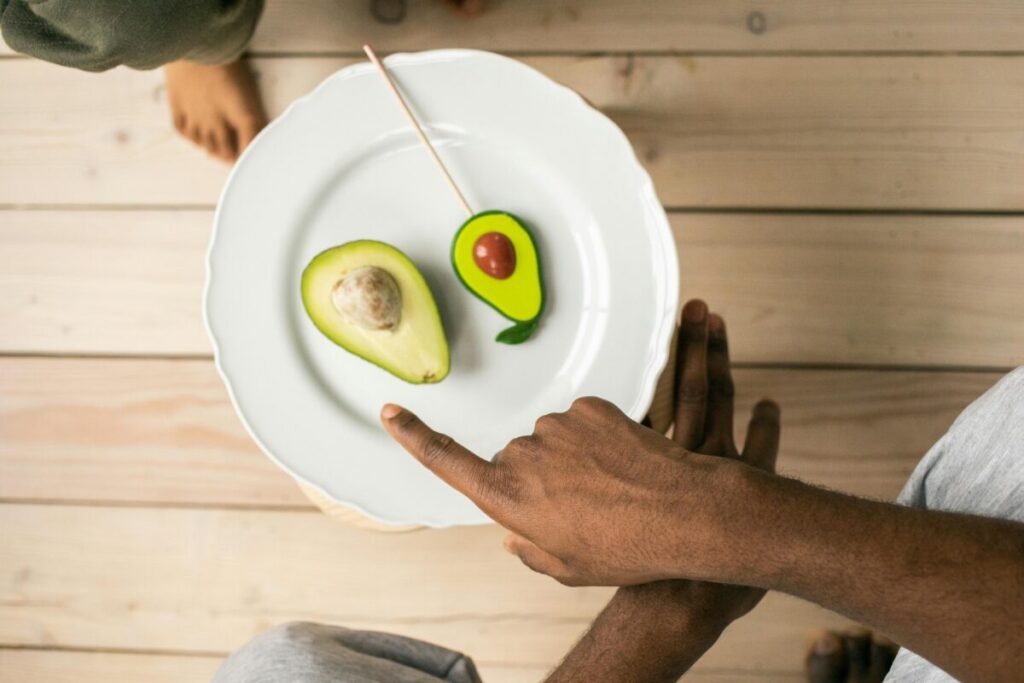
This is my most-reached-for option. The kind of thing I make when I have half a brain cell left and I need it to count.
Why every ingredient is there:
Avocado isn’t just a trendy food — it’s one of the most complete nutrient-dense toddler food options you can put in front of your little one. It’s packed with monounsaturated fats for brain development, folate for neural growth, and potassium for heart health. Plus, the fat in avocado helps the body absorb fat-soluble vitamins from everything else on the plate. It’s truly doing double duty.
Full-fat cottage cheese or ricotta is soft, mild, and most toddlers will accept it without a fight. It’s a solid protein hit plus calcium, and the texture is easy for little hands to scoop.
Ripe pear or mango brings natural sweetness — which is how you get them to actually eat the plate — plus vitamin C, which increases iron absorption from the other foods. That’s not a coincidence. That’s strategic pairing.
Hemp seeds are tasteless, invisible, and three tablespoons pack around 10 grams of complete protein plus omega-3 fatty acids. Sprinkle them on top. Your toddler will never know.
Ingredients:
- ½ ripe avocado, sliced or mashed
- 3–4 tablespoons full-fat cottage cheese or ricotta
- A few slices of ripe pear or mango
- 1 teaspoon hemp seeds
- A small pinch of salt on the avocado (trust me — it makes it)
To make it:
- Put the avocado on the plate
- Spoon the cheese alongside
- Add the fruit
- Scatter hemp seeds over everything
- Done. You’re done. Go sit down for thirty seconds.
The Green Smoothie (That They Will Actually Drink)
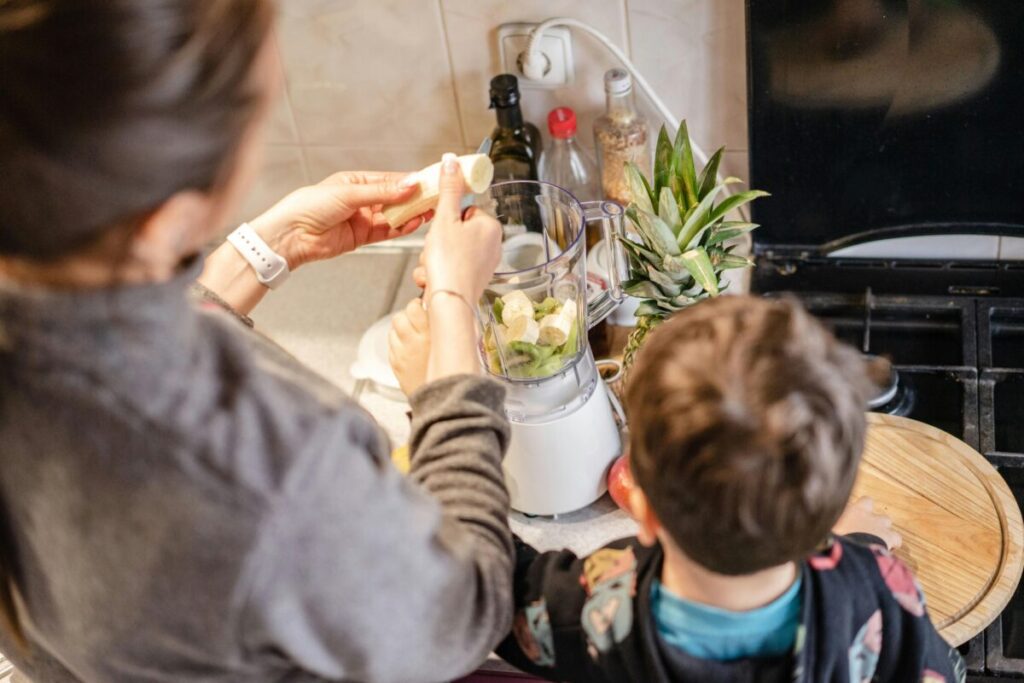
Before you skip this because your toddler “doesn’t do green things” — stay with me. The banana and mango in this recipe completely mask the spinach. I have served this to children who announce daily that they hate vegetables. They drink it every time. The straw helps.
Why every ingredient is there:
Spinach — one large handful — contains iron, folate, magnesium, and vitamin K. It blends completely smooth and the flavor disappears behind the fruit. The vitamin C from the mango or banana works with the spinach’s iron to dramatically increase how much your toddler’s body actually absorbs. They’re doing chemistry together in that blender.
Frozen banana or mango adds creaminess, natural sweetness, and makes the whole thing feel like a treat. Frozen fruit is a staple for easy toddler meals for tired moms because you always have it on hand, even on the days when the fresh fruit in the bowl has already turned.
Full-fat Greek yogurt adds protein, probiotics for gut health, and that thick, shake-like texture that makes toddlers think they’re getting something special.
Chia seeds blend invisible and add omega-3s, fiber, and calcium without changing the flavor at all.
Ingredients:
- 1 large handful baby spinach (fresh or frozen both work)
- ½ frozen banana or ½ cup frozen mango chunks
- 3 tablespoons full-fat Greek yogurt
- 1 teaspoon chia seeds
- ½ cup whole milk
To make it:
- Everything in the blender
- Blend 45 seconds until completely smooth
- Pour into a cup with a straw — this detail matters more than it should
- Add a splash more milk if it’s too thick
Four minutes. Five if you wash the blender, which I will not pretend I always do immediately.
The Protein Berry Bowl
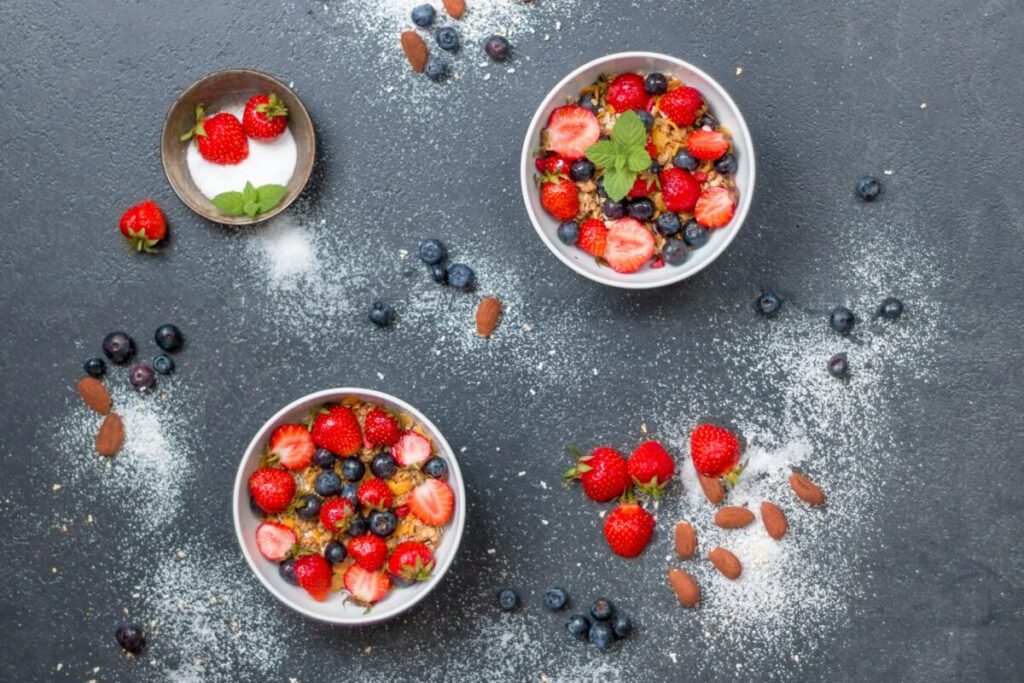
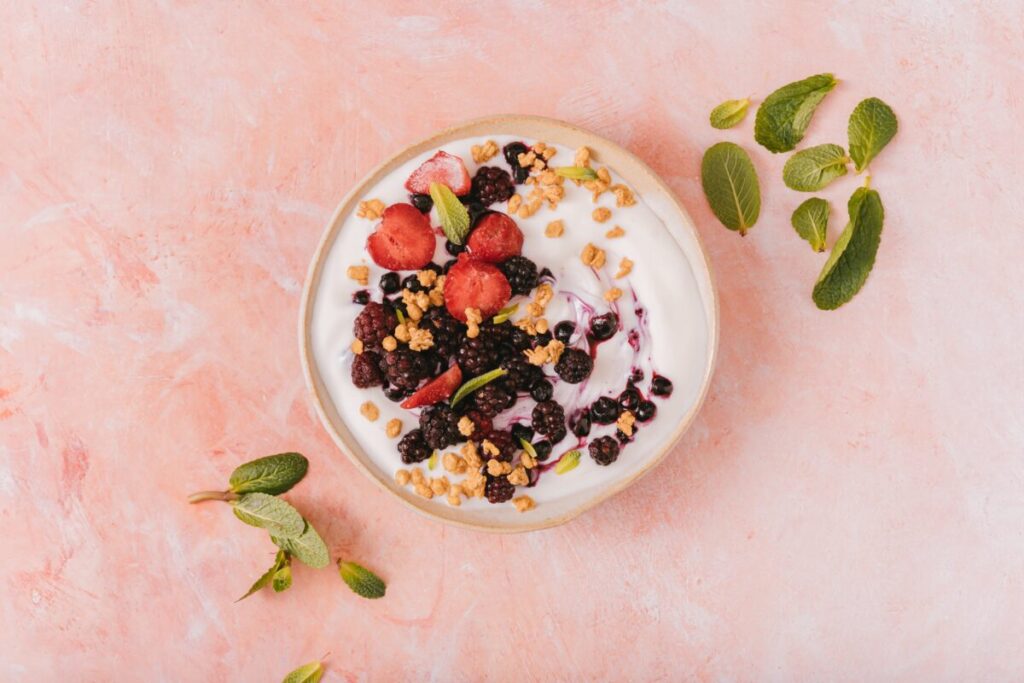
This one looks like dessert. That’s the whole strategy. Your toddler sees it and feels like they won something, and meanwhile they’re eating one of the most nutrient-dense toddler foods you can assemble without turning on the stove.
It works for breakfast, lunch, or that chaotic 4 PM “I’m hungry but dinner is nowhere near ready” moment that I’m convinced was specifically designed to break parents.
Why every ingredient is there:
Full-fat Greek yogurt is the protein and probiotic base. Every time. Non-negotiable. Buy it in the big container.
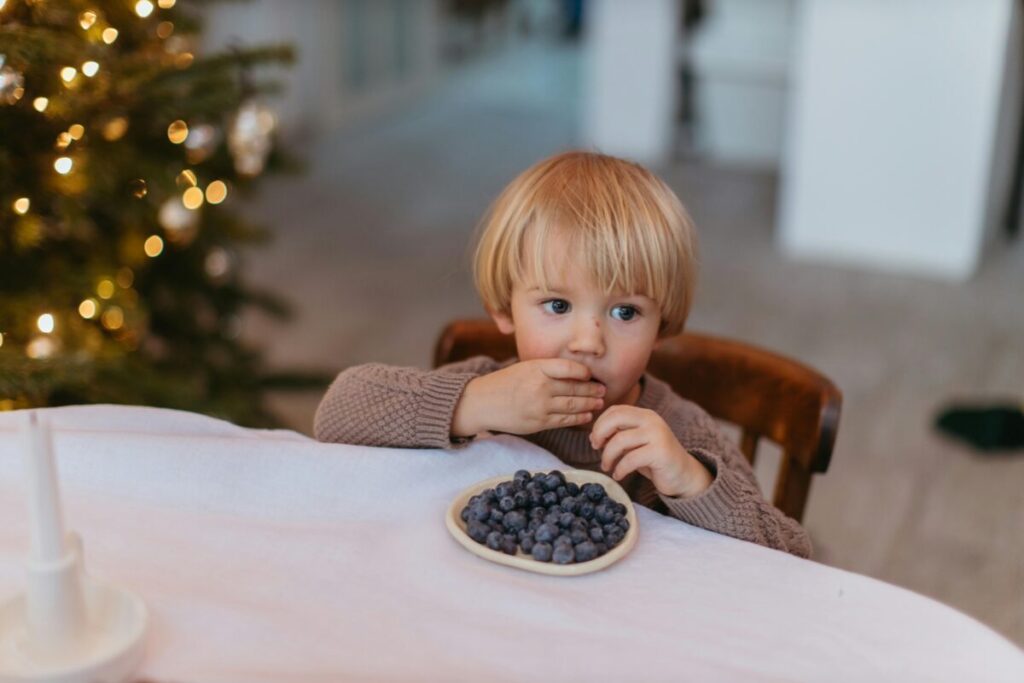
Blueberries are the most studied berry for cognitive development — the antioxidants in them actively support brain health and have been linked to improved memory and focus in children. I’m not exaggerating; they are one of my favorite quick no-cook toddler snacks to keep on hand. The research on blueberries and pediatric brain development is genuinely interesting, and because they’re tiny and easy to eat, they’re a huge practical win.
Nut butter drizzle — almond, peanut, or sunflower seed butter if allergies are a concern — adds healthy fat, protein, and a richness that makes the bowl feel satisfying instead of just a snack. Warm it for ten seconds if it’s stiff. It drizzles better and looks more intentional, which kids somehow sense.
Crushed whole grain crackers or rolled oats on top give crunch texture that toddlers love, plus complex carbohydrates that release energy slowly. Less crashing, more sustained focus.
Ingredients:
- ½ cup full-fat Greek yogurt
- ¼ cup mixed berries (fresh, or thawed frozen — both fine)
- 1 teaspoon almond or sunflower seed butter
- 1 tablespoon crushed whole grain crackers or rolled oats
To make it:
- Spoon yogurt into a bowl
- Scatter berries on top
- Drizzle with nut butter
- Crumble crackers or sprinkle oats over everything
- Serve immediately
Three minutes. Honest.
What are the best no-cook nutrient-dense toddler foods?
Avocado, full-fat Greek yogurt, cottage cheese, nut butters, and berries are top-tier no-cook options rich in healthy fats, protein, and brain-supporting antioxidants.
Is it okay if my toddler only eats one thing for a week?
Yes, toddler food strikes are a normal developmental stage of testing boundaries. Keep offering a variety of foods without pressure and look at their intake over the week, not a single day.
Does my toddler need a hot meal for proper nutrition?
No. Proper nutrition comes from whole-food ingredients like healthy fats and proteins, regardless of whether they are cooked or served fresh/raw.
The Thing I Actually Want You to Take Away From This
One night during the Goldfish cracker week, I gave up. I put crackers on a plate, cut up a banana, and sat down on the floor next to her little table because the chair felt too far.
She ate her crackers. She was happy. And then she reached over and put her small hand on my arm — just rested it there, warm and completely unbothered — and kept eating.
She didn’t know I felt like I was failing. She just knew I was there.
That night was quick no-cook toddler snacks and a banana and me sitting on the floor too tired to cry anymore. And she is fine. More than fine. She’s four now and she eats blueberries and asks for “the green smoothie” and occasionally, on a good day, eats avocado off a spoon.
The connection you show up for — even on the completely broken days, even when dinner is crackers, even when you’re sitting on the floor — that is also nutrition. That is also nourishment. That counts in ways that don’t show up on any food chart.
P.S. If you’re heading into the colder months and need more practical help, check out The Ultimate Winter Survival Guide for Toddlers: Dry Skin, Colds, and Cozy Indoor Play for extra tips on getting through the season.
That’s everything. Save this for the next time it’s 5 PM and you’re standing in front of the fridge. You’ll know what to make.
Make the five-minute bowl when you can. On the days you can’t, make peace with what you have. You are not what you cook. You are the person who stayed.
That’s everything.
Save this for the next time it’s 5 PM and you’re standing in front of the fridge. You’ll know what to make.
Disclaimer: The information provided in this article is for educational and informational purposes only and does not constitute professional medical advice, diagnosis, or treatment. Every child is unique, and nutritional needs can vary based on age, health status, and individual requirements. Always seek the advice of your pediatrician or a qualified healthcare professional with any questions you may have regarding your child’s health, growth, or dietary needs. Never disregard professional medical advice or delay in seeking it because of something you have read here.