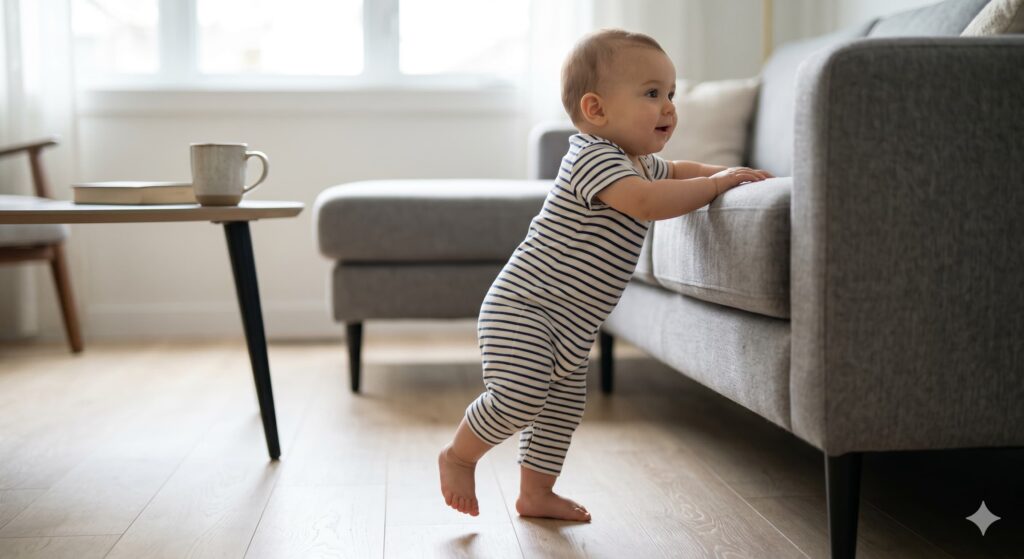
One day, you’re scrolling through your phone while your baby sits on the rug, happily chewing on a rubber giraffe for what feels like forever. Life feels predictable… for a second. Your coffee is safe on the table, everything feels normal. And then — boom — your tiny human grabs the couch and hauls themselves up like they’ve been training for it.
Welcome to the baby cruising stage, where your living room becomes a gym. Suddenly your living room? Total obstacle course. That coffee? Not safe anymore. The bookshelves you spent years organizing? They are now ladders for someone who doesn’t understand gravity yet. Cruising is that chaotic, exciting, slightly terrifying stage between “I sit where you put me” and “I can destroy everything vertically.” It’s a major milestone, but honestly, it’s also the start of you spending most of your day hovering behind them like a human airbag, praying they don’t face-plant into everything.
If you’re sitting there with cold tea that’s been forgotten for hours while watching your baby shuffle along, you’ve officially entered the baby cruising stage. Let’s talk about when babies actually start cruising, why it’s actually a harder workout than walking, and how to keep them (and your last remaining brain cells) safe.
The Timeline: When Do Babies Start Cruising?
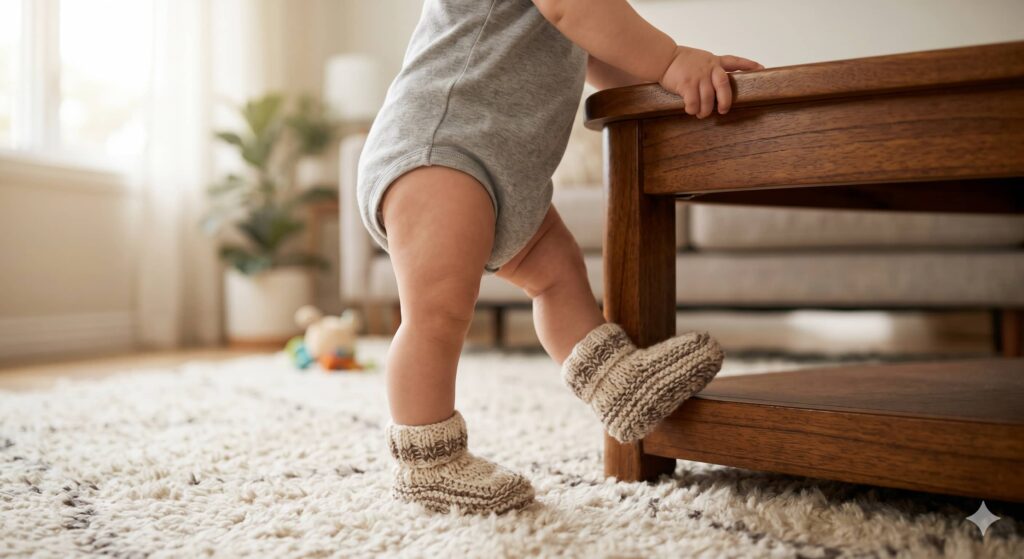
If you’ve been hanging out in those “perfect” mom groups on Facebook (a dangerous hobby that leads to instant mom-guilt, I know), you’ve probably heard some lady brag that her baby was “sprinting across the kitchen at six months.” First of all, she’s probably lying. Second of all, take a deep breath and ignore her.
Most babies start cruising around 8–11 months. But honestly? The “normal” range is huge. Some babies are “pull-up” enthusiasts early on, while others are perfectly happy to stay on the floor, living that horizontal life until they’re nearly a year old.
Cruising usually follows a very specific sequence that will make you both cheer and panic:
- The Pull-Up: They find a sturdy object (or your leg while you’re trying to pee) and use their arm strength to get vertical.
- The Wobble: They stand there with a look of pure shock, realizing the view is way better from up here—and so is the access to your snacks.
- The First Step: They tentatively move one foot to the side while white-knuckling the furniture like they’re hanging off a cliff.
If your 10-month-old is still a dedicated crawler, don’t spiral. They might just be perfecting their floor skills before they launch their vertical career. But if you’re asking yourself, “when do babies start cruising?” and your little one is already trying to climb the dog, the answer is: the baby cruising stage has officially begun.
Cruising vs. Walking: The Secret Brain Workout (And Why You’re Exhausted)
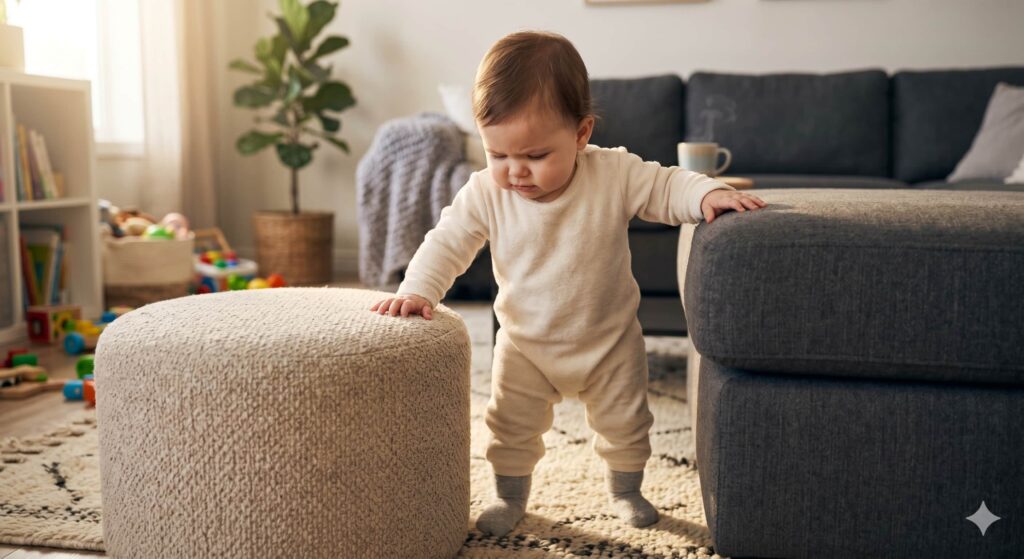
A lot of parents see cruising as just “walking with training wheels,” but it’s actually its own distinct and vital developmental phase. In many ways, the baby cruising stage is a more complex brain workout than actual walking, making the baby cruising stage a vital brain workout. This is why they’re extra cranky and you’re extra tired.
Walking is forward. Cruising is sideways chaos. When they cruise, they are moving sideways. This lateral movement requires a different set of muscle groups and a higher level of hip stability. It’s like the difference between walking on a treadmill and doing a high-intensity sideways shuffle at the gym.
Why Cruising is Crucial (The Non-Boring Version):
- Balance & Weight Shifting: They have to learn how to move their weight from one leg to the other while holding onto your expensive velvet sofa. This is the foundation for actual steps.
- Spatial Awareness: In the baby cruising stage, they learn that corners hurt and gaps are a challenge. It’s basically a mini physics lesson every time they shuffle.
- Building the Arch: Standing and shuffling helps develop the muscles in their feet. Yes, even those tiny, delicious-smelling toes are working out.
So, while you might be impatient for those first independent “drunk-walk” steps, cherish this part of the baby cruising stage. Their brain is doing heavy-duty architectural work on their motor skills every time they shuffle along the loveseat.
The “Cruiser’s Workout”: Baby Pulling Up to Stand
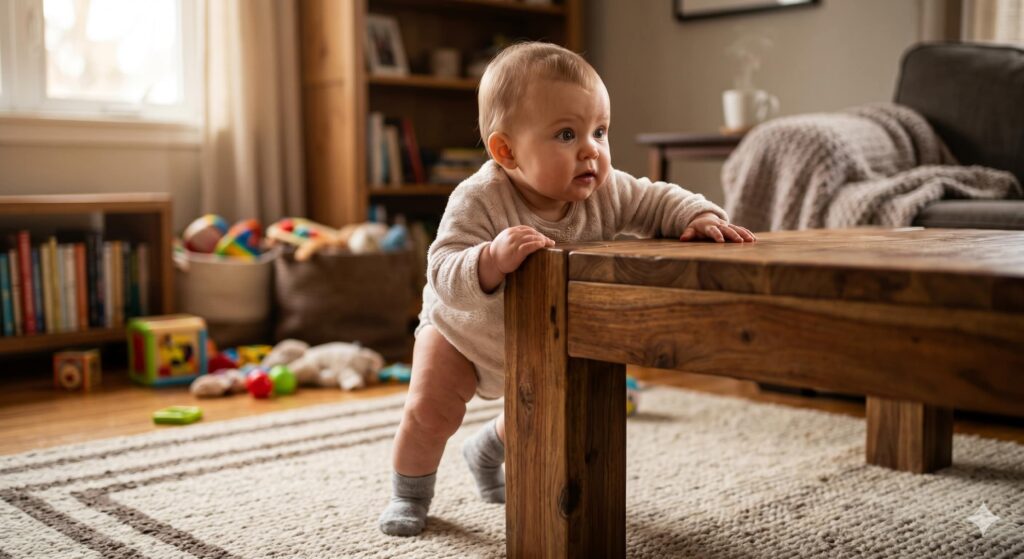
Watching a baby pulling up to stand for the first time is like watching a shaky baby giraffe find its legs—if that giraffe also tried to eat the remote control. It starts with the “death grip” on your pant legs. They use their arms significantly more than their legs at first, which is why those baby biceps look so surprisingly toned (unlike ours, let’s be real).
But the real comedy (and the part where you’ll find yourself holding your breath) is the Squat-and-Plop.
Once they get up, they often realize they have no idea how the hell to get back down. You’ll see them standing there, legs trembling, crying for backup because they are “stuck” in the upright position. Eventually, they learn the “controlled fall”—that adorable little squat where they eventually just give up on physics and land on their padded diaper with a satisfying thump.
Tip: don’t rush in immediately every time they freeze standing.
To Shoe or Not to Shoe? (The Footwear Rabbit Hole)
One of the first things we do when the baby cruising stage begins is run to Amazon to buy those tiny, adorable sneakers. We see those $50 miniature Nikes and think they’ll provide the support the baby needs to conquer the living room.
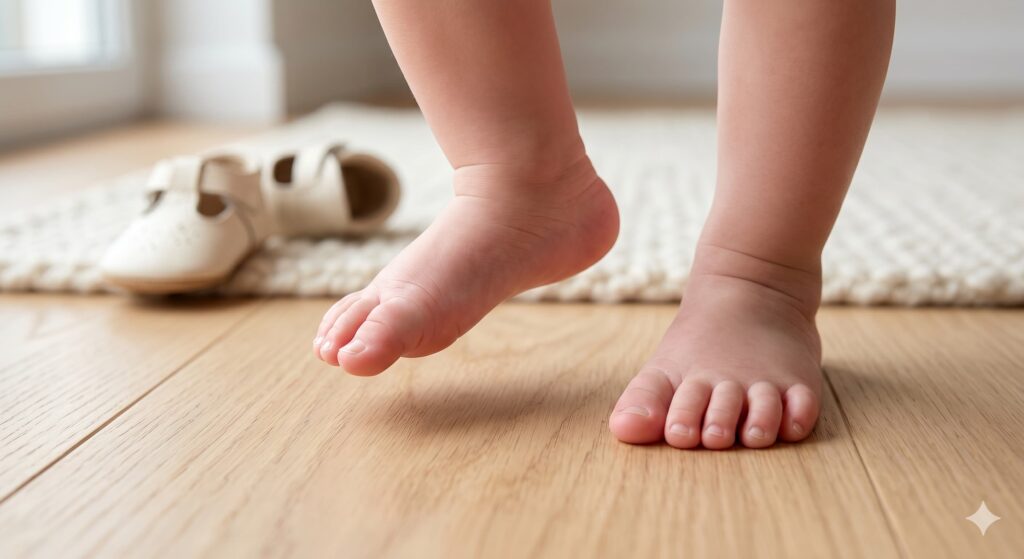
However, the consensus among people who actually know things (pediatricians and experts) is the opposite. When it comes to the best shoes for cruising babies, the best shoe is usually absolutely nothing.
Why Barefoot is King:
- Sensory Input: Babies use the nerves in the bottoms of their feet to “read” the floor. Putting them in stiff shoes is like trying to type on a keyboard while wearing winter mittens.
- Grip: Toes are made for gripping. They need to splay those toes out to stay upright.
- Muscle Growth: Being barefoot allows the foot to move naturally and build the strength they’ll need when they’re eventually sprinting away from you in a parking lot.
When do you actually need shoes? Only when you’re outside where the ground might be hot, cold, or covered in something gross. For those times, look for soft-sole leather shoes. They protect the foot but still let the baby feel the ground. Avoid those heavy, thick-soled “mini-adult” sneakers for now—they just turn your baby into a clumsy little robot.
Baby-Proofing 2.0: Baby Safety During Cruising
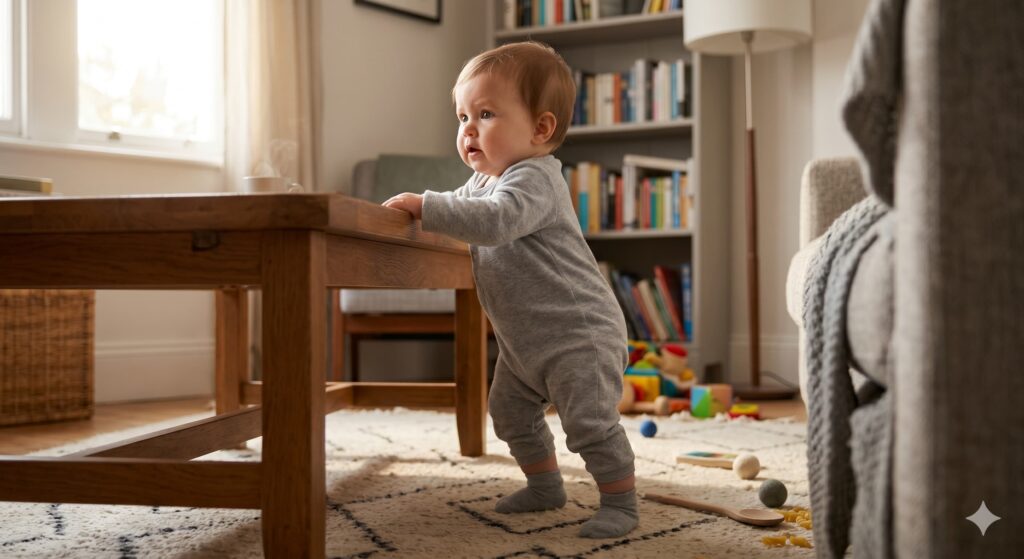
You thought your house was baby-proofed because you put those little plastic things in the outlets. Cute. That was “Crawler Proofing.” Now that you have a vertical explorer who can reach the top of the coffee table, you need to upgrade your safety protocols for the baby cruising stage.
Your baby’s reach has just increased by two feet. Everything you thought was safe because it was “up high” is now in the danger zone.
The Cruising Safety Checklist (The “Don’t End Up in the ER” Version):
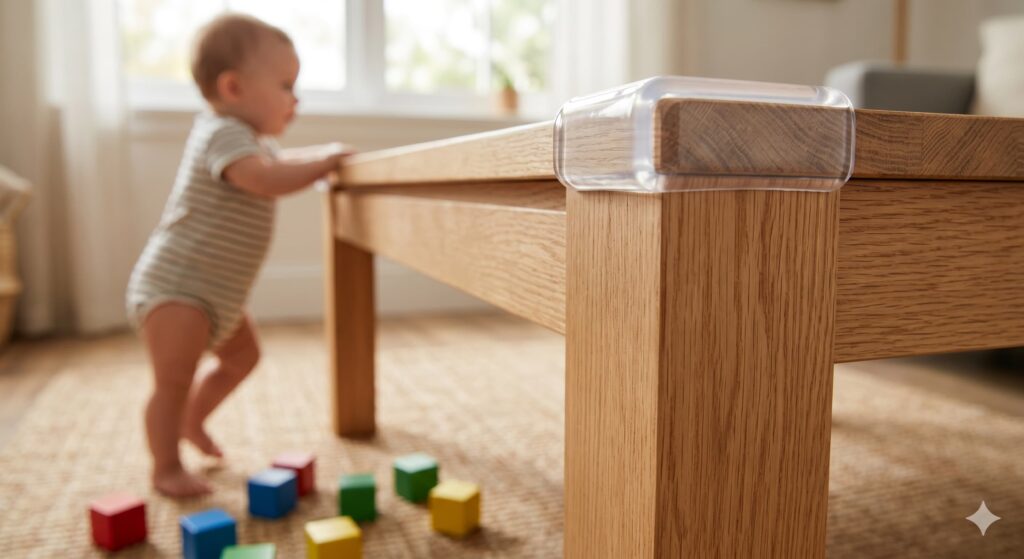
- The Coffee Table Corner Guards: I know, they’re ugly. They ruin your “aesthetic.” But coffee tables are basically heat-seeking missiles for a cruising baby’s forehead. Get the soft silicone bumpers.
- Furniture Anchors: This isn’t optional. If a baby pulls up on a dresser or a bookshelf that isn’t bolted to the wall, it will tip. I don’t care how heavy you think it is. Anchor everything.
- The Tablecloth Trap: If you have a tablecloth, say goodbye to it for a year. A cruising baby will grab it for support, and your hot coffee, vase, and dignity will come crashing down.
- Unstable Objects: Floor lamps and flimsy plant stands are now “death traps.” If it wobbles, it goes in the garage.
- Curtain Safety: Babies love to use curtains like they’re training for the circus. Make sure those rods are screwed into studs, or keep the curtains tucked away.
How to Encourage Them (Without Being a “Tiger Mom”)
You don’t need to put your baby through “Cruising Boot Camp,” but you can make your living room a little more user-friendly for a tiny person who is learning to walk sideways.
- The “Furniture Bridge”: Place sturdy chairs or ottomans close enough together so the baby can reach from one to the other. If the gap is too big, they’ll just give up and crawl (which is fine, but we’re trying to promote the shuffle here).
- Bribe Them: To motivate them during the baby cruising stage, place a favorite toy just out of reach. This encourages that lateral shuffle.
- Get Down on Their Level: Sit on the floor. Seeing your face at their new height is the best motivation they have. Plus, you’re already down there to catch them when they plop.
The FAQ: Real Answers for Parents Who Are Over It
“My baby only cruises in one direction during the baby cruising stage. Is he broken?” Nope. Many babies have a “dominant” side at first. Eventually, they’ll realize the other side of the room also has things they aren’t supposed to touch and will figure out how to shuffle that way.
“What if they haven’t started by 10 or 11 months?” Check with your pediatrician to be safe, but usually, if they are hitting other milestones (rolling, sitting, crawling), they are just taking their sweet time. Some babies skip the baby cruising stage almost entirely and just walk.
“They keep falling and hitting their head. Do I need a baby helmet?” Unless your doctor says so for a medical reason, no. Those baby helmets are mostly for our own anxiety. Falling is an annoying but normal part of the baby cruising stage, helping them learn where their body ends. Just stay close and keep the sharp stuff covered.
Conclusion: The Longest Mile
Cruising is weirdly bittersweet. It’s the first time you realize that your baby is quite literally moving away from you. One day they’re a permanent fixture in your lap, smelling like milk and innocence, and the next, they’re shuffling toward the TV remote with a look of pure, unadulterated defiance.
Yes, it’s exhausting. Yes, your back is going to hurt from leaning over. And yes, you will probably find yourself “hovering” for a few months until they find their center of gravity.
But watching that look of absolute triumph when they successfully cross the gap from the sofa to the armchair? That’s the good stuff. That’s the sound of them becoming their own person.
And while you’re hovering and waiting for those first independent steps, you might need a way to keep them occupied in one spot for more than thirty seconds. Check out my guide on 5 Sensory Play Ideas That Won’t Ruin Your Carpet (And 1 That Will, But It’s Worth It) — it’s the ultimate sanity-saver for this stage.
So, anchor your bookshelves, hide your houseplants, and keep that coffee far, far back on the kitchen counter. You’ve officially survived the baby cruising stage. Good luck!