Somewhere around day two of this cold, I found myself standing in front of an open fridge, holding a squeeze pouch my toddler swore she wanted thirty seconds earlier, watching her turn her head away like I’d offered her broccoli-flavored regret. The dishwasher was beeping. My phone had four unread work messages. And I genuinely could not remember the last time I’d eaten a full meal sitting down. Sound familiar? Then you’re exactly who I’m writing this for.
If you’re here, you’re probably staring into that same fridge, wondering what to feed a toddler with a cold who won’t eat, won’t drink, and won’t stop wiping their nose on your shirt like it’s a personal tissue. First — deep breath. Second — you’re already doing the hardest part, which is showing up. Now let’s talk food, because feeding a sick toddler is its own special circle of parenting chaos, and I’ve lived through enough boxes of tissues to have some real, practical answers.
The #1 Priority When Your Toddler Has a Cold (Hint: It’s Not Food)

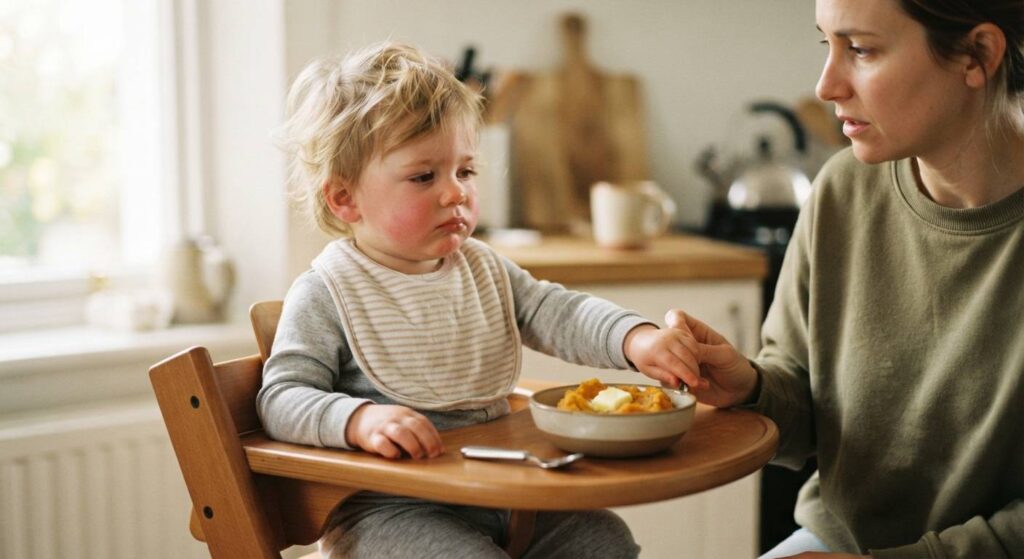

Here’s the mom-confession nobody tells you before you have kids: when your toddler is sick, food is not actually the priority. Hydration is. If your toddler eats basically nothing but crackers and dry toast for three days straight, that is completely fine. I repeat — completely fine.
A stuffy nose makes it hard to breathe and eat at the same time (try it yourself sometime, it’s genuinely miserable), so appetite naturally drops during a cold. Your job isn’t to force three balanced meals a day. Your job is to keep fluids going in and not panic about the rest.
Good hydration options for a congested toddler include:
- Water, offered often in small sips
- Diluted fruit juice (half juice, half water)
- Warm broth or soup
- Breastmilk or formula, if your toddler still takes it
- Popsicles made from real fruit juice (also soothes a sore throat)
So if you’re wondering what to feed a toddler with a cold and the honest answer some days is “basically nothing, but they drank a lot of water,” that’s a win. Write it in the baby book. Frame it, even.
What to Feed a Toddler With a Cold: The Comfort Food Lineup
Once your kiddo shows any interest in food again, this is the moment to lean into toddler cold comfort foods — the soft, mild, easy-to-swallow stuff that doesn’t fight a raw throat or a stuffed-up nose. Think of it as edible comfort, not a nutrition competition.
Beige and Boring (and That’s Okay)
Every mom I know has a “sick day beige food” arsenal, and mine is basically a shrine to carbohydrates. And you know what? It works.
- Buttered toast, cut into strips
- Plain crackers (saltines are a classic for a reason)
- Plain pasta with a little butter or olive oil
- Rice, soft and warm
- Oatmeal, slightly runny so it’s easier to swallow
Nobody is winning a nutrition award during a head cold. Beige foods are gentle on a sensitive tummy and an irritated throat, and they’re rarely something a toddler will actively refuse. Relying on simple toddler cold comfort foods — which, when you’re covered in someone else’s snot and running on fumes, is basically a miracle.
Warm, Soothing, Slurpable
Warm liquids do double duty: they hydrate and they soothe. My son’s cold-weather uniform basically became a bowl and a spoon he refused to use, but the soup still went in eventually.
- Chicken noodle soup, noodles cut small
- Warm (not hot) vegetable broth
- Miso soup, if your toddler already likes it
- Warm milk with a touch of honey (only for toddlers over age one)
A quick safety note: honey should never be given to babies under 12 months due to the risk of infant botulism. Once your toddler is past that first birthday, though, a little honey in warm milk or tea can genuinely help soothe a scratchy throat.
Sneaky Immunity Boosters: How to Boost Toddler Immunity
If your toddler is up for it, this is where you can quietly work on how to boost toddler immunity without turning mealtime into a negotiation.
- Mashed banana or applesauce (gentle on the stomach, easy to swallow)
- Soft-cooked sweet potato, mashed with a little butter
- Smoothies with spinach hidden inside mango and banana
- Yogurt with a drizzle of honey (again, only over age one)
- Orange segments or a splash of orange juice for vitamin C
I will not pretend my kid ate spinach smoothies happily while sick. He drank half of one, made a face like I’d personally betrayed him, and then asked for crackers. I count it as a partial win, and you should too.
How to Boost Toddler Immunity Without a Fight

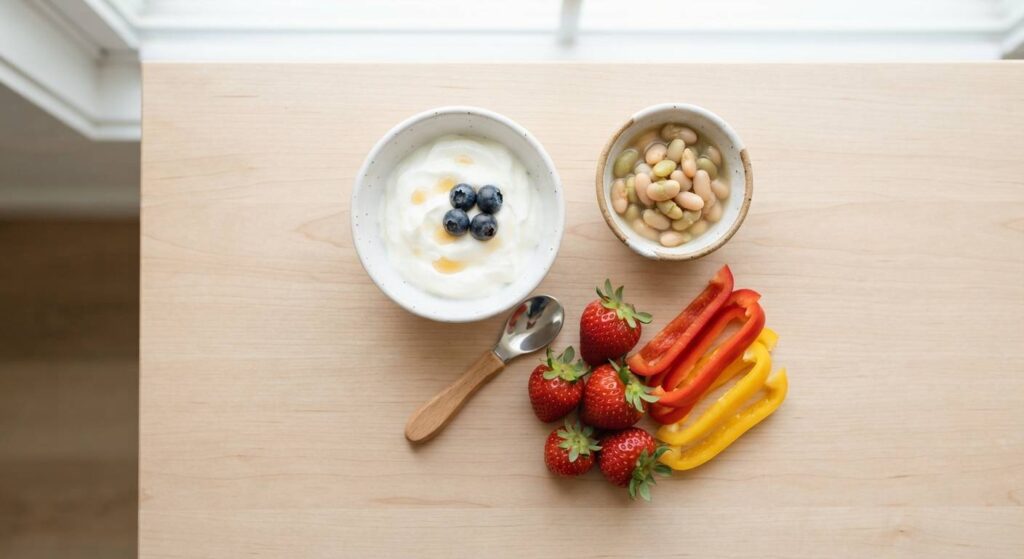
Beyond the individual foods, a few nutrients do a lot of the heavy lifting when your toddler’s immune system is working overtime. If you’re thinking about how to boost toddler immunity in general — not just during this particular cold — these are the ones worth keeping on your radar:
- Vitamin C — oranges, strawberries, bell peppers (soft-cooked if needed)
- Zinc — yogurt, oatmeal, soft-cooked beans
- Protein — eggs, shredded chicken, beans, cheese
- Probiotics — plain yogurt or kefir, which support gut health, where a lot of immune function actually lives
You don’t need to hit all of these in one sick day. Think of it as a slow rebuild over the course of the illness, not a checklist for lunch.
Picky Toddler Sick With a Cold? Here’s What Actually Works
Let’s talk about the moment that breaks every parent a little: you offer your toddler’s favorite snack, the one that has literally never failed, and they push it away and burst into tears like you’ve offered them a plate of gravel.
I lived this exact scene with goldfish crackers. My daughter loved goldfish crackers the way some people love their morning coffee — unconditionally, daily, no questions asked. Sick with a cold, she took one bite, gagged a little from the congestion, and refused to touch them again for the rest of the illness. Dealing with a picky toddler sick with a cold can make you feel like you’ve failed some invisible parenting test. But I hadn’t failed. Her throat just hurt and her nose was blocked, and nothing tasted or felt right.
A picky toddler sick with a cold isn’t rejecting you or your cooking. Taste and smell genuinely change when the nose is congested, and swallowing can be uncomfortable with a sore throat. This is completely normal, and it usually resolves as the cold does.
A few things that help with a picky toddler sick with a cold:
- Offer smaller portions more often, instead of three big meals
- Let temperature do some of the work — cold popsicles for a sore throat, warm soup for congestion
- Don’t introduce new foods right now; stick to familiar favorites, even if they’re “just” toast
- Let them eat on the couch, in a blanket fort, wherever — the goal is calories and fluids in, not table manners
Pro-Mom Tip
Keep a “sick day basket” stocked in your pantry before anyone actually gets sick — saltines, applesauce cups, a box of chicken broth, popsicles in the freezer, and infant/toddler electrolyte solution. Future-you, standing in the kitchen at 11 PM in yesterday’s leggings, will genuinely thank past-you for this five minutes of prep.
What NOT to Feed a Toddler With a Cold: Foods to Avoid
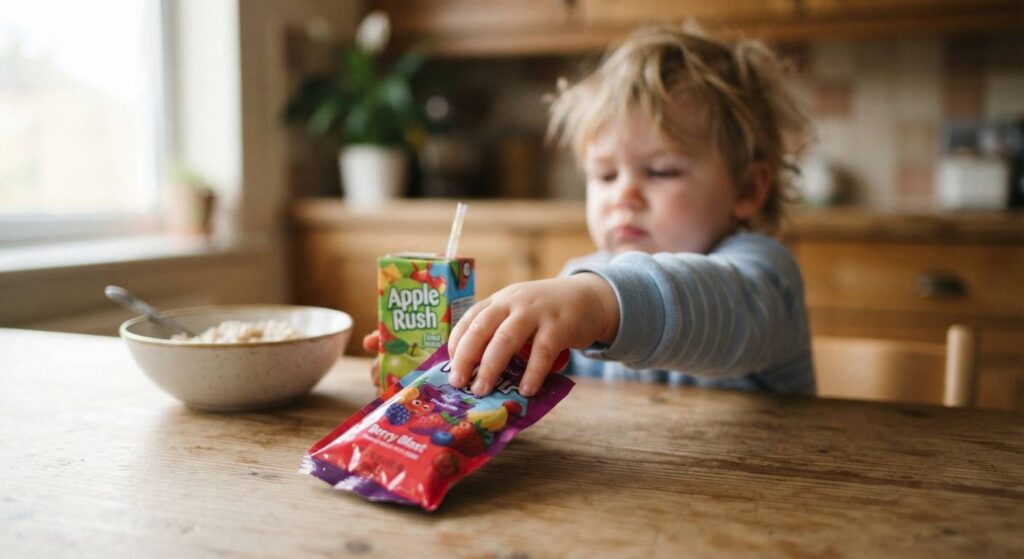
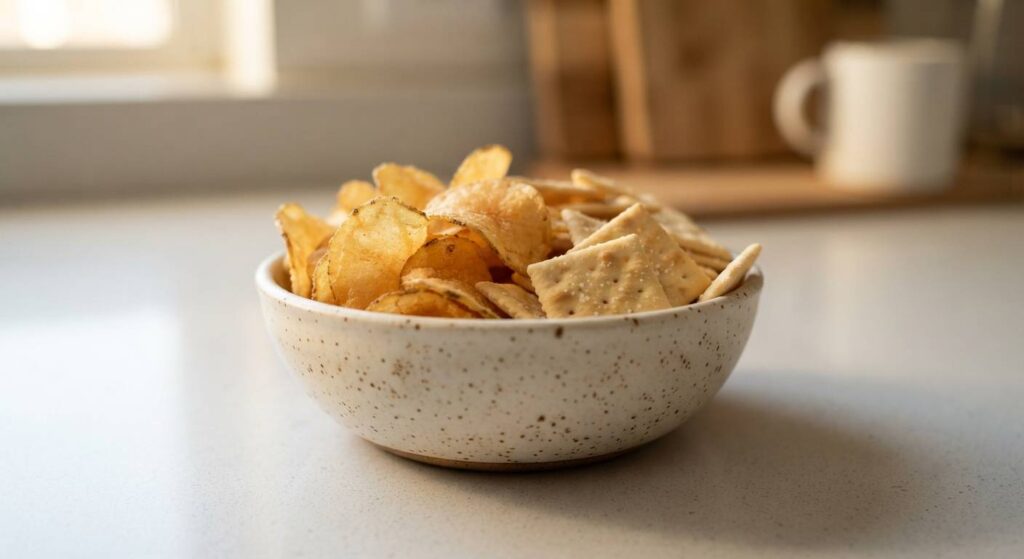
A few things tend to make congestion or a sore throat worse, so it’s worth steering clear of them until your toddler is on the mend:
- Very acidic foods (like straight orange juice or tomato sauce) if their throat is raw
- Dairy in large amounts, if you notice it seems to thicken mucus for your particular kid (this varies child to child)
- Crunchy, sharp-edged snacks like chips that can irritate a sore throat
- Anything overly sugary, which can add an energy crash on top of an already rough day
When to Call the Pediatrician
Most toddler colds run their course at home with rest, fluids, and a lot of patience. But trust your gut — you know your kid better than any blog post ever will. Call your pediatrician if you notice:
- Signs of dehydration: no wet diaper for 6+ hours, no tears when crying, dry lips or mouth
- Fever over 102°F (38.9°C), or any fever in a baby under 3 months
- Refusing all liquids, not just food, for an extended period
- Difficulty breathing, wheezing, or unusual lethargy
- Symptoms lasting more than 10–14 days without improvement, or getting worse instead of better
- Ear pulling or complaints of ear pain, which can signal an ear infection
When in doubt, call. Nobody — least of all your pediatrician — will think you’re overreacting.
ინგლისურად ჩასმა შესანიშნავი იდეაა, რადგან ეს უფრო ბუნებრივად გამოიყურება და მკითხველს მეტად უბიძგებს კლიკისკენ. აი, როგორ უნდა გამოიყურებოდეს ეს სექცია ინგლისურად:
You Might Also Like…
- The Ultimate 24-Month-Old Behavior Guide: Surviving the Turning Two Shift – Discover practical tips to navigate the toddler years and manage emotional outbursts with ease.
- Toddler Food Refusal: 7 Proven Strategies to End the Dinner Battle – If your little one is being picky, these 7 actionable strategies will help turn mealtime into a stress-free experience.
- The Ultimate Winter Survival Guide for Toddlers: Dry Skin, Colds, and Cozy Indoor Play – Everything you need to know to keep your toddler healthy, comfortable, and entertained throughout the winter season.
A Little Reminder, From One Tired Mom to Another
Here’s the truth about the whole situation: figuring out what to feed a toddler with a cold isn’t really about the food. It’s about showing up, over and over, with a cup of water and a plate of toast and a hug, even when you’re running on cold coffee and 3 AM humidifier duty. It’s wiping the same nose for the fortieth time that day and still saying “I know, bug, I know” in a soft voice instead of the exhausted one you actually feel.
Some days your toddler will eat crackers and nothing else, and that is enough. Some days they’ll cry over goldfish and that is not your failure. You are not behind. You are not doing it wrong. You are in the trenches of toddler cold season, doing exactly what needs to be done, one soggy tissue and one cold cup of coffee at a time — and that is more than enough.
Medical Disclaimer:
The information provided on Tiny Care Tips is for educational purposes only and is not intended to be a substitute for professional medical advice, diagnosis, or treatment. Always seek the advice of your pediatrician or another qualified health provider with any questions you may have regarding a medical condition. Never disregard professional medical advice or delay in seeking it because of something you have read on this website. If you think your child may have a medical emergency, call your doctor or emergency services immediately.