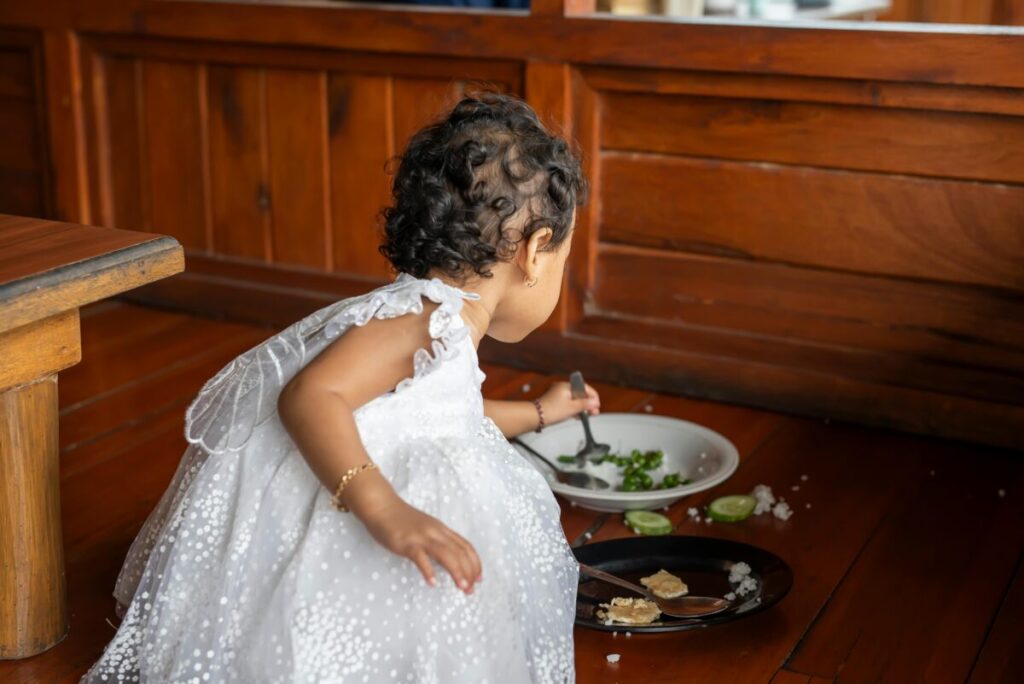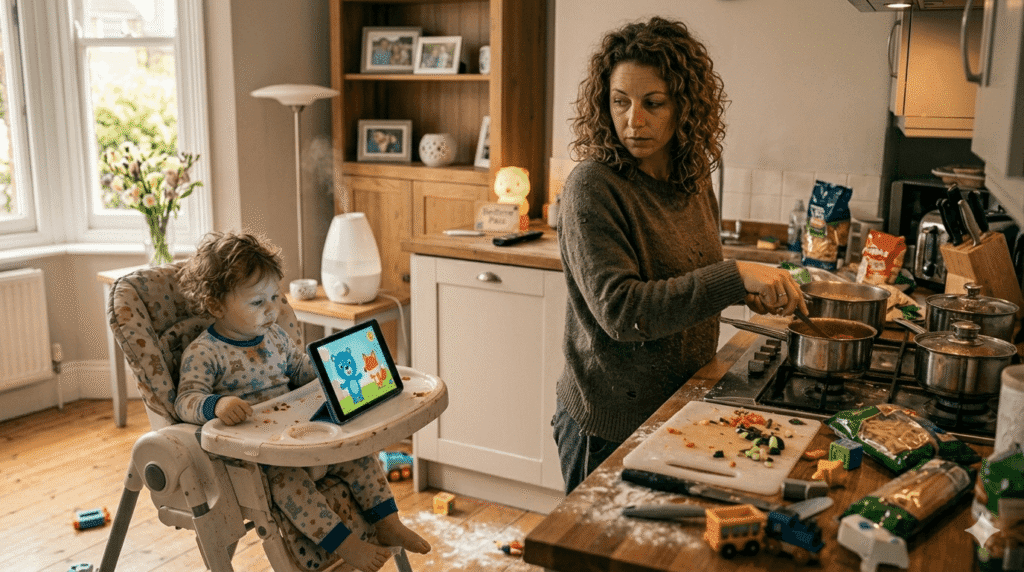
I will never forget the night my son looked dead at me, pointed at his cup, and said “moo.”
I gasped. I called my husband into the kitchen like we’d just witnessed a moon landing. ‘He said MILK,’ I whispered, eyes wide, hand over my heart. We celebrated. We texted grandma. We may have even done a small dance in the kitchen. Looking back, I realize that little moment was the very beginning of his 2-year-old speech explosion, though at the time, I didn’t know how much my life (and the volume in our house) was about to change.
It was not milk. It was “more.” He wanted more crackers. The “moo” was just toddler shorthand for “woman, feed me,” and I had spent ten minutes pouring him a glass of milk he did not want while he stared at me like I was the dumbest adult he’d ever met, which, fair.
That’s the thing about waiting for your toddler to talk. You become a detective, a translator, and occasionally a fool, all before 7 a.m. And if you’re anywhere near the two-year mark and your kid is still mostly grunting and pointing, I know the anxiety that creeps in. Is this normal? Should they be saying more by now? Am I doing this wrong?
Take a breath. Grab your coffee (the one that’s probably cold by now, because toddler). We’re going to talk about the 2-year-old speech explosion — what it actually looks like, how to nudge it along, and how to know when it’s time to ask for backup. (And if you’re tackling big transitions like [moving them from a crib to a bed], I’ve got you covered there, too!).
Table of Contents
What Even Is the “Speech Explosion”?
Somewhere around 18 to 24 months, lots of toddlers go from a handful of words to suddenly slinging out new vocabulary like they’re getting paid for it. One week it’s “dog,” “ball,” and “no” (mostly “no”). The next week they’re naming every object in the house, including things you didn’t know had names, like the specific crumb on the floor they are now pointing at and demanding you acknowledge.
This is often called the 2-year-old speech explosion, and it’s a real, documented phase of toddler language development milestones. It doesn’t happen on a strict schedule, and it definitely doesn’t happen the same way for every kid. Some toddlers ease into it gradually. Others seem to flip a switch overnight and won’t stop narrating their entire existence from that point forward.
The catch? Not every toddler hits this explosion right at two. Some hit it at 22 months. Some hit it at 30 months. Some take their sweet, sweet time and make their moms develop a nervous eye twitch in the process.
My Personal Experience: The Days of Grunts and Gestures


Before the explosion, there were the grunts.
Oh, the grunts.
My daughter went through a solid six-month stretch where her entire communication system consisted of pointing, grunting, and occasionally shrieking like a tiny pterodactyl when I guessed wrong. And I guessed wrong a lot.
She’d point at the fridge. Okay, hungry, got it. I’d open the fridge. More pointing. More grunting. I’d pull out yogurt. Wrong. Cheese. Wrong. The specific blue cup that was, in fact, in the dishwasher and therefore unavailable, which she did not care about because she is two and physics is not her problem.
I remember standing in my kitchen, sweating, holding three different snacks like some kind of deranged toddler buffet, thinking, “I have a college degree and I cannot figure out what this 28-pound person wants.”
Here’s what nobody tells you about this stage: it’s exhausting in a very specific, very silent way. You’re not stressed because your kid is loud. You’re stressed because they’re not loud enough. You start comparing them to the neighbor’s kid who’s already saying full sentences, and you spiral a little. You Google things at 11 p.m. you probably shouldn’t Google at 11 p.m.
And then, one random Tuesday, she said “more cheese please” like she’d been saying it her whole life, and I nearly cried into the fridge. The point is — the grunting phase feels endless when you’re in it. It is not endless. I promise.
Toddler Language Development Milestones: What’s Actually “Normal”
Let’s get into the actual milestones, because vague reassurance only goes so far when you’re up at midnight worrying.
Generally, here’s what experts look for in toddler language development milestones:
By 18 months:
- Says at least 10-20 words
- Points to ask for things or show you stuff
- Understands simple instructions like “come here” or “give me the cup”
By 24 months:
- Has a vocabulary of around 50+ words (though this varies a LOT)
- Starts combining two words together, like “more juice” or “mommy go”
- Can point to body parts or pictures when named
- Imitates words and sounds they hear
By 30-36 months:
- Uses short sentences (3+ words)
- Vocabulary expands rapidly — this is peak speech explosion territory
- Asks simple questions
- Can be understood by familiar adults most of the time
Notice the phrase “varies a lot” up there. I’m not just being nice. The range of “normal” is genuinely wide. Some perfectly healthy, perfectly bright toddlers are late talkers who catch up fast and end up being the kid who narrates their own breakfast in full paragraphs by age four.
Notice the phrase ‘varies a lot’ up there. I’m not just being nice. The range of ‘normal’ is genuinely wide. Some perfectly healthy, perfectly bright toddlers are late talkers who catch up fast. And remember, language isn’t the only ‘milestone’ they’re tackling right now. If your toddler is also struggling with social skills, like sharing their favorite toys, know that it’s just as normal as their speech journey. For more on why this happens, check out our guide: [Sharing is Hard: Why Your 2-Year-Old Isn’t Being ‘Selfish’].
How to Encourage Toddler Talking (Without Losing Your Mind)

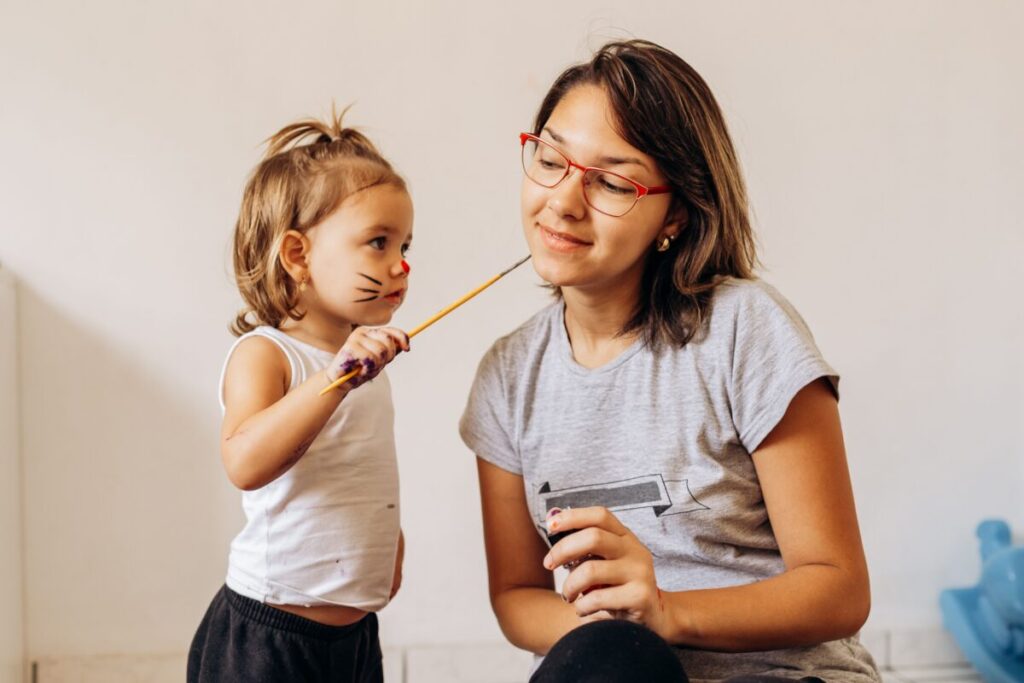
Okay, here’s the part you actually came for. You want practical, doable stuff, not a parenting textbook. Here’s how to encourage toddler talking in ways that fit into actual real life, not Pinterest life.
Narrate Everything (Yes, Everything)
I know it feels ridiculous talking out loud to a person who responds with grunts, but narrating your day works. Say what you’re doing as you do it.
- “Mommy is pouring the milk.”
- “We are putting on your shoes.”
- “Look, a big truck!”
You will feel like you’re talking to yourself. You are, sort of. Do it anyway.
Read More Than You Think You Need To
Books are basically vocabulary cheat codes. Point at pictures, name things, ask simple questions even if they can’t answer yet (“Where’s the doggy?”). Repetition is your friend here — read the same book 400 times if that’s what they’re into. Annoying for you, gold for their brain.
Sing Songs and Use Rhymes
Toddlers love rhythm and repetition, which makes songs a sneaky-effective tool. Nursery rhymes, silly made-up songs about putting on socks, whatever works. Music sticks in toddler brains in a way regular talking sometimes doesn’t.
Pause and Wait
Okay, confession time: I am a world-class filler of silences. If I ask my son a question and he doesn’t answer in two seconds, my brain immediately goes, ‘Oh no, he didn’t hear me! Let me rephrase it! Let me ask again! Let me just answer it myself!’
If you’re a talkative mom like me, this is your biggest challenge. After you ask them a question, force yourself to count to five in your head. I know, it feels like an eternity. It feels awkward. But giving them that extra breathing room allows their tiny brains to actually process what you said, retrieve the words, and get them out. Resist the urge to jump in and save them from the silence. Let them own the pause—that’s where the magic happens.
Get Face to Face
Get down on their level when you talk. Let them see your mouth move. Toddlers pick up a lot from watching how words are formed, not just hearing them.
Expand, Don’t Correct
If they say “ball go,” respond with “Yes! The ball is rolling!” instead of correcting them outright. You’re modeling the fuller sentence without making it feel like a pop quiz.
Limit Screen Time Slightly More Than You’d Like
I’m not the screen police, and I know some days survival mode requires cartoons. But back-and-forth conversation with a real human does more for speech than even the best toddler show. Balance, not perfection.
And let’s be honest — the same goes for mealtimes. When you’re exhausted and just trying to survive the day, you don’t need a complex cooking project. If you’re looking for quick ways to keep them fed without the stress, check out my [5-Minute Nutrient-Dense Meals for Toddlers: Healthy, No-Cook Ideas When You’re Exhausted]
When to Seek Speech Therapy for Toddlers
Now for the part that makes moms’ stomachs flip a little. Let’s talk honestly about when to seek speech therapy for toddlers, because the worry is real and it deserves a real answer, not vague reassurance.
First, here’s the truth bomb: asking for help is not failure. It is not a reflection of your parenting. A speech evaluation is not a verdict — it’s information. Proactive parents get evaluations. Worried, googling-at-midnight, doing-their-best parents get evaluations. That’s you. That’s most of us.
Signs It Might Be Worth a Chat With a Specialist
Consider reaching out to a pediatrician or speech-language pathologist if your toddler:
- Has fewer than 50 words by age 2
- Isn’t combining any words together by 24-30 months
- Seems frustrated often when trying to communicate
- Loses words they used to say (this one’s worth mentioning specifically)
- Doesn’t follow simple directions
- Isn’t pointing, waving, or using gestures to communicate by 18 months
- Has trouble being understood by family members most of the time past age 3
What an Evaluation Actually Looks Like
It’s not scary. Usually it involves a speech-language pathologist playing with your kid, watching how they communicate, and chatting with you about what you’re noticing at home. Many areas offer free early intervention evaluations through local programs, so cost isn’t always the barrier you’d expect.
And here’s the thing — even if your toddler turns out to be totally fine and just on their own timeline, you’ll have peace of mind instead of 11 p.m. Google spirals. That alone is worth it.
Trust Your Gut, But Don’t Panic-Spiral Alone
You know your kid better than any chart does. If something feels off, it’s okay to get it checked, even if everyone around you says “he’s fine, boys talk late.” Maybe he is fine. Get the reassurance anyway. There is zero downside to checking, and a whole lot of downside to spending months anxious in silence.
The Ending You Actually Need to Hear
Here’s what I want you to take with you, mama, more than any milestone chart or bullet list.
Every kid is different. Some explode into full sentences right on schedule. Some take their time, grunt their way through toddlerhood, and then suddenly won’t stop talking — about dinosaurs, about why the sky is blue, about why they specifically need the blue cup and not the green one, forever, every single day.
The 2-year-old speech explosion is a beautiful, chaotic, completely individual process. You’re not failing because your kid isn’t there yet. You’re not “behind” because another toddler at the park is already negotiating snack terms in full sentences. Keep narrating your days, and keep reading. And hey, while we’re tackling these big 2-year-old milestones, if you’re also feeling like it’s time to ditch the diapers, I’ve broken down my process in my guide: [The No-Stress Guide to Potty Training at 2 Years Old]. Take it one step at a time.
Keep narrating your days. Keep reading the same book for the 500th time. Keep watching for the signs that matter, and don’t be afraid to ask for help if your gut is nudging you to. And on the days you feel like you’re failing because you handed your toddler the wrong snack for the fifth time in a row — you’re not. You’re just doing the hardest, most beautiful job there is, one grunt, gesture, and eventual full sentence at a time.
They’ll get there. And one day, you’ll actually miss the quiet.
Disclaimer: I’m a mom sharing what’s worked in our home, not a speech-language pathologist or pediatrician. While these tips are based on general developmental guidelines, every child is unique. If you’re ever worried about your toddler’s progress, please trust your gut and consult with your pediatrician. You are your child’s best advocate!