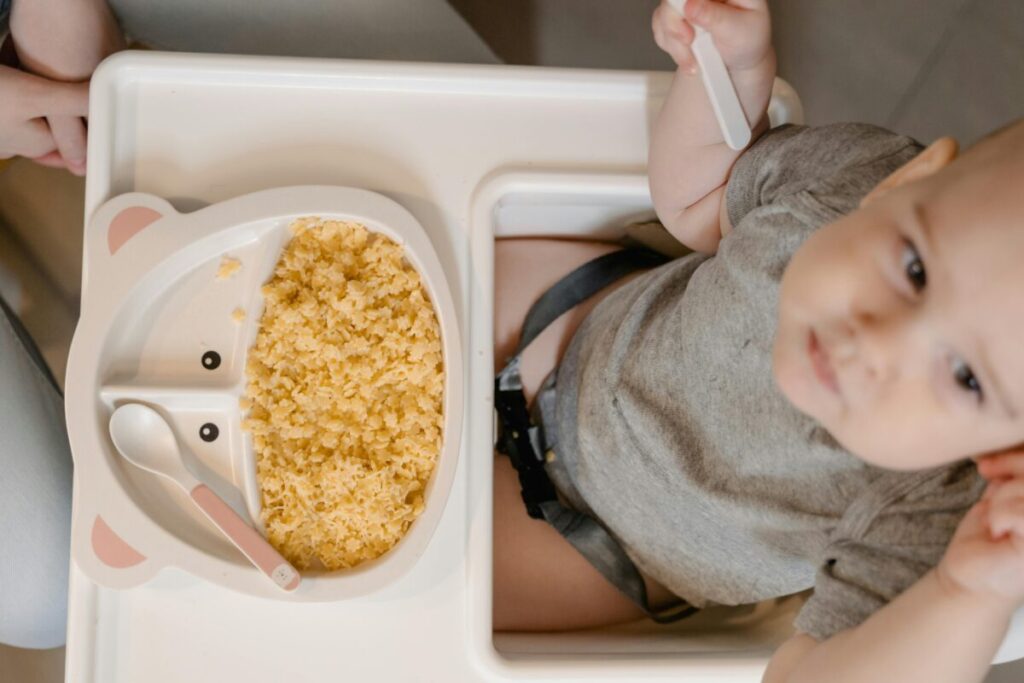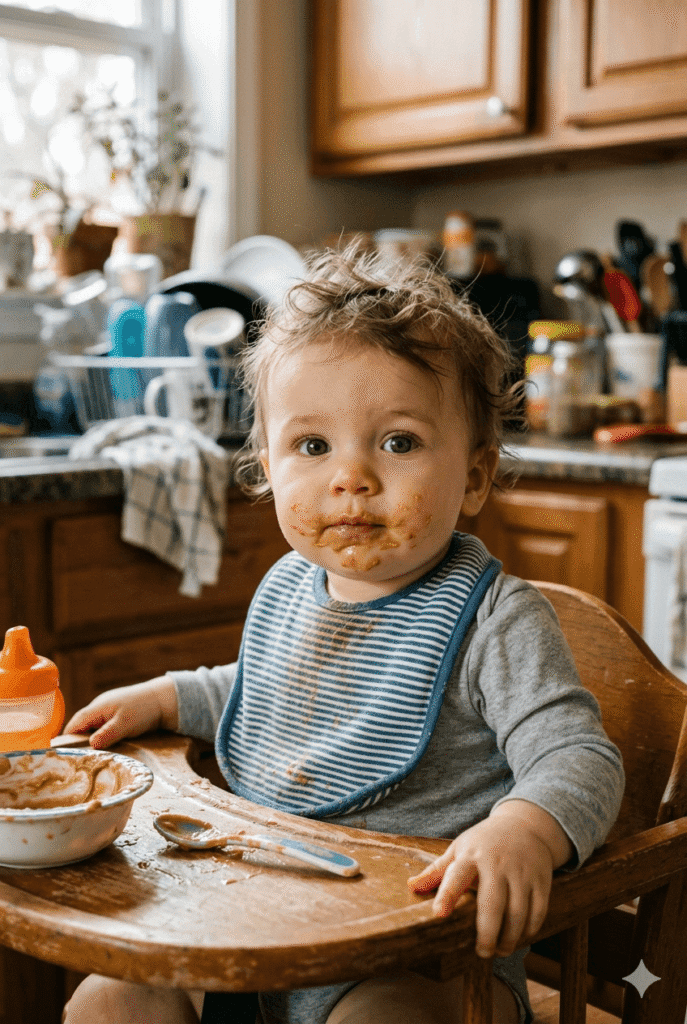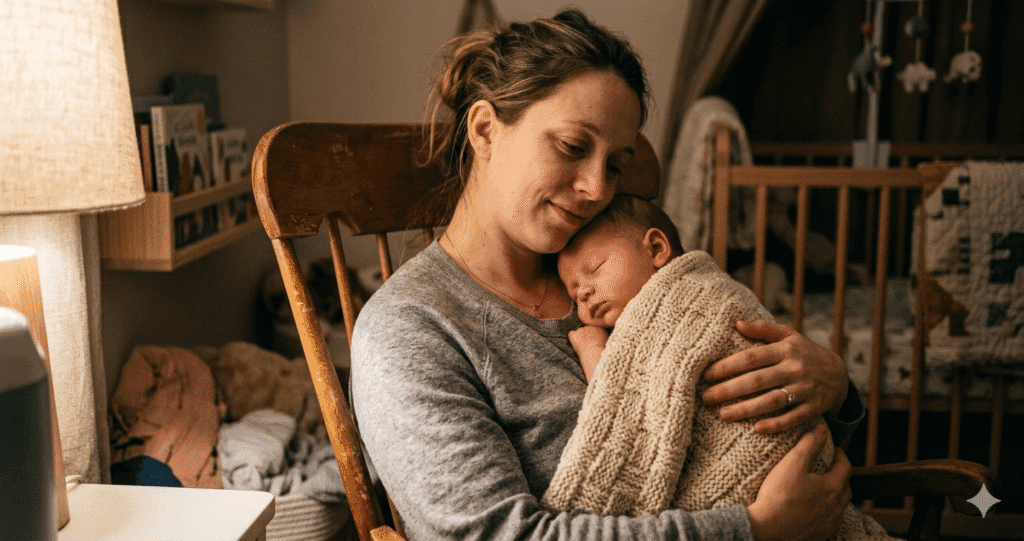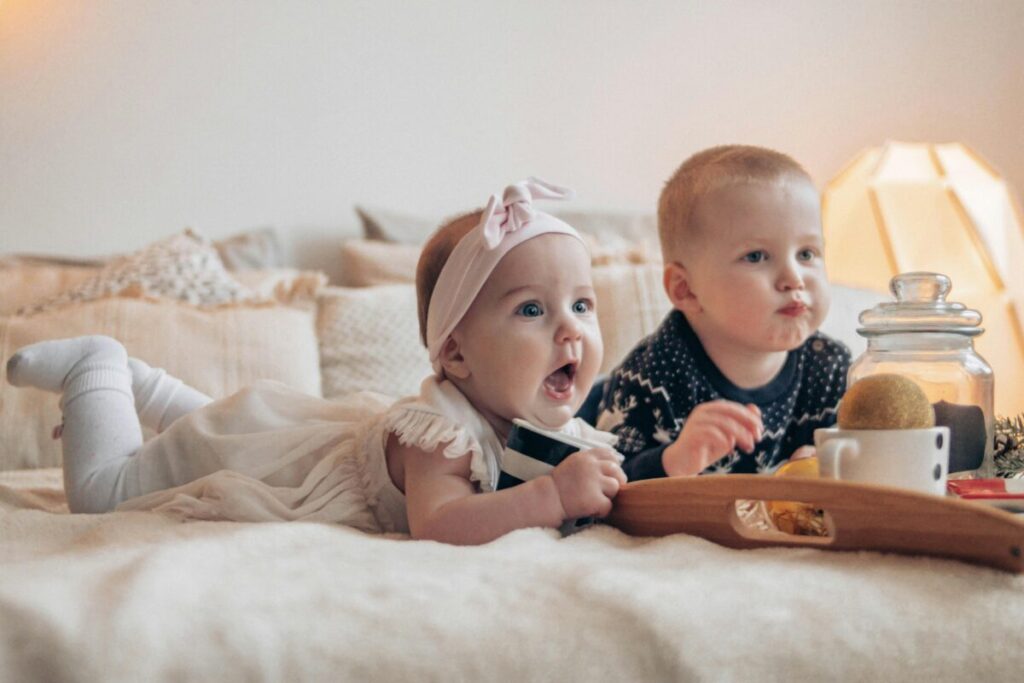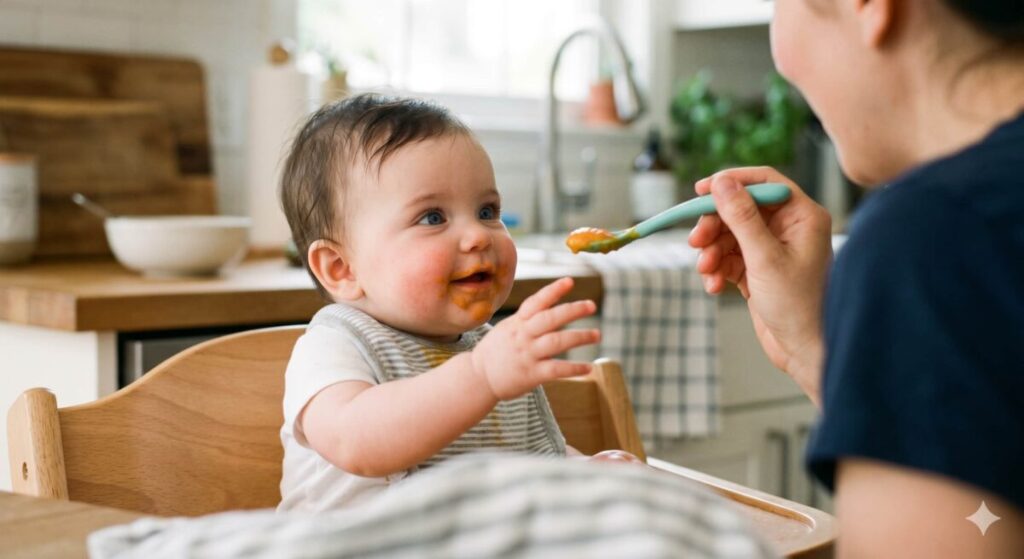
Let’s be honest: my kitchen floor has seen better days. Right now, there is a crusty, dried-up smear of what I think is mashed peas near the fridge, and my hair hasn’t seen a brush since yesterday. If you’re reading this while rocking a baby with one hand and drinking lukewarm coffee—or let’s be real, cold—with the other, you’re in the right place. Welcome to the trenches of motherhood. It’s loud, it’s sticky, and nobody told me I’d be scrubbing sweet potato out of the grout at 11 PM.
The “Mom Guilt” starts early, doesn’t it? One day you’re just figuring out diapers, and the next, everyone from your mother-in-law to the lady staring at you at the grocery store is asking, “Is he eating solids yet?” or “My kids started cereal at three months and they turned out fine!” It’s enough to make your head spin and your eye twitch. You start staring at your little one, wondering, when can my baby start eating baby food, and suddenly you’re spiraling into a deep hole of internet forums, conflicting advice, and 2 AM TikToks that make you feel like you’re already behind.
Real talk: I remember sitting on my kitchen floor, actually crying over a jar of organic squash because I wasn’t sure when can my baby start eating baby food or if I was just ‘forcing’ it because I was desperate for her to sleep through the night. Spoiler alert: the squash didn’t help her sleep, but it did end up in her eyebrows and somehow inside her ear.
The Great Debate: 4 Months vs. 6 Months
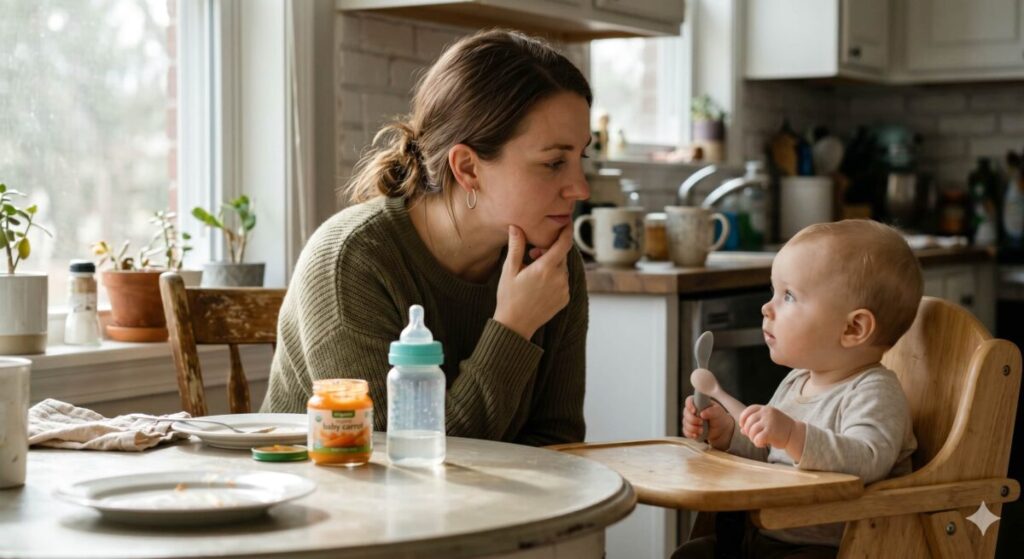
I wish someone told me that the “magic number” isn’t a hard deadline set in stone. If you ask the World Health Organization or the American Academy of Pediatrics, they’ll tell you to wait until six months. They talk about infant nutrition and how the gut needs time to mature so it doesn’t freak out. But then you go to your 4-month checkup, and your pediatrician—who you usually trust—casually mentions starting rice cereal or oatmeal.
So, when can my baby start eating baby food without it being a total, unmitigated disaster? The “4 months vs 6 months” debate is less about the calendar and more about what your baby is actually doing in front of you. Starting solids at 4 months vs 6 months isn’t something you have to “get right” on a deadline.
For my first, we tried at four months because I was exhausted, cranky, and convinced that food was the secret key to our midnight wake-ups. He just pushed everything out with his tongue, looked at me like I was trying to feed him literal dirt, and cried. My second? At five and a half months, she practically snatched a piece of crusty bread out of my hand while I was trying to eat lunch. Every baby follows their own internal, messy clock for baby development milestones.
The “Look For These” Moments (The Real Life Version)
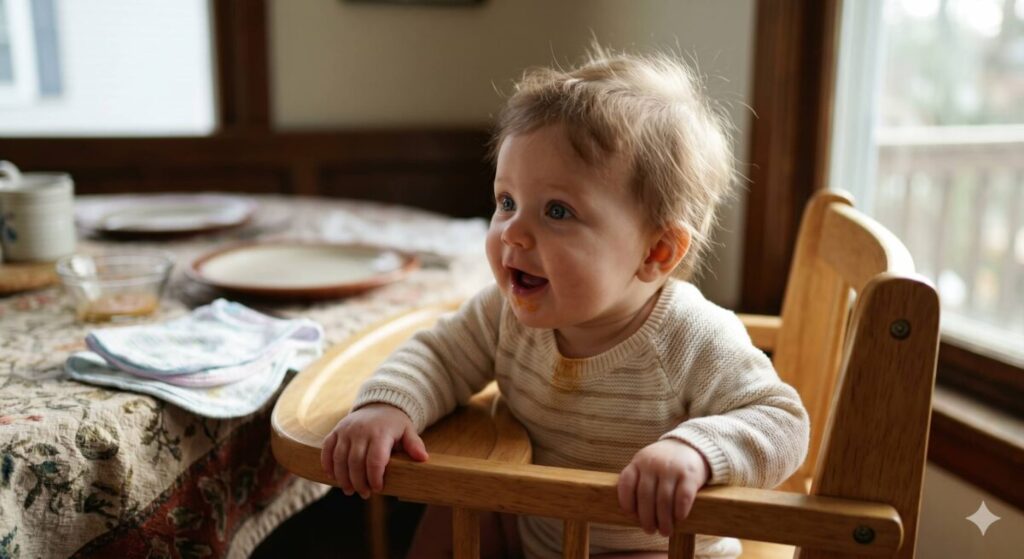
Instead of looking at a sterile, boring checklist on a doctor’s wall, let’s look at what “ready” actually looks like in your messy living room. You know your baby is getting there when you’ll notice they stop flopping around like a little soggy noodle.
Sitting up with support is the big boss of signs. If your baby still slumps over in their high chair like they’ve had three too many mocktails at a bottomless brunch, they aren’t ready to handle food safely yet. They need that core strength to swallow without choking, which is a terrifying thought we all try to suppress.
Then there’s the “staring.” You know the stare. You’re trying to enjoy a rare slice of pizza, and your baby is tracking that crust like a heat-seeking missile. Their little mouth might even start mimicking your chewing motions, looking like a tiny, toothless goldfish. When you see that intense, that intense, almost funny level of focus on your fork, you’ll naturally start asking yourself, when can my baby start eating baby food, because they are literally eyeballing your dinner and judging you for not sharing.
Another big sign of readiness for solids is hand-eye coordination, or at least the baby version of it. Can they pick up a toy and actually bring it directly to their mouth, or are they still punching themselves in the forehead by accident? If they’re still swinging their arms wildly, trying to aim a spoon or a piece of soft avocado is just going to result in a painted wall and a very frustrated tiny human.
That Weird Tongue Thing (The Tongue-Thrust Reflex)
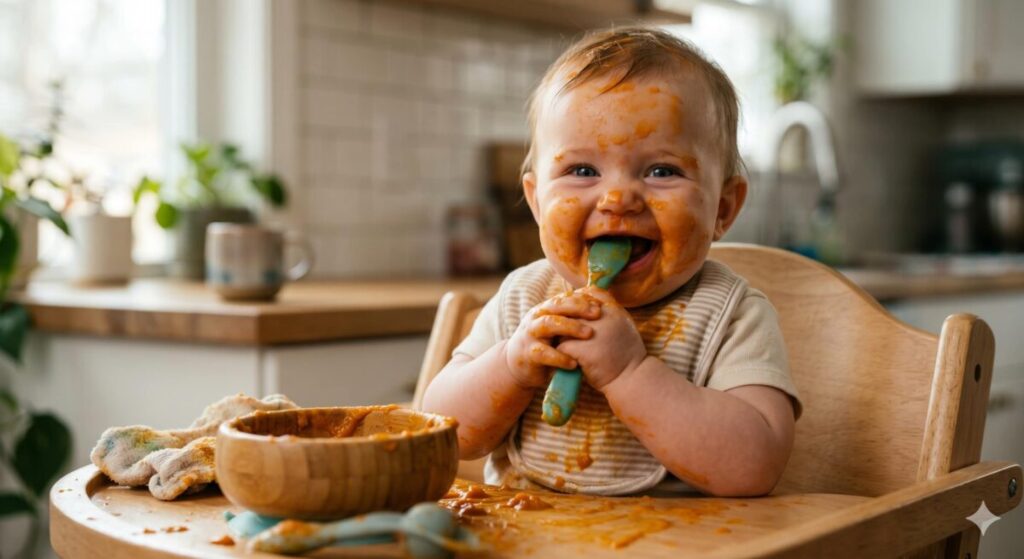
I remember the first time I tried to give my daughter a tiny bit of mashed banana. I was so excited. I put the spoon in, and—blooop—it came right back out. I tried again. Bloop. I honestly thought she hated my cooking already! But here’s the thing: it’s just the tongue-thrust reflex.
It’s a survival instinct. Babies are born with a built-in “reject” button that pushes anything solid out of their mouths to keep them from choking. It’s actually pretty brilliant, but it makes starting solids feel like you’re playing a losing game of tennis. When you’re wondering when can my baby start eating baby food, wait until that reflex starts to fade. If they’re still pushing every single bite back at you like a rejected peace offering, they aren’t being stubborn or picky—their body is just saying, “Nope, still a milk-only zone here!”
What Should the “First Menu” Actually Look Like?
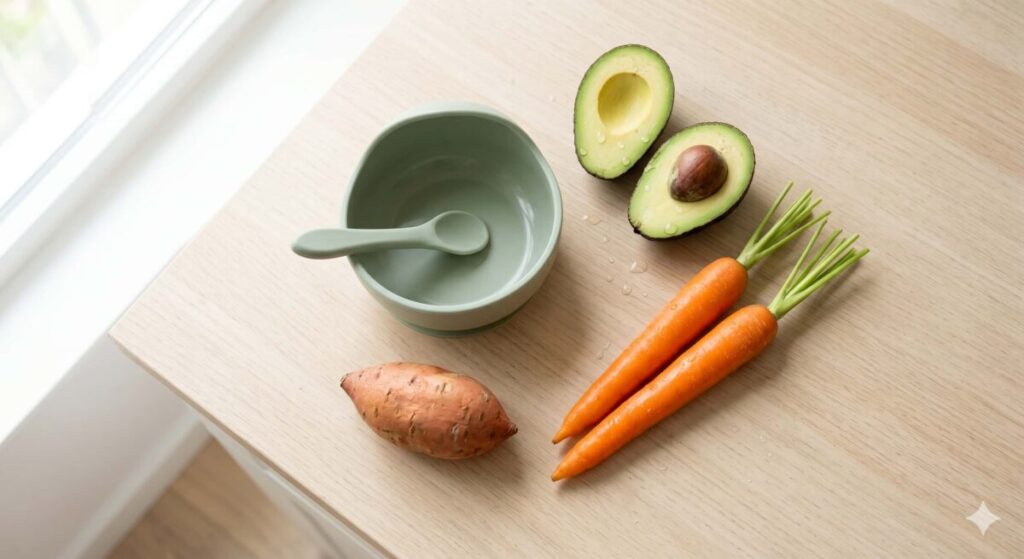
Once you’ve ticked the boxes—they’re sitting up, they’re staring at your steak like it’s a long-lost friend, and the tongue-thrust is gone—you get to the fun part: first baby foods.
Back in the day, everyone started with rice cereal. Now, the internet is a battlefield of opinions. Some moms go straight for the avocado or sweet potato, while others stick to iron-fortified cereals. There’s no “perfect” first food, but iron matters around the six-month mark because your baby’s natural stores start to dip.
But let’s be real about that first meal. I had the camera ready, the cute “My First Meal” bib that cost too much, and a bowl of perfectly pureed carrots. My daughter took one bite, made a face like she’d just swallowed a whole lemon, and then—I kid you not—she sneezed. Bright orange carrot spray went everywhere. It was on my white shirt (RIP), on the dog’s head, and even on the curtains.
That’s the reality. When you ask when can my baby start eating baby food, you also have to ask: “Am I emotionally prepared to find pumpkin puree in my bra three hours later?”
The Pressure to Start Early: “The 4-Month Itch”
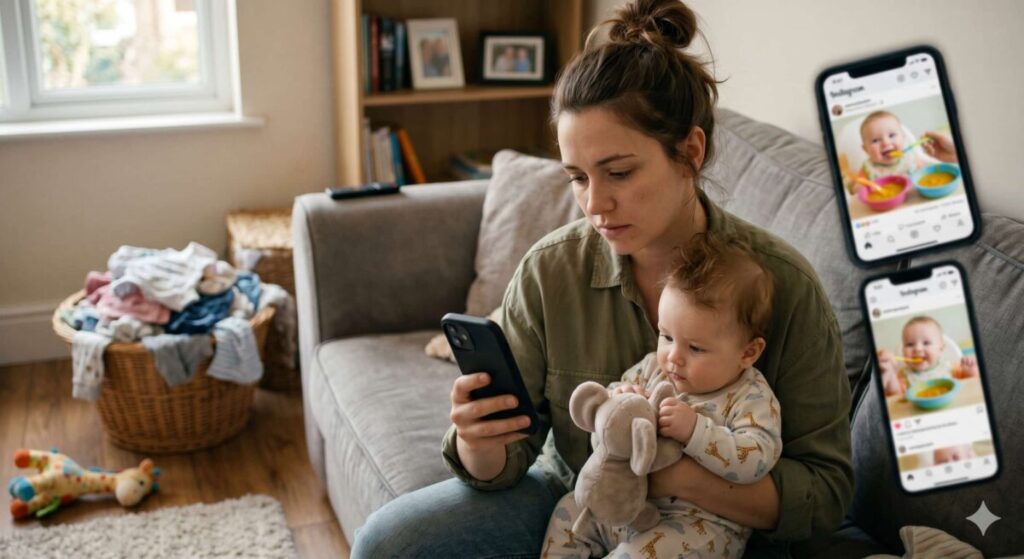
There is this weird, invisible pressure around the four-month mark. You see other moms in your Instagram feed starting “tastes” and “smears,” and you feel like you’re failing some test. Or maybe your baby is a “big baby” and people keep telling you they need “real food” to fill them up.
I wish someone told me that breast milk or formula is still the MVP of infant nutrition for the entire first year. Food at this stage is mostly just for practice. It’s about textures, weird smells, and learning how to use those tiny mouth muscles without gagging. If you’re feeling pressured by your neighbor or a Facebook group, take a breath. If you’re still asking when can my baby start eating baby food at five months and you just don’t feel like dealing with the mess yet, it’s okay to wait a few more weeks. The carrots will still be there.
If you’re struggling with nights specifically, check out [The Ultimate 4-Month-Old Feeding Routine: Milk, Survival, and the Sleep Regression Myth] to see why solids might not be the magic sleep fix you were hoping for.”
Trusting Your Gut (Because Science Doesn’t Live in Your House)
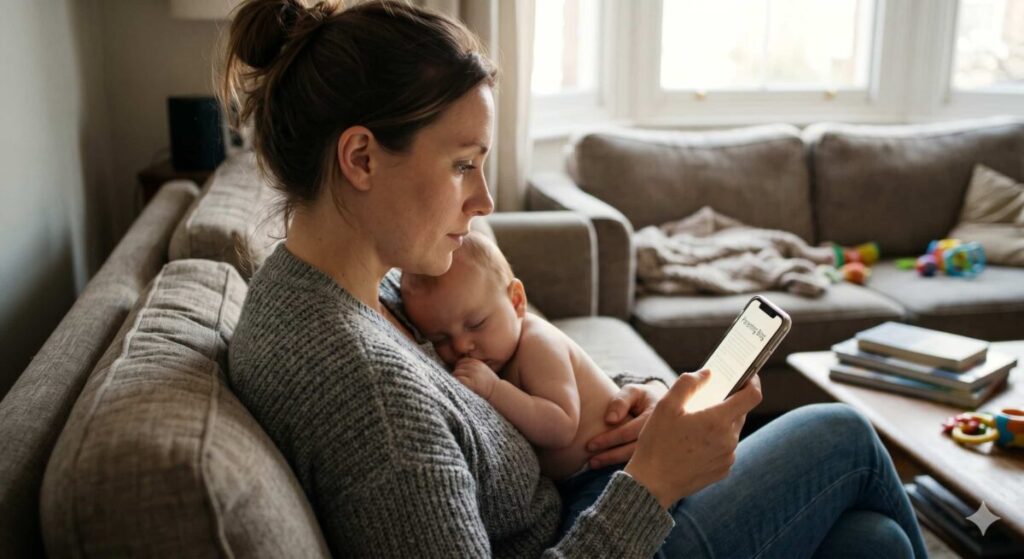
Every baby is a tiny, unique, and often confusing human. My niece was eating full meals of “real” food at seven months, while my son was still mostly interested in his bottle until he was almost ten months old. Both are healthy, thriving kids who now eat chicken nuggets like professionals.
You’ll hear a lot of noise about baby development milestones, but you are the only one who truly knows your baby. You see the way they watch you eat; you see how they struggle—or don’t—to sit in their chair. If you try a spoonful and they seem absolutely clearly miserable, stop. Throw the spoon in the sink. Try again in a week. There is no prize for starting the earliest.
When I was frantically Googling when can my baby start eating baby food, I was looking for a specific Tuesday on a calendar. What I actually needed to look for was my baby’s messy, confusing cues.
A Quick “Mom-to-Mom” Reality Checklist
If you’re still unsure and asking yourself when can my baby start eating baby food, here’s a quick mental checklist I use. If you can’t say ‘yes’ to most of these, maybe go back to just nursing or bottle-feeding for another week:
- The Slump Test: Can they stay upright in a high chair without leaning to the side like a wilted plant?
- The “Target” Test: Can they grab a toy and shove it in their mouth without poking themselves in the ear first?
- The Weight Rule: Have they roughly doubled their birth weight? (This isn’t a law, but it’s a sign their body is growing fast).
- The Curiosity Factor: Do they look like they’re about to launch themselves onto your dinner plate?
The Truth About the “Gag” vs. “Choke”
This is the part that kept me up at night. Babies gag. A lot. It’s loud, they turn a little red, and it’s absolutely terrifying for a first-time mom. But gagging is just them learning how to move food around. Choking is silent and dangerous. Learning the difference was one of the most stressful parts for me.
I remember my son gagged on a piece of soft avocado right after I decided it was finally time for him to start. I almost called an ambulance, wondering if I’d gotten the answer to when can my baby start eating baby food all wrong. He, on the other hand, just spit it out and reached for more. They are often much more resilient than our anxiety gives them credit for.
The Glorious, Sticky Conclusion
You’re going to buy the fancy silicone bibs with the “food catcher” that supposedly keeps the floor clean. (Spoiler: it doesn’t). You’re going to buy the tiny spoons that change color. And you know what? The food will still end up in their hair, in your hair, and somehow, inside their diaper. The first time you see a piece of undigested blueberry in a diaper is a true parenting milestone, welcome to the club!
But through the mess, you’re watching them discover the world. The first time they taste a tart apple or a creamy avocado, their whole face lights up—or they look disgusted, which is also hilarious. It’s one of those baby development milestones that feels like a huge bridge into a new stage of life.
So, when can my baby start eating baby food? When you both feel ready to embrace the chaos and the stains. If they’re showing all the signs of readiness for solids, then grab the paper towels, put the dog in the other room (unless he’s your designated floor cleaner), and let the fun begin.
You’ve got this, mama. Whether you’re debating starting solids at 4 months vs 6 months or just trying to figure out how to get a beet stain out of a white rug, you are doing a great job. The floors can stay sticky for another day. This stage is messy, chaotic, and weirdly kind of special. Trust your baby, trust yourself, and keep the stain remover handy.
And hey, if you’re still spiraling, check out my other “oops, I did it again” moments:
- The Day the Blender Gave Up (And So Did I): 5-Minute No-Cook Baby Meals
- Baby Development Milestones: A Stress-Free Guide for First-Time Moms (6-12 Months)
- Is Beech-Nut Baby Food Safe? What I Learned When I Panicked (So You Don’t Have To)
Disclaimer: Look, I’m a mom, not a pediatrician. While I’ve done my homework and spent way too many hours researching infant nutrition, every baby is different. The information on Tiny Care Tips is based on my personal experience and general guidelines. Always, and I mean always, talk to your pediatrician before introducing new foods or changing your baby’s diet. We’re here to support you, but your doctor is the one who knows your baby’s health best!