
We made it to nineteen months, mamas. Take a second to look at that beautiful, chaotic little human currently trying to stick a piece of lint up their nose or running laps around your coffee table, and give yourself a massive pat on the back. Whether you’re a first-time mom navigating these crazy toddler waters for the very first time, or you’ve been around the block before, hitting these 19 month milestones is a whole different ballgame.
It is beautiful, it is incredibly loud, it is exhausting, and honestly, some days it feels like you’re living with a tiny, unpredictable roommate who can’t decide if they want to give you a sloppy, open-mouthed kiss or scream at the top of their lungs because you dared to cut their toast into triangles instead of squares.
When my little one hit this stage, I remember sitting on the kitchen floor staring at cold scrambled eggs all over the tiles thinking, “Wait… when did this happen?” One minute I had this sweet little baby who mostly just wanted cuddles, and suddenly I was negotiating with a tiny person screaming because I peeled the banana “wrong.”
If you are feeling a little overwhelmed by all the conflicting advice on social media, you are in the right place. This is a realistic guide written by a mom who is right there in the trenches with you. No textbook perfection here—just the real, messy truth about what your toddler is actually going through this month, and how we can all survive it with our sanity mostly intact.
19 Month Milestones: A Realistic Survival Guide for Tired Moms



Just when you think you’ve finally nailed down a perfect daily routine, the nineteen-month mark hits and flips the script. If your toddler has suddenly started turning bedtime into a two-hour wrestling match, waking up crying in the middle of the night, or melting down over the color of their plastic cup, you are not losing your mind. Your little one’s brain is going through a massive cognitive remodel. They are transitioning out of later infancy and stepping firmly into true toddlerhood, which means they are discovering a very powerful, dizzying concept: identity and control.
And honestly? As amazing as this stage is, it can also completely humble you some days. Many parents wake up one day to find they are suddenly surviving the 19 month old sleep regression and tantrums all at the same time. Let’s break down the sleep drama first. The sleep regression at this age isn’t usually about cutting teeth or physical growth spurts; it is purely cognitive. Their little brains are just… busy all the time right now.
I remember nights where my toddler would suddenly stand up in the crib at 2:00 AM, completely wide awake, shouting the three new words they learned that afternoon. It is exhausting, and it makes you question every single parenting choice you’ve ever made. But here is the realistic truth: this bedtime resistance isn’t a behavior problem. They are learning that they are separate individuals from us, and that realization can be both exciting and terrifying for them.
And but wait — somehow the exhaustion from the 19 month old sleep regression and tantrums always seems to hit at the exact same time the daytime challenges get louder too. Your toddler’s emotional cup overflows quickly because their logic centers aren’t fully wired yet. A meltdown over a broken cracker or the wrong color socks is just their way of saying, ‘My brain is overwhelmed, and I don’t know how to process this massive emotion yet.
Decoding the 19 Month Old Sleep Regression and Tantrums
One of the most breathtaking things about this month is watching your toddler’s mind open up through speech. You are likely right in the middle of a massive linguistic transition. And honestly, every kid moves at their own pace with speech, no matter how much Google convinces us to panic at 2 AM, but if you look at a typical language explosion at 19 months milestones checklist, you’ll notice a massive shift from simple, accidental sounds to intentional communication attempts. (And if you think nineteen months is talkative, wait until you see the communication leaps I’ve mapped out in [21 Month Milestones: A Brutally Honest Survival Guide for Tired Moms] for a realistic look at what’s just around the corner!)
What does this look like in the real world, away from the sterile charts? Here is what you should realistically be looking out for right now:
The Communication Checklist
- The Word Count: Your toddler is likely using anywhere from 10 to 50+ real words now, though even a handful of consistent words is perfectly normal.
- Animal Sounds and Word Approximations: “Moo,” “Baaa,” or saying “ba” for ball and “da” for dog all count as real words if they use them consistently for the same object.
- Understanding Simple Commands: They can follow two-step requests like, “Pick up the cup and give it to Mommy,” or “Go get your shoes.”
- Gesticulation and Pointing: They are actively pointing to show you something interesting, shaking their head “no” (with fierce enthusiasm), and waving goodbye.
- Vocal Mimicry: They are starting to mimic the intonation of your voice, your hand gestures, and yes—any accidental bad words you might drop when you stub your toe on a wooden block.
Even though their receptive language (what they understand) is skyrocketing, their expressive language (what they can actually say) is still trying to catch up. Imagine knowing exactly what you want, understanding the whole conversation happening around you, but only having a few words to explain your massive thoughts.
This exact gap is why those daytime tantrums happen, and it’s a classic sign you’re right in the middle of the language explosion at 19 months milestones checklist. When my toddler wanted a specific toy that was trapped behind the couch, they didn’t have the words to explain the logistics. They just pointed, grunted, and eventually dissolved into tears on the rug because I handed them a banana instead. Once I realized their anger was just a lack of vocabulary, it changed how I reacted. Helping them name those feelings—saying things like, ‘You are frustrated because you want your toy, I see you’—can work wonders, even if it doesn’t stop the crying immediately.
The Language Explosion: 19 Month Milestones Checklist



Let’s talk about food, because this is where a lot of modern moms lose their absolute sanity. If you spent the last year carefully prepping organic purees, loading up on iron-fortified oatmeal, and celebrating your baby’s amazing appetite, this month might feel like a rude awakening. It is incredibly common for toddlers to suddenly go on a total food strike.
Learning how to handle 19 month old picky eating patterns is practically a rite of passage for parents at this stage. You will serve a meal that they ate three bowls of yesterday, and they will look at you like you are trying to poison them. They might take one bite, declare they are “done,” and then spend the next twenty minutes trying to drop their peas over the edge of the high chair one by one to watch them roll across the kitchen floor.
I swear there were days mine survived entirely on blueberries, crackers, and pure toddler rage.
First, take a deep breath and look at their physical growth. Between 12 and 24 months, a toddler’s growth rate slows down significantly compared to that rapid, exponential first year of life. Because they aren’t growing at lightning speed anymore, their caloric needs naturally drop. They don’t actually need as much food as your mother-in-law or the internet charts think they do! Toddlers are weirdly good at balancing things out over time, even when it feels like they survived on two crackers all day.
Secondly, eating is one of the very few things a nineteen-month-old has total, absolute control over. When you are figuring out how to handle 19 month old picky eating patterns, remember they can’t control when they leave the house, when they take a bath, or what diaper they wear, but they can control what goes past their lips. If you turn mealtime into a stressful battlefield or try to force ‘just one more bite,’ they will dig their heels in just to win the power struggle.
The best approach is division of responsibility: you decide what and when to serve, and they decide if and how much they eat. Offer a couple of healthy options, include at least one “safe” food you know they currently like, and then step back. If they only eat two blueberries for lunch and refuse the rest, trust that they will make up for it at breakfast or snack time tomorrow.
Physical Milestones: The Era of the Mini-Acrobat
At this point they’re basically tiny stunt performers with absolutely no fear. Most toddlers at this age are hitting their physical 19 month milestones by walking with total confidence, running with that hilarious, wide-legged toddler stance, and starting to experiment with climbing everything in sight. Couches, coffee tables, bookshelves, and kitchen chairs are now personal challenges waiting to be conquered.
They are also drastically refining their fine motor skills. You’ll notice they can probably build a small tower of two to four blocks, scribble with a crayon using a full-fist grip, and maybe even attempt to feed themselves with a spoon or fork with varying levels of success (mostly resulting in yogurt in their hair). They love pulling things apart, opening kitchen cabinets, stacking rings, and carrying massive objects across the room just to prove they can.
This physical independence is wonderful because they can finally explore the world on their own terms, but it also means your anxiety levels as a mom are probably at an all-time high. Childproofing needs an urgent upgrade this month. If a chair can be pushed over to a kitchen counter or a window, your toddler will figure out how to do it. Keep a close eye on heavy furniture and make sure everything is safely anchored to the wall.
💡 Pro-Mom-Tip: The “Double Spoon” and Independent Dressing Success
If your toddler is screaming because they want to feed themselves, but they don’t actually have the coordination to get the food into their mouth yet, use the Double Spoon Trick. Give them one baby spoon to hold and “control” themselves. While their hands are busy waving that spoon around and practicing dipping it into the bowl, you use a second spoon to quietly guide the food in. It satisfies their desperate need for independence while making sure some actual nutrition gets into their belly!
The same rule applies to getting out the door. If they scream because they want to put their shoes on themselves, give them one shoe to fumble with while you quietly slide the other shoe onto their opposite foot. It saves you twenty minutes of morning frustration, honors their autonomy, and keeps the routine moving forward without an epic meltdown before you’ve even had your morning coffee.
Social Leaps: The Reality of Parallel Play
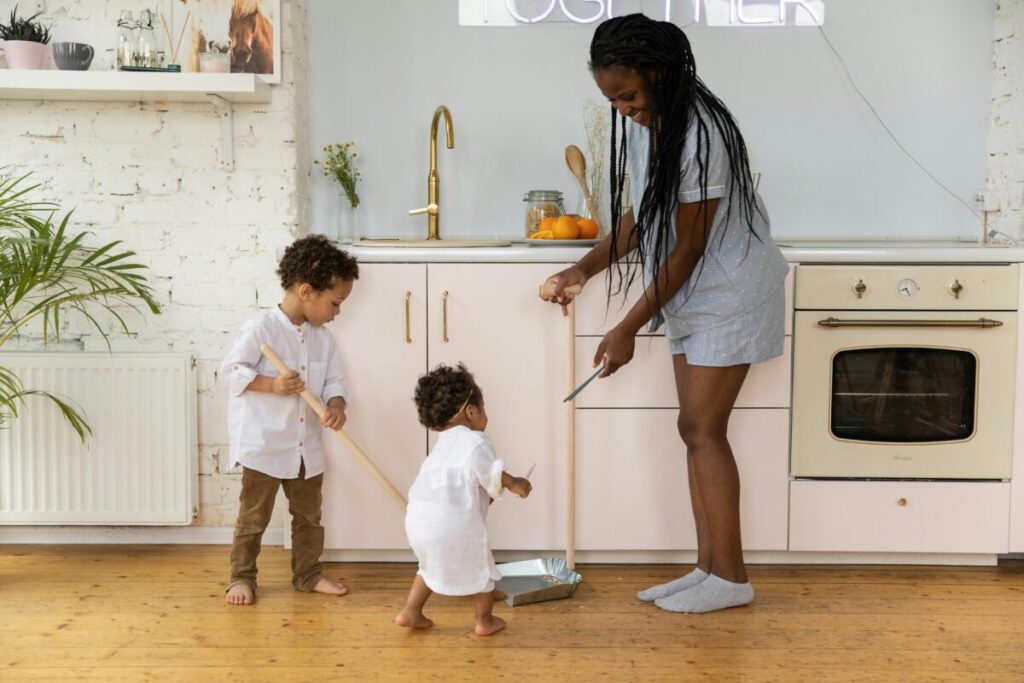
Socially, your nineteen-month-old is a little mirror reflecting everything happening in their immediate environment. They are completely obsessed with watching you. If you sweep the floor, they want a broom. If you brush your hair, they want to grab the brush. This is the prime age for cooperative imitation, and it’s a beautiful way to bond with them. Include them in your daily chores! Give them a damp cloth and let them “wipe” the cabinets while you clean the kitchen. It keeps them entertained, makes them feel important, and satisfies that burning desire to be just like Mom.
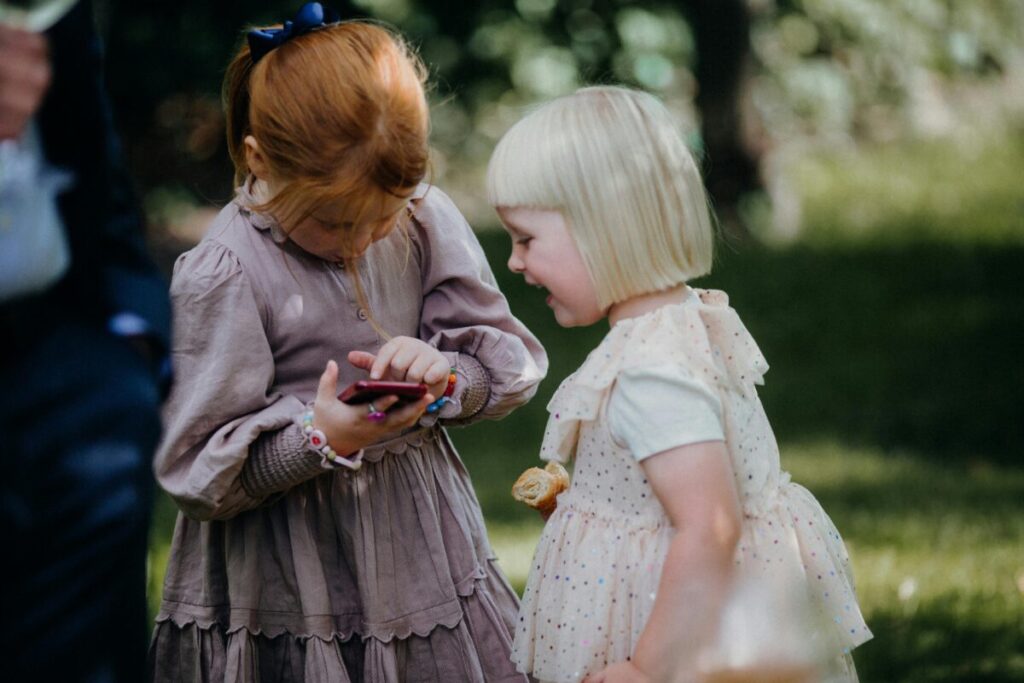
When it comes to playing with other children, don’t expect them to share nicely or play tag just yet. At this stage of their 19 month milestones, toddlers engage almost exclusively in what developmental specialists call parallel play. This means they will sit right next to another child on the rug, completely content, playing with their own trucks or blocks without actually interacting, talking, or sharing.
Sharing is a complex cognitive concept that won’t truly click for another year or two. If a playdate friend gets too close and your little one hoards their toys, snatches them back, or shouts, it isn’t selfishness or a sign of bad behavior; it’s just exactly where their brain is at right now. They view their toys as an extension of themselves.
How long does the 19-month sleep regression last?
Every toddler is different, but it typically lasts anywhere from 2 to 4 weeks while their brain finishes this major cognitive remodel.
Is it normal for a 19-month-old to suddenly stop eating?
Yes, it’s a very common phase often caused by slower growth rates and a newfound desire for independence. Focus on the division of responsibility.
How many words should a 19-month-old say?
While 10-50 words is the “typical” range, every child develops at their own pace. Consistency is more important than the exact count.
Read Next on Tiny Care Tips:
- 💡 If you are currently struggling with midday sleep schedules, check out our guide on The One-Nap Transition: A Survival Guide for the Sleep-Deprived.
- 🧹 Dealing with an absolute mess at lunch? You’ll love this realistic look at The High Chair Chronicles: Why My Toddler Thinks the Floor is a Better Plate.
- 🥛 Wondering what to pour into their cup next month? Read the honest truth in Is Toddler Milk a Marketing Scam? The Truth About Formula vs. Whole Milk.
- 🦖 Living with a tiny, screaming dictator who smiles while breaking your rules? You need 20 Month Milestones: A Brutally Honest Survival Guide for Tired Moms.
Finding the Balance in Modern Motherhood
Looking back at all these shifts, it’s easy to see why this month feels like a wild emotional rollercoaster. You are balancing a language explosion, physical acrobatics, eating strikes, and intense sleep shifts all within a single four-week period. It is a lot for a tiny toddler brain to handle, and honestly, it is a lot for a mom’s nervous system to handle too.
If your days feel a bit chaotic lately while navigating these 19 month milestones, please know you are doing an incredible job. Some days you will feel like a parenting guru who handles tantrums with perfect, zen-like grace, and other days you will find yourself hiding in the pantry eating a hidden chocolate bar just to get three minutes of peace and quiet. Both of those days are completely normal, valid parts of the modern motherhood experience.
Some days you’ll handle everything calmly, and other days you’ll count down the minutes until bedtime while hiding in the kitchen eating chocolate. And honestly, both versions of you are still a good mom.
This stage can feel really intense sometimes. One minute they’re laughing, the next they’re crying because you peeled the banana “wrong,” and by the end of the day everybody’s exhausted. But a lot of these hard moments really do come from how fast their little brains are changing right now.
So if your house feels messy lately, if bedtime has become chaotic, or if you feel overstimulated by all the noise and toddler emotions… you’re definitely not alone in that. Take the shortcuts when you need to, let the laundry wait sometimes, and try not to put so much pressure on yourself to handle every moment perfectly.
Most of us are honestly just figuring it out as we go.