Introduction: The “Percentile” Worry Every Parent Feels
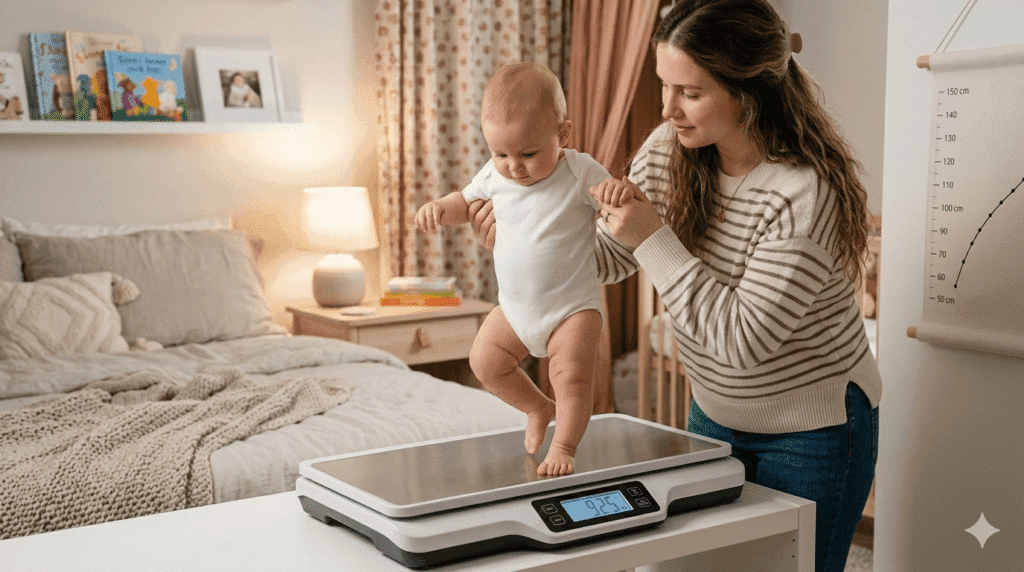
To be honest, you’re not alone! If you’re looking for ways to ensure healthy baby weight gain and leaving the pediatrician’s office thinking, “Wait… isn’t my little one gaining enough weight?” that’s what worried me most about my child’s weight during the first year, and I thought about it a lot.
I remember one visit clearly. I went out to the car, sat for a minute, and just stared at the numbers written on a piece of paper. Nothing was “bad,” but I couldn’t shake the worry for my little one. Even though the doctor said everything was “fine,” I spent days thinking about this heavy, constant worry.
It’s hard not to look at other babies and wonder why your little one isn’t growing as fast or reaching the same milestones. But you shouldn’t worry about that. I had to constantly remind myself that the growth chart is not a report card. Just because your little one isn’t growing like others, it’s nothing to be alarmed about. Every child is an individual.
I’ll admit it—I was obsessed. I kept looking at other babies why the child from the same month was bigger than mine. But you have to remember that it’s about how they are developing compared to themselves, not how they look compared to the neighbor’s child.
Some babies are born small. Some babies are born fat. Neither is wrong. What’s important is not your baby’s percentile—it’s consistent growth.
We’ll cover everything you need to know about healthy baby weight gain, including feeding and schedules as well as warning signs and tips that have worked for other parents.
Is It a Slow Phase or Healthy Baby Weight Gain?
Growth charts can feel confusing, but they’re actually simple once you break them down.
📊 What Percentiles Really Mean
say your baby falls in the:
Imagine percentiles as a chart, not a grading system. According to official CDC Growth Charts, your baby is not ‘failing’ at growing just because they are in the 10th percentile. Your baby is not ‘failing’ at growing just because they are in the 10th percentile and smaller than other babies. What helped me was looking at the line itself. Is that slope consistent? As long as they’re climbing their own small slope upward, you’re typically fine.
The key to healthy baby weight gain is consistency. As long as they’re climbing their own small slope upward, you’re typically fine.
✅ Normal Growth Looks Like:
- Following the same curve over time
- Gradual increases in weight (not sudden drops)
- Healthy energy, feeding, and development
Take for instance, a baby consistently growing from 13 lbs (5.9 kg) to 15 lbs (6.8 kg) over a few months. That baby is perfectly healthy—despite what their percentile may say. These indicators are often more important than the scale when tracking healthy baby weight gain over several months.
🚩 When It Might Be Slow Gain
- Dropping multiple percentile lines
- Minimal weight gain over several weeks
- Feeding difficulties
Over time, I realized, the biggest shift came when I stopped focusing on “how big” my baby was—and started focusing on patterns over time.
How to Use High-Calorie Foods for Healthy Baby Weight Gain: Small Changes, Big Impact
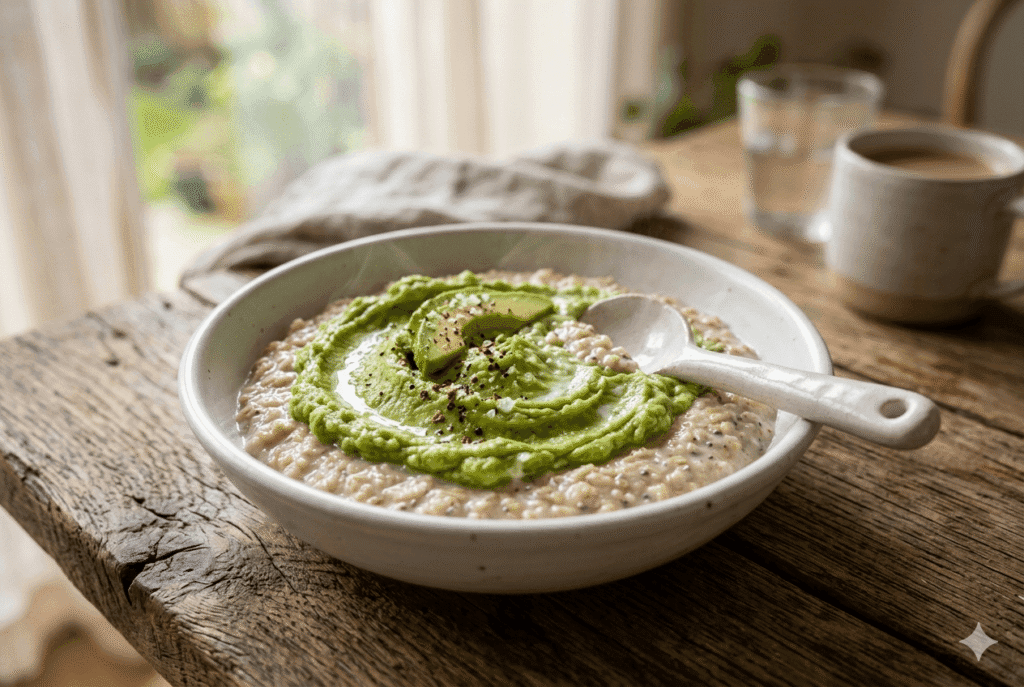
The biggest error I almost fell into was trying to shove larger portions down their throats. Truth is, you really don’t have to! It’s so much easier to just concentrate on dense calories. You’re increasing the nutrition in the SAME amount of food they’re already eating so you don’t overload their little bellies.
Essentially you’re loading up on nutrition INTO the same serving.c
🥑 Easy Ways to Add Healthy Calories
To support healthy baby weight gain, you don’t have to serve your little one twice as much food, just feed them food that’s twice as calorie-dense. You don’t have to serve your little one twice as much food, just feed them food that’s twice as good and calorie-dense. I would add a teaspoon of butter or olive oil to almost everything. Avocado is also good for a baby’s health. Add a few tablespoons of mashed avocado (half an avocado is only one to two ounces) to their oatmeal. My little one and I also constantly ate full-fat yogurt. It’s about getting full on calories, not filling bowls, which took me a long time to figure out.
💡 Why This Works
Our infants have small stomachs. They can only eat small amounts of food at one time.
By increasing the calories in each bite, you. By increasing the calories in each bite, you support healthy baby weight gain and avoid overwhelming your baby
- Increase total intake
- Support healthy weight gain
- Avoid overwhelming your baby
Look, I’ll be blunt: you’re definitely not the only one feeling this way. I remember walking out of the pediatrician’s office with that heavy knot in my stomach, constantly replaying the doctor’s words in my head. ‘Wait—is she actually gaining enough?’ Honestly, that one question haunted my first year of motherhood. I probably spent more time obsessing over those tiny weight charts than I did sleeping!
👉 [Link to: Is Your Baby Waking Up Hungry? 10 High-Calorie Foods]
Structuring the Day for Growth

Honestly, getting a solid feeding routine in place was a game-changer for us—it’s wild how much more they actually eat when things don’t feel so… random.
🕒 Why Routine Matters
Let’s face it—life is easier for everyone when your little one knows exactly when their next meal is arriving. When those feedings happen like clockwork (or close to it!):
- Hunger cues become clearer
- Intake improves
- Less grazing, more full feeds
it’s just about focusing on full, ‘quality’ feeds to promote healthy baby weight gain instead of letting them graze on tiny snacks all day. As your baby grows, maintaining this balance gets a bit more complex. If you’re heading into the next stage, check out my guide on [The 8 to 12 Month Transition: How to Balance Solids, Milk, and Naps Without the Chaos] to keep that routine on track.
🍼 What a Typical Day Looked Like for Us
Look, every baby has their own little internal clock, but honestly? Having even a loose structure was what finally stopped my constant guessing game. For us, the day usually kicked off around 7:00 AM with a big milk feed—somewhere between 6 to 8 oz. Then, maybe an hour later (give or take), we’d dive into breakfast.
The goal? Getting milk in every few hours while sneaking in those calorie-dense meals for lunch and dinner. Honestly, our big secret was making sure those daytime calories were high enough. Why? So they wouldn’t wake up absolutely starving at 3 a.m. (we’ve all been there!). It’s not about being a slave to the clock—not at all—it’s just about focusing on full, ‘quality’ feeds instead of letting them graze on tiny snacks all day.
💡 What Helps
One thing that really made a difference for us was avoiding constant snacking. I noticed that when I stopped letting my baby graze all day, they actually took full, calorie-rich feeds during mealtime.
👉 Once you get the calories sorted, the next puzzle is the timing. I actually found that following a solid [7-Month Feeding Schedule] helped us stay consistent and made sure those high-calorie meals actually happened
When Things Don’t Go to Plan (Teething, Illness, and Refusal
Let’s be real—even the best plan falls apart when a new tooth starts poking through or a cold hits. When my baby was teething, their appetite would just vanish, and I’d start to panic.
If you’re dealing with a sudden refusal of solids or a temporary dip because they’re sick, my best advice is: Don’t pressure them. Stay consistent, offer familiar comfort foods, and focus on keeping them hydrated. It feels like an endless phase when you’re in the middle of it, but trust me, their appetite usually bounces back faster than you’d expect.
It feels like an endless phase when you’re in the middle of it, but trust me, their appetite usually bounces back faster than you’d expect. However, if this isn’t just a phase and you’re wondering [why your baby refuses solids] on a regular basis, there are a few specific signs you should look out for.
The Sleep-Weight Connection
Here’s something many parents don’t realize: better daytime calories often lead to better sleep at night.
💡 Quick Tip for Better Nights: If you think your little one might be waking up due to a rumbly tummy, you can find my favorite calorie-dense options here: [Is Your Baby Waking Up Hungry? 10 High-Calorie Foods for Better Sleep and Steady Growth]
🌙 Why This Happens
If your baby doesn’t eat enough during the day:
- They wake at night to compensate
- Sleep becomes fragmented
Shifting those calories to the daytime is a win-win for both sleep and healthy baby weight gain.
🍼 Example
If your baby only drinks:
- 20 oz (600 ml) during the day
They may wake up needing an extra:
- 4–8 oz (120–240 ml) overnight
💡 The Goal
Shift calories to daytime hours.
In my experience, once my baby consistently reached 24–30 oz (720–900 ml) daily plus solids, night wakings decreased naturally.
In my experience, once my baby consistently reached 24–30 oz (720–900 ml) daily plus solids, night wakings decreased naturally. If you’re struggling with both weight gain and bedtime, I’ve put together a complete [Sleep Training & Nutrition Guide] to help you balance these two challenges
When to Call the Pediatrician
Most weight concerns are normal—but some signs shouldn’t be ignored.
🚩 Call Your Doctor If:
- No weight gain for 2–4 weeks
- Sudden drop in percentiles
- Refusal to eat or drink
- Persistent vomiting or diarrhea
- Low energy or lethargy
Trust your instincts. If something feels off, it’s always okay to ask.
Frequently Asked Questions About Baby Weight Gain
Real Questions Parents Ask (The Stuff We All Worry About)
1. Is breast milk or formula actually better for weight gain? Honestly, both are great, and your baby can thrive on either. I spent so much time obsessing over this, but what I finally realized is that it’s not about the “type” of milk—it’s about the total amount they’re taking in throughout the day. Formula makes it a bit easier to see the exact ounces, but breast milk is so easy on their tummies. Don’t let the “breast vs. bottle” debate add to your stress!
2. What if my baby is just a “light” eater? Some babies are just naturally smaller eaters, and that can be totally normal. If your little one is active, alert, and following their own growth curve (even if it’s a lower one), they’re likely doing just fine with those 2 oz meals. I had to learn to stop comparing my baby’s plate to the “chunky” baby next door—every kid has their own rhythm.
3. How do I sneak more calories into their food without making the portions huge? This was a game-changer for me! Since babies have tiny stomachs, you have to make every bite count. I started adding a teaspoon of healthy fats—like olive oil, butter, or mashed avocado—to almost every puree. Even a little full-fat yogurt or a swirl of nut butter in their oatmeal can seriously bump up the calorie count without overwhelming them.
4. How much weight should they actually be gaining each month? When it comes to healthy baby weight gain, it’s not always a steady climb. In the early months, they grow like weeds, but it usually slows down a bit as they get older. I used to expect a jump every week, but growth often comes in waves—nothing for a while, then suddenly their pajamas don’t fit! As long as the overall trend is moving up, you’re on the right track.
5. Can teething or being sick mess with their weight? Oh, absolutely. When my baby was teething or had a little cold, their appetite would completely vanish for a few days. It’s scary to see a tiny dip in weight, but usually, once they feel better, they’ll make up for it with a “growth spurt” hunger. Just focus on keeping them hydrated and offer their favorite comfort foods until the phase passes.
A Quick Pep Talk Before You Go
Look, helping your baby gain weight isn’t some kind of competition. It’s definitely not about obsessed-over numbers on a chart. It’s really just about those tiny wins—like finally getting them to eat a bit of avocado or realizing they actually finished a full feed for once. Those are the moments that actually add up.
I noticed that once I stopped obsessing over the scale and started focusing on my baby’s cues, everything else—the sleep, the growth, and my own sanity—finally started to click. You’re doing a great job, and your little one is lucky to have you in their corner.