So, you’ve made it. You’ve officially survived the first twelve weeks of parenthood. High five! If you’re anything like I was at this stage, you’re probably standing in your kitchen, wondering if you actually washed your hair this morning or just dreamt about it while staring at a lukewarm cup of coffee (or let’s be real, is that yesterday’s coffee?). The “fourth trimester” is ending, and everyone keeps saying “it gets easier”… but honestly, some days it still feels just as confusing.
I remember one day around this time when I tried to “fix” our day by following a perfect schedule I found online. It lasted maybe… two hours, if that. After that, everything fell apart — missed nap, overtired baby, and me just standing in the kitchen wondering how something so simple could feel so hard. That’s when I realized a 3 month old feeding routine isn’t something you control perfectly — it’s something you slowly figure out as you go.
I just want to share what actually helped me during this stage. We’re talking about the 3 month old feeding routine, the magic (and absolute frustration) of wake windows, and how to actually build a day that doesn’t leave you feeling completely overwhelmed by the afternoon.
The Mental Load: Why This Transition Feels Like a Marathon

Before we get into the “how-to,” I need to check in on you. The mental load of motherhood hits a specific, exhausting peak at three months. You aren’t just a “new” mom anymore; the world suddenly expects you to be a “functioning” human. The adrenaline of those first weeks has worn off, and the sleep deprivation is starting to feel like a permanent part of your personality.
You’re tracking ounces, counting wet diapers, timing naps, and trying to remember if you actually paid the electric bill or just thought about it. Some days it just feels really heavy. Most “experts” talk about the baby’s development, but they don’t talk about the mother’s burnout. If your house looks like a toy store exploded and you feel like you can’t even focus on one thing at a time, you are doing a great job. Seriously. A schedule isn’t about being a robot; it’s about creating “predictable islands” so you can finally take a shower in peace.
Finding that balance starts with a manageable 3 month old feeding routine that actually works for your lifestyle, not just on paper.
3 Month Old Feeding Routine: Milk, More Milk, and Please, No Solids Yet!

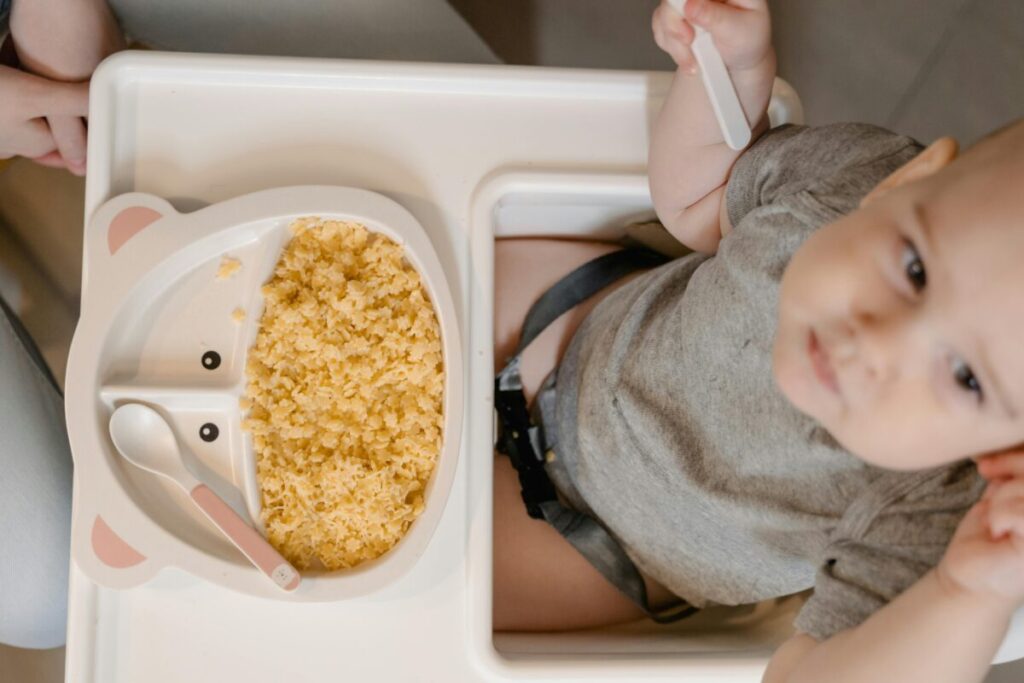
One of the biggest, most annoying questions you’ll get from older relatives is, “Can I start solids yet? He looks hungry!” Maybe your grandmother told you a little rice cereal in the bottle helps them sleep. Stop right there. At three months, your 3 month old feeding routine should be 100% breast milk or formula.
I remember feeling this pressure to start something “extra,” especially because he always looked so interested in food. There was a moment I genuinely thought milk wasn’t enough anymore. But every time I tried to change things too early, it just made everything worse — more fussiness, more confusion. Once I just stuck to milk, things actually got a bit calmer, even if it didn’t feel like it at the time.
Their little digestive systems just aren’t ready for that avocado toast yet — at least that’s what I kept hearing, and honestly, it started to make sense once I saw how sensitive everything still was. The American Academy of Pediatrics (and honestly, most doctors) recommend waiting until around 6 months. Giving solids too early can actually mess with their sleep — their tummies just aren’t ready for it yet, and it can make them really uncomfortable.
When establishing a 3 month old feeding routine, the first thing to accept is that you are basically a 24/7 milk bar, and that is perfectly normal at this stage.
💡 READ THIS NEXT: [The Bedtime Cereal Myth: Why Filling Their Tummy Might Be Ruining Their Sleep] (Learn why that extra bottle or cereal bowl might actually be the reason for those midnight wake-ups!)
How Much and How Often? (Because we’re all counting)

At this stage, most 3 month olds are feeding every 3 to 4 hours.
- Breastfed babies: Usually take 6–8 feedings in a 24-hour period. I know, it feels like you’re just a walking milk machine.
- Formula-fed babies: Typically take 4–6 ounces per bottle, totaling about 24–32 ounces a day.
Pro-Tip from the Trenches: If your baby suddenly seems ravenous and cranky for two days straight, don’t panic and think your milk is “gone.” It’s likely the 3 month growth spurt. They are just “ordering” more supply. Just keep feeding on demand; it passes, I promise!
The Science of Wake Windows: The 60-90 Minute Magic
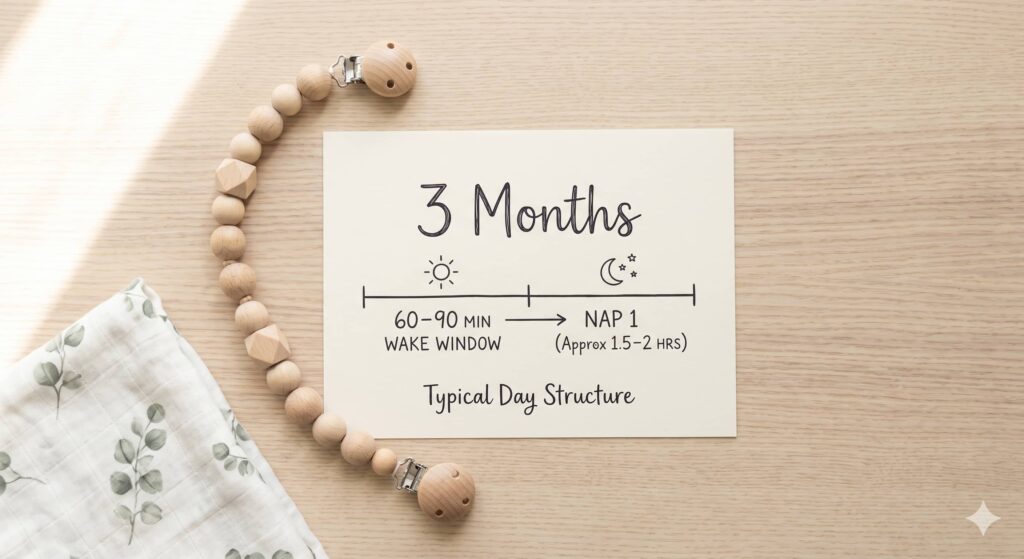
A huge part of making your 3 month old feeding routine work is understanding the science of wake windows
If you learn only one thing today that might save your sanity, let it be this: Wake windows are your best friend.
It honestly took me a while to understand this. At first, I missed every single window. He’d go from happy to screaming in what felt like seconds, and I had no idea what I was missing.
Once I started paying attention to those small sleepy cues, things didn’t suddenly become perfect — but they did start to feel a little easier to manage.
A wake window is just the amount of time your baby stays awake between naps. At three months, the “sweet spot” is usually between 60 and 90 minutes.
Why does this matter? Because if you miss the window and your baby becomes “overtired,” their body produces cortisol. An overtired baby is like a tiny, angry drunk person—they are twice as hard to settle.
When you align your baby’s sleep with a solid 3 month old feeding routine, you’ll notice those fussy periods start to shrink.
How to Spot the “I’m Done” Cues
Don’t wait for the red-faced screaming. Look for the “Early Warning Signs” (The ‘Mom-Dar’):
- The Stare: They start looking off into space (the “thousand-yard stare”).
- The Red Brow: The area around their eyebrows turns pink. This was my daughter’s “tell” every single time!
- Disinterest: They turn their head away from that annoying singing toy.
- The Classic: Yawning and rubbing eyes—if you see this, you’re already at the end of the window! Move fast!
🏃♀️ Looking Ahead: You’re doing great with those wake windows! But be prepared—the 4-month mark brings its own set of challenges. Check out my guide on [The Ultimate 4-Month-Old Feeding Routine: Milk, Survival, and the Sleep Regression Myth] to get ahead of the game. And if you’re already worried about those restless nights, I’ve put together some tips in [The 4-Month Sleep Regression Survival Guide: How to Survive the Witching Hour] to help you navigate the upcoming sleep changes.
Nap Strategies: Dealing with the Infamous “Crap Nap”

Ah, the 30-minute nap. There were days when every single nap was 30 minutes, no matter what I did. I’d sit down thinking “okay, I finally have time,” and then boom — crying again. It was frustrating, but looking back, it was just part of how his sleep was developing, not something I was doing wrong.
At three months, baby sleep cycles are maturing. They struggle to connect the cycles.
- The “Save the Nap” Move: If they wake up at 30 minutes, try to rock or soothe them back to sleep for another 15 minutes. Sometimes it works, sometimes it doesn’t.
- The Environment Matters: Is the room pitch black? Like, “can’t see your hand” black? Use a white noise machine. At 3 months, they are becoming “nosy.” A bird chirping outside is now a major distraction that will wake them up.
Sample Hour-by-Hour Routine: Because We Need a Plan
Remember, this is a sample. If your baby wakes up at 6:00 AM instead of 7:00 AM, just shift the whole thing. This is just a loose example — real life rarely looks exactly like this. If you follow this 70% of the time, you’re winning.
To help you visualize how it all works, here is a sample of how a 3 month old feeding routine fits into a typical day:
| Time | Activity | Notes |
| 7:00 AM | Wake Up & Feed | Open the curtains! Let them know it’s daytime. |
| 8:15 AM | Nap 1 | Aim for that 60-90 min wake window. |
| 9:45 AM | Wake & Feed | Full feeding. Try to keep them awake for the whole feed. |
| 11:00 AM | Nap 2 | Usually the “big” nap. Cross your fingers for 2 hours! |
| 1:00 PM | Wake & Feed | Tummy time and some “serious” chatting. |
| 2:30 PM | Nap 3 | Usually a shorter one. Good for a stroller nap. |
| 4:00 PM | Wake & Feed | Afternoon stroll or some “floor time.” |
| 5:30 PM | Catnap | A short 30-min bridge nap. Do NOT let this go long. |
| 6:30 PM | Bedtime Routine | Bath, PJs, final feed. Keep it calm and boring. |
| 7:30 PM | Bedtime | Ideally asleep. Now go eat something! |
The Buffer Zone: Real life involves diaper blowouts and your mother-in-law calling. If the schedule slides by 40 minutes, don’t sweat it. Just focus on the next wake window.
3-Month Development: More Than Just Sleeping and Pooping

Your 3-month-old is starting to become a real little person! This is such a fun age for 3-month development.
- Social Smiles: They aren’t just gas anymore! Those smiles are for you, and they make the 3 AM wake-ups almost worth it.
- Hand Discovery: You’ll see them staring at their hands like they’ve just discovered a new planet.
- Tummy Time: They should be getting stronger. If they hate tummy time (mine screamed like I was torturing him), try lying on your back and putting them on your chest. It’s “lazy tummy time” but it works!
Stronger muscles mean a more active baby, which in turn helps regulate your 3 month old feeding routine as they burn more energy during play.
As your baby develops, your focus will soon shift from just tracking milk to thinking about first tastes. When that day comes, don’t let the fear of reactions hold you back. You can bookmark my guide on [Introducing Allergens Safely] so you’re ready when they hit that 6-month milestone.
Tackling Common Hurdles

Even the most well-planned 3 month old feeding routine will face some daily hurdles, and that’s okay.
The Witching Hour (Or “The Hour of Doom”)
Between 5:00 PM and 8:00 PM, many 3-month-olds go through a fussy period. They are just “done” with the world.
- The Fix: Lower the lights, use skin-to-skin contact, or try a warm bath. Sometimes a “change of scenery” (going outside or even just into the bathroom to look at the mirror) resets their brain.
Sometimes a little extra nursing or a small bottle as part of your flexible 3 month old feeding routine can also help calm the chaos during these fussy hours. If gas seems to be the main culprit behind the fussiness, check out [The Ultimate Guide: How to Relieve Baby Gas and Colic So Your Little One Can Finally Rest] for tips on how to soothe that trapped air
Growth Spurts
The “3-month-frenzy” is real. If they are eating every 2 hours and acting like they’ve never seen milk before, they are growing. Follow their lead. Your 3 month old feeding routine will get back to normal in a few days. Hang in there.
During a growth spurt, your 3 month old feeding routine might go out the window for a few days, but don’t worry—it will settle back down.
Conclusion: You’re Doing Better Than You Think!
Creating a 3 month old baby schedule isn’t about being perfect; it’s about not going crazy. Some days will be great, and other days you’ll be ordering pizza because you can’t even think about cooking.
I’m just sharing what helped me understand things a little better, so I could figure out why my baby was crying and respond with a bit more confidence. Take it one wake window at a time. Keep your coffee (relatively) warm, and remember: you are exactly the mom your baby needs.
Some days you’ll feel like you figured it out, and the next day everything changes again. That doesn’t mean you’re doing anything wrong — it just means this stage is changing a lot.
Be patient with yourself as you navigate your new 3 month old feeding routine; you’re doing an incredible job, mama!
👀 What’s Coming Next?
You’re doing amazing navigating these first few months! But let’s be real—the 4-month mark feels like a whole new world (hello, growth spurts!). To stay one step ahead of the changes, check out:
The Ultimate 4-Month-Old Feeding Routine: Milk, Survival, and the Sleep Regression Myth
Read this now so you’re not trying to figure it out at 3 AM when the “regression” hits! ☕✨
Disclaimer
Quick little disclaimer — I’m not a doctor, just a tired mom sharing what I’ve learned along the way. Every baby is so different, and honestly, sometimes what works one day doesn’t work the next.
If something feels off or you’re unsure, definitely talk to your pediatrician. And also… trust yourself. You spend every day with your baby — that matters more than you think.